Engine Repair & Diagnostics
AKA 'Explosion Box Surgeons' — Thousands of tiny explosions per minute, and we keep them controlled.
Engine knocking? Burning oil? Lost compression? We diagnose engine problems and perform repairs from minor fixes to major rebuilds.
See our upfront pricingQuick Facts
What's This All About Then?
The engine is the heart of your car. When it's sick, everything suffers. Strange noises, smoke, oil consumption, loss of power, misfires - engines communicate their problems in lots of ways. We start with proper diagnosis: compression tests, leak-down tests, oil analysis, and thorough inspection. Sometimes it's a simple fix - a sensor, a gasket, a timing issue. Sometimes it's more serious - bottom end rebuild, head gasket, valve work. We'll tell you honestly what you're dealing with and whether repair makes economic sense. No drama, just facts and options.
How it works
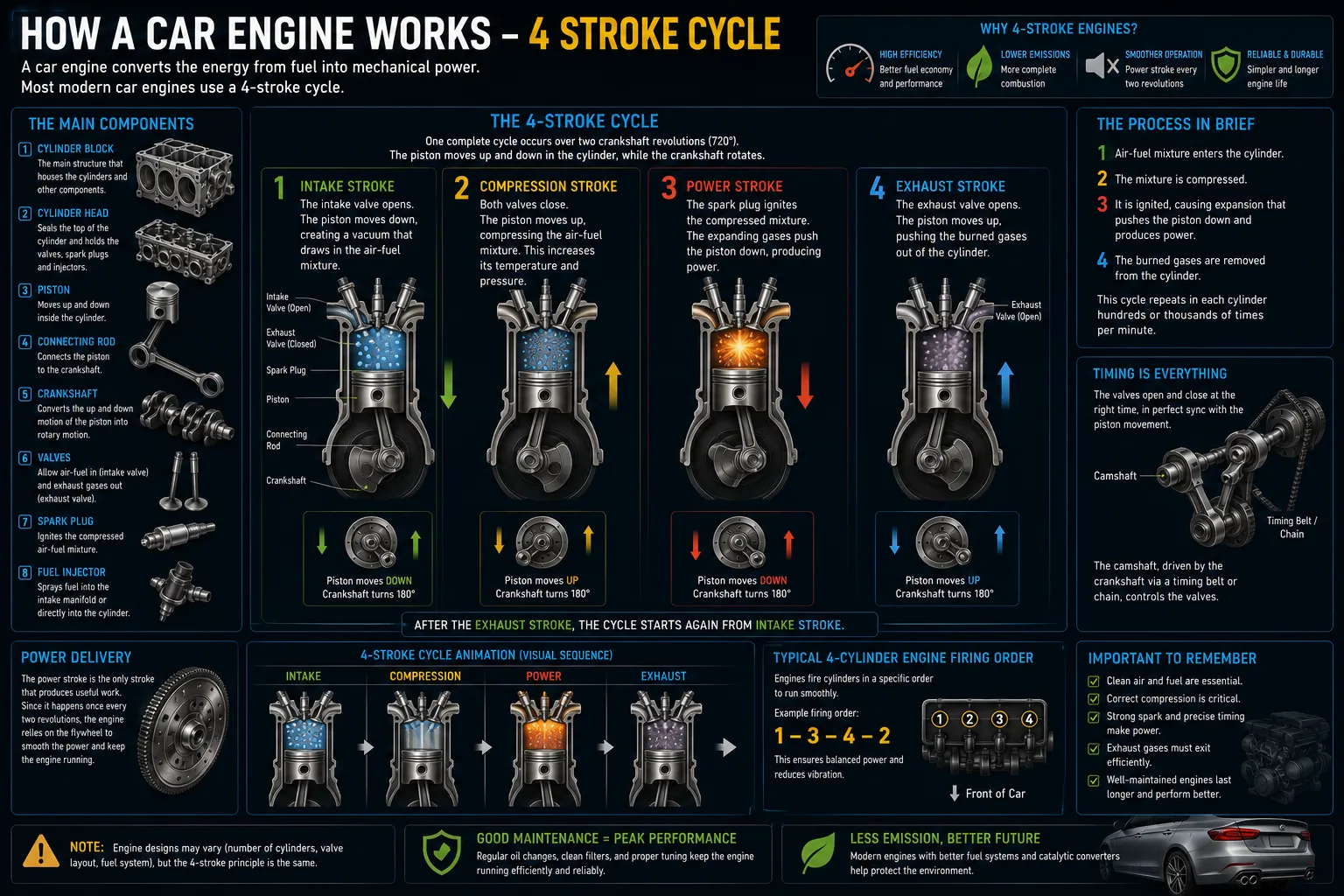
Your engine turns fuel into motion through a controlled sequence: air and fuel are drawn into each cylinder, compressed by a rising piston, then ignited — by a spark plug in petrol engines, or by heat and compression in diesels. The explosion drives the piston down, turning the crankshaft, and that's your power. Valves let the mixture in and the burnt gases out at precisely the right moments, oil keeps everything lubricated and cool, and coolant carries away the immense heat. Modern engines are managed by an ECU reading a web of sensors. When one part of that finely-balanced system drifts — spark, fuel, air, compression, oil or cooling — you feel it as a misfire, a knock, smoke or overheating.
Warning signs to watch for
- •Knocking or 'pinking' under acceleration — pre-ignition, or in a deeper knock, worn bearings
- •A misfire or stumble — the engine juddering, losing power, often with the engine light on
- •Blue smoke from the exhaust — the engine is burning oil past worn rings or valve seals
- •White smoke and disappearing coolant — a possible head gasket or cooling fault
- •The temperature gauge climbing — overheating from coolant, thermostat or water-pump trouble
- •A persistent ticking or tapping — low oil pressure, worn tappets or valve-train wear
Common causes
What we do
We read the fault codes, but we don't stop there — codes point to a system, not always the exact part. We back it up with live sensor data, and where needed compression or leak-down tests, to find the real cause before you spend a penny on parts. From misfires to overheating, you get a clear diagnosis and an honest quote. It's all done on your driveway or at your workplace, no tow to a garage required.
Engine Repair & Diagnostics — FAQs
The engine light is on but the car drives fine — is it urgent?
It depends what triggered it. Some codes are minor (a loose fuel cap, a lazy sensor); others flag a misfire that can wreck your catalytic converter if you keep driving, especially if the light is flashing. A flashing engine light means stop soon. Either way it's worth reading the code properly rather than ignoring it.
What does blue or white exhaust smoke mean?
Blue smoke means the engine is burning oil — usually worn piston rings or valve stem seals — and often comes with oil loss. White smoke that smells sweet and comes with disappearing coolant can point to a head gasket. Both deserve prompt diagnosis; caught early they're far cheaper than the damage they cause if ignored.
Is engine knocking something I can keep driving with?
Be cautious. Light 'pinking' under load can be poor fuel or ignition timing and is often fixable. But a deep, rhythmic knock that rises with revs can be worn bearings or serious internal wear — keep driving and you risk catastrophic failure. If it's a deep knock, stop and get it checked before it turns into a new engine.
What You Actually Get
Common Engine Repair & Diagnostics Faults We Fix
Random Knowledge You Didn't Ask For
Your engine has thousands of small explosions per minute. It's basically a controlled bomb under your bonnet.
Engine oil can get hotter than a commercial deep fryer. Change it regularly or enjoy expensive repairs.
Why Get Your Engine Repair & Diagnostics Done By Us?
We're Quick
Fast response, efficient work. No dragging things out.
We Come To You
Your driveway, your office, wherever. We travel.
We Guarantee It
If we mess up, we fix it. Simple as that.
Ready for Engine Repair & Diagnostics?
That thing's not going to fix itself. We've checked.