The Blown Head Gasket: The Engine Failure That Makes Grown Adults Cry in Car Parks
The head gasket sits quietly between your engine block and cylinder head, doing one of the most thankless jobs in all of motoring — sealing combustion gases in, keeping coolant and oil firmly in their respective lanes, and generally holding the entire thermal-mechanical arrangement together under pressures and temperatures that would make a pressure cooker weep. When it fails, it fails dramatically. Suddenly your expansion tank is bubbling like a witch's cauldron, there's a creamy beige sludge under your oil cap that looks disturbingly like bad mayonnaise, and white steam is billowing from your exhaust with the theatrical commitment of a West End show. Mechanics wince when they hear these symptoms. Former owners of 2003 Vauxhall Zafiras already know the plot twist. SOSCarFix comes to you — driveway, road, wherever — to properly diagnose whether you actually have a blown head gasket or whether something slightly less catastrophic is going on. Because jumping to conclusions costs money, and we prefer honesty to heroics.
See our upfront pricingBlown head gasket? Mayo under the cap, white smoke, overheating — we diagnose mobile, no garage required. Honest UK diagnosis and repair advice. Get a quote.
How it actually works
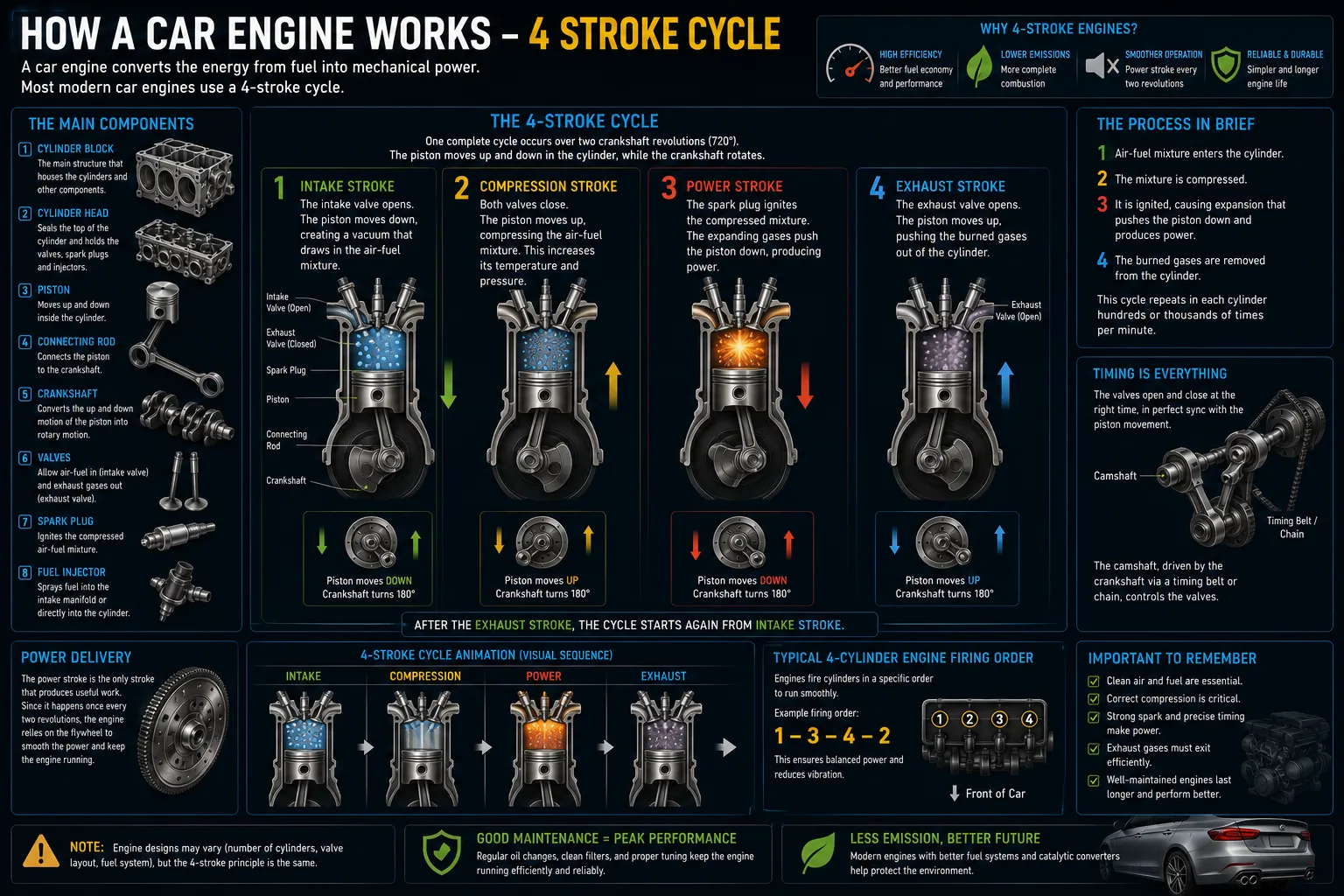
Your engine is split into two major castings: the block (everything from the crankshaft up to where the cylinders live) and the cylinder head (which sits on top and houses the valves, camshafts, and combustion chambers). Between them is the head gasket — a multi-layer steel and composite sandwich, typically 1–2mm thick, that must simultaneously seal combustion pressures of 150+ PSI, coolant passages carrying water at up to 110°C, and oil galleries. It does this tens of millions of times over the life of an engine. When it goes, it usually fails at one of those three sealing surfaces — sometimes all three at once if you really pushed your luck by ignoring the temperature gauge. A coolant-to-combustion breach means coolant gets drawn into the cylinder and burned off as white steam. A combustion-to-coolant breach pushes exhaust gases into the cooling system, which is what causes the ominous bubbling in the expansion tank. Oil-to-coolant mixing gives you the dreaded emulsification — that mayonnaise under the cap. A proper diagnosis uses a combustion gas leak-detection test (a chemical sniff test using a fluid that changes colour in the presence of exhaust hydrocarbons), a cooling system pressure test, and sometimes a compression check or cylinder leak-down test. We carry all of this. We don't guess. Guessing is what the last garage did before charging you for a water pump.
“Because jumping to conclusions costs money, and we prefer honesty to heroics.”
Sound familiar?
So what's behind it?
What we do — at your door
We come to you — your driveway, your workplace car park, the roadside if things have already gone sideways — and we run a proper diagnostic before anyone starts talking about repair bills. That means a combustion gas test on the cooling system (the chemical test fluid changes from blue to yellow if exhaust gases are present — a result that is unfortunately unambiguous), a cooling system pressure test to check whether the system holds pressure as it should, a visual check of the oil and coolant for cross-contamination, and where warranted, a compression or leak-down test to assess individual cylinder sealing. We'll tell you honestly whether the head gasket has failed, which type of failure it is (coolant-to-combustion, combustion-to-coolant, or oil-mixing — they're not all equally catastrophic in the short term), and whether the cylinder head itself is likely warped and will need machining before any gasket replacement makes sense. We don't sell you the repair before we know what the repair is. If the car is genuinely terminal — an old car with a warped head, a cracked block, or a repair cost that dwarfs the vehicle's value — we'll say so plainly, because that's also useful information.
What affects the price
Head gasket replacement is one of those jobs where the cost range is genuinely wide, and anyone who quotes you a fixed price over the phone without knowing the engine, the car's age, or whether the head needs machining is making things up. The labour alone is substantial — stripping a cylinder head means removing cam covers, cams, timing chains or belts (which often need replacement while you're in there), inlet manifolds, coolant pipes, and on some modern engines, an alarming quantity of ancillary components before you even see the gasket itself; some engines are a day's work, others are closer to two. Then the cylinder head almost always needs to be sent to a machine shop for a flatness check and skim if it's warped — that's an additional cost and turnaround time. The head bolts on most modern engines are torque-to-yield (stretch bolts) and cannot be reused safely, so they're replaced as a matter of course. On engines with a timing belt, if the belt was due anyway, it's replaced now while access is free. Parts quality matters too — a cheap imitation gasket on an engine that already destroyed one is not the economy move it appears to be. All of this means the job can range from a modest sum on a simple engine to a significant one on a complex unit with an alloy head that's been abused — and on an older car with a modest market value, the honest conversation about repair-versus-retire is sometimes the most useful thing we can offer.
Random knowledge you didn't ask for
Questions you're probably asking
Can I use a head gasket sealer additive instead of replacing the gasket?
You can. Some of them — particularly the better sodium silicate or fibre-based products — work temporarily on minor coolant-to-combustion leaks on engines that aren't severely warped. The honest caveat is 'temporarily'. They don't fix a warped head, they can't address oil contamination, and they occasionally block coolant passages or cause other problems if used liberally. On an older car you're planning to sell or scrap in six months, perhaps. On anything you rely on or want to keep, they're a delay tactic, not a repair.
My temperature gauge spiked once and came back down. Have I damaged the head gasket?
Possibly, possibly not — a single brief overheat on a modern engine with a steel or composite gasket may not have done permanent damage, especially if you caught it quickly and the cooling system recovered. The risk is with aluminium cylinder heads, which start to distort at sustained high temperatures. We'd recommend a cooling system pressure test and combustion gas check if the gauge did something it's never done before. Catching early seepage is considerably cheaper than catching full failure.
How long does a head gasket replacement actually take?
On a simple engine — an older pushrod unit with a straightforward layout — a skilled mechanic can do the job in a day. On a modern DOHC engine with a timing chain, variable valve timing, and everything bolted to everything else, it's realistically a day and a half to two days, plus however long the machine shop takes with the head if it needs a skim, which is often a working day. Don't let anyone tell you it's a quick job on a complex engine — that's how corners get cut.
Is it worth replacing the head gasket on a high-mileage car?
Depends entirely on the rest of the car. If the engine is otherwise in good health, the body isn't rotting, and the car has been properly serviced, a head gasket replacement can absolutely give you another 50,000–100,000 miles of reliable motoring. If the head gasket failed because the engine was already tired and overheated from neglect, you're potentially spending serious money on a car that will find other expensive ways to express its dissatisfaction shortly afterwards. We'll give you an honest read.
Will my car pass an MOT with a blown head gasket?
Almost certainly not, if the failure is meaningful. White smoke from the exhaust will fail on emissions grounds. Coolant loss or visible smoke from the engine bay can attract advisory or failure notes. An engine that overheats during or after the test is also a concern for the tester. More practically, driving an overheating car to an MOT is a good way to turn a repairable head gasket into a warped head and a much bigger bill. Sort the gasket first.
The Blown Head Gasket — sorted at your door
Stop procrastinating. Get a transparent quote and we'll come to you.