Rocker Cover Gasket Leak: Your Engine Is Bleeding Oil and Pretending Everything's Fine
The rocker cover gasket is one of those components that quietly fails over years of heat cycles, and your car's response is to slowly weep oil down the side of the engine where it sizzles on the exhaust manifold and fills your cabin with that distinctive burning smell that makes passengers question your life choices. Left long enough, it stops being a minor annoyance and starts being an actual problem — oil finding its way into plug wells, soaking your spark plugs, and turning a twenty-quid gasket job into a misfire, a set of plugs, and a considerably larger invoice. SOSCarFix comes to you, diagnoses the leak on the spot, and fixes it properly before the oil decides to go exploring somewhere more expensive.
See our upfront pricingOil weeping down your engine? Burning smell off the manifold? Could be the rocker cover gasket. Common, affordable, and we fix it on your driveway. Get a quote.
How it actually works
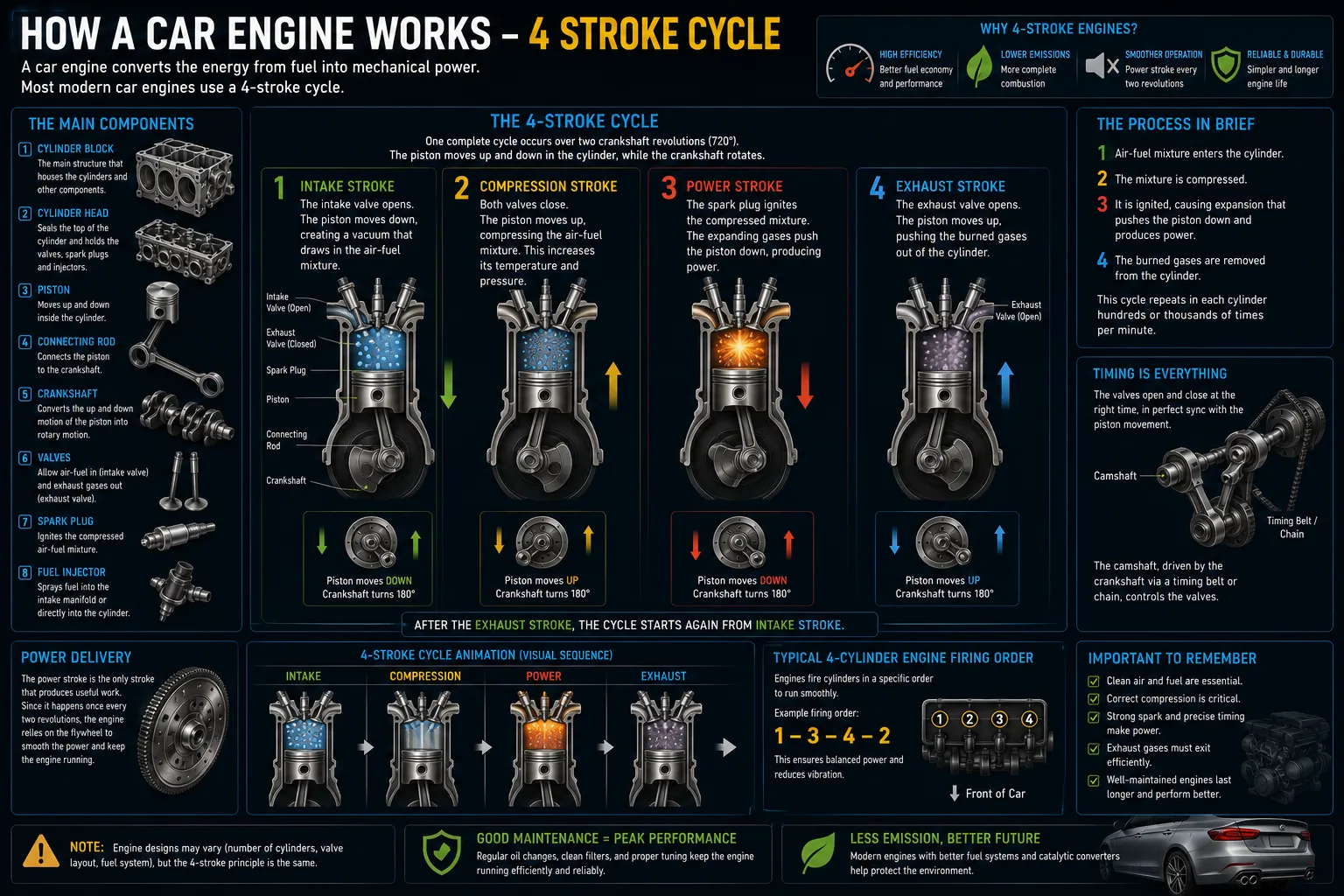
The rocker cover — also called the cam cover or valve cover, depending on which generation of mechanic trained you — sits right at the top of the engine, bolted over the cylinder head. It's a lid. Its job is to seal in the oil that lubricates the valvetrain: the camshafts, rockers, and valve springs that control when your engine breathes in and out. Between that cover and the cylinder head sits a gasket — usually rubber or cork on older engines — that keeps the oil where it belongs. Here's where it all goes wrong: that gasket lives in one of the harshest thermal environments in the car. Every time the engine starts cold and warms to operating temperature (usually around 90°C), then cools back down overnight, the gasket expands and contracts. It does this thousands of times over the car's life. The rubber hardens, shrinks, and eventually loses its ability to seal. The cover itself — often aluminium or plastic on modern engines — can also warp slightly over time, which helps the gasket along in its retirement. Once the seal fails, engine oil seeps out along the top of the head. On many engines the exhaust manifold sits nearby, which is why you get that sharp, acrid burning-oil smell — you're essentially doing a small barbecue with your own sump oil every time the engine reaches temperature. On many modern engines, the spark plug tubes pass through the cover; a failed gasket lets oil pool around the plug boots, which will eventually give you a misfire and a cause-and-effect puzzle that most people solve only after replacing the coil packs first.
Sound familiar?
So what's behind it?
What we do — at your door
We come to your driveway, workplace, or wherever the car happens to be sitting when you've finally decided that burning smell is worth investigating. The diagnosis is usually quick: a visual inspection of the top of the engine with the right torch angle tells us where the oil is coming from and whether it's the gasket, the filler cap seal, or something else entirely pretending to be the gasket. If the gasket is the culprit, we remove the rocker cover, clean the sealing faces on both the cover and the cylinder head (this part matters — skip it and the new gasket fails sooner), check the cover itself for warping, inspect the PCV system while we're in there, and refit with a new gasket torqued to the manufacturer's specification — not just nipped up because it feels right. If there's oil in the plug wells, we clean those out and flag the condition of the plugs while we're at it; if they're soaked, replacing them at the same time saves you a return visit when the misfire shows up three weeks later. The whole job is done at your location with no need to drop the car anywhere, and you'll get a clear quote before we start.
What affects the price
The gasket itself is rarely expensive — on most common UK cars it's a modest part. Labour is where the variation comes in. A simple four-cylinder engine with easy access to the top of the head is a short job. A V6 or V8 has two rocker covers, and some of them are buried under intake manifolds and wiring looms that need to come off first — that's a different conversation. Plastic covers are generally quicker; engines with individual rubber plug tube seals (common on BMW, VAG group, and Ford Duratorq units) take longer because each tube seal needs replacing separately. If the cover itself is warped or cracked, the cover is a component cost rather than just a gasket. We'll quote the full job — parts and labour — before starting, so there are no surprises.
Random knowledge you didn't ask for
Questions you're probably asking
Is a rocker cover gasket leak serious enough to stop driving?
Not immediately, but don't ignore it for long. A slow seep won't strand you, but oil dripping onto hot exhaust components is a fire risk in sufficient quantity, and oil in plug wells will cause a misfire that can damage catalytic converters if left running. It's a 'book it this week' job, not a 'deal with it next year' situation.
Can I just top up the oil and leave it?
You can, but it's treating the symptom while the cause carries on regardless. The leak rarely stays the same size — gaskets don't reseal themselves — and the oil dripping onto the exhaust manifold gradually cooks onto it, making the burning smell worse over time. Sooner or later it finds the plug wells, and then you've got a misfire on top of the leak.
Why does my car smell of burning oil but I can't see any puddles under it?
Because the oil is landing on the exhaust rather than the floor. The manifold sits at several hundred degrees under load and burns off oil almost as fast as it drips — which is also why rocker cover leaks can quietly drop your oil level without leaving any evidence underneath the car. Always check the top of the engine, not just what's on the tarmac.
How long does a rocker cover gasket replacement take?
On a straightforward engine — most common four-cylinders — it's typically an hour to an hour and a half, including cleaning the sealing faces and checking the plug wells. More complex engines with awkward access or multiple covers will take longer. We confirm the time when we quote so you know what you're committing to.
Will it fail MOT?
An oil leak that's 'minor seepage' is an advisory on the MOT; an 'excessive' leak is a failure. The tester has discretion, and a weeping rocker cover gasket that's dripping onto the exhaust or contaminating other components will often fail. More practically, a car producing visible smoke or burning smell from the engine bay is unlikely to sail through without comment.
Rocker Cover Gasket Leak — sorted at your door
Stop procrastinating. Get a transparent quote and we'll come to you.