The Engine That Ticks: A Noise That Ranges From "Fine, Probably" to "Pull Over Immediately"
Your engine is not a percussion instrument. When it starts ticking or tapping — especially when that sound is new, rhythmic, or getting worse — your car is communicating something, and it is not complimenting your driving. The maddening part is that engine ticks span a frankly enormous range of seriousness: from a harmless cold-start exhaust tick that clears up in thirty seconds, to the hollow death-rattle of a rod bearing advertising its retirement. The key is knowing which one you're dealing with before it costs you an engine. SOSCarFix brings the diagnosis to your driveway. We listen properly, connect the scan tools, check your oil pressure, and give you a straight answer — not a thousand-pound guess based on vibes and a booked-in slot three weeks from now.
See our upfront pricingEngine ticking at you like an angry clock? Could be oil starvation, dodgy lifters, or an exhaust leak. SOSCarFix comes to you — get a quote today.
How it actually works
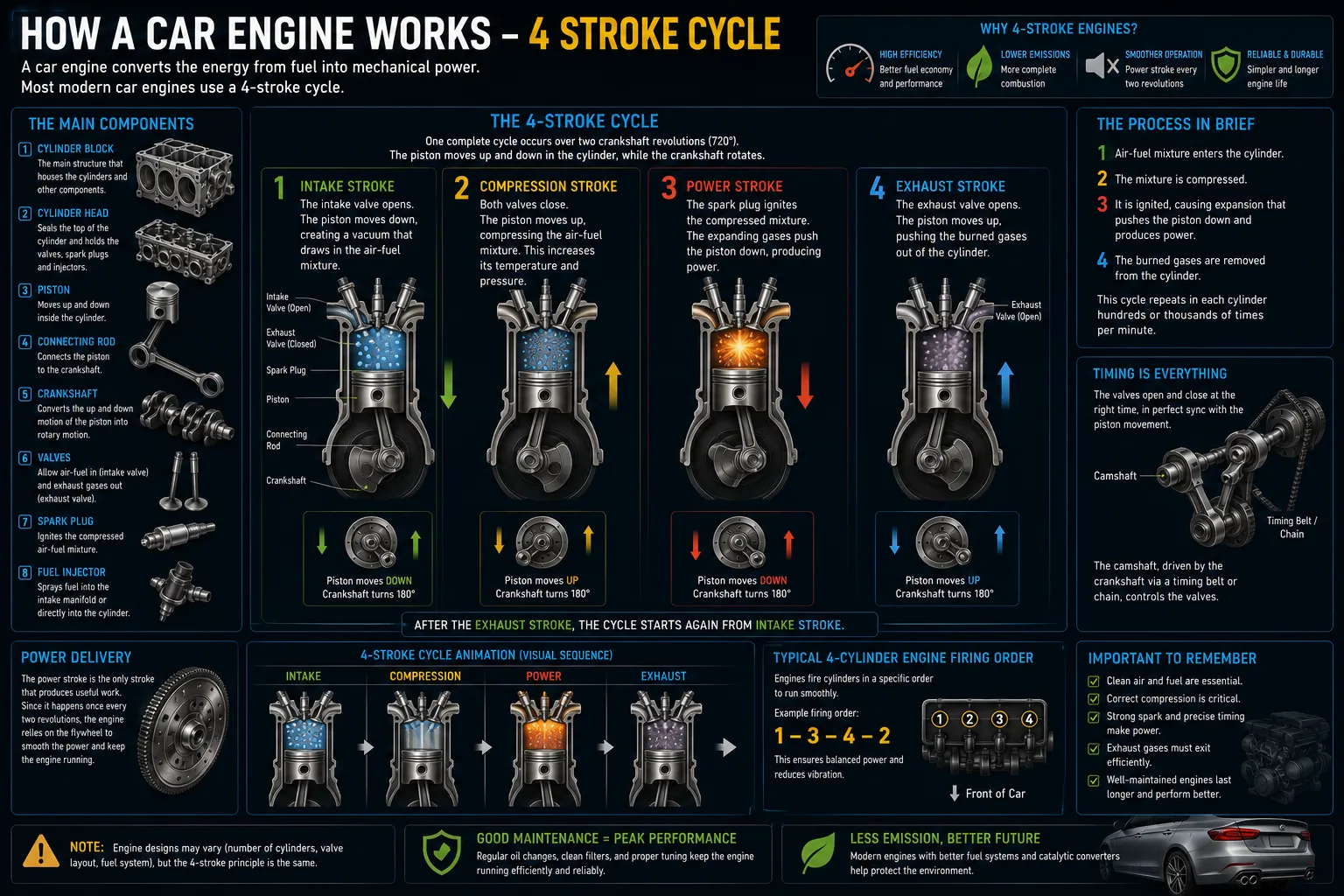
Engine ticks and taps are almost always mechanical or hydraulic in origin — something is either not getting enough oil, or has physical clearance it shouldn't have. The noise is typically timed to engine speed (rev it and the tick speeds up), which is your first clue that this is a valvetrain or reciprocating-assembly problem, not a random rattle. The valvetrain — camshafts, rocker arms, hydraulic tappets (also called hydraulic lifters or HLAs), and valve stems — runs at the top of your engine and is the first area to suffer when oil pressure drops, oil is low, or oil has degraded into something resembling warm treacle. Hydraulic tappets are self-adjusting by design; they rely on a constant supply of clean, pressurised oil to maintain zero valve clearance. Starve them of oil and they collapse, creating a gap — and that gap ticks every time the camshaft lobe passes over. On older engines with solid (non-hydraulic) tappets, valve clearances drift over time and need periodic mechanical adjustment — a job that involves feeler gauges and patience rather than fresh oil and wishful thinking. Separately, an exhaust manifold leak creates a tick that is loud when cold and often fades as the metal expands and partially seals the crack. People regularly confuse this for a valvetrain problem — until we listen and notice it stops ticking once the engine warms up.
“The key is knowing which one you're dealing with before it costs you an engine.”
Sound familiar?
So what's behind it?
What we do — at your door
SOSCarFix comes to wherever the car is — your driveway, workplace car park, or the roadside layby where you've been sitting regretting your dipstick negligence. We do not need a ramp for an engine noise diagnosis; we need the car, the noise, and a power source for the scan tools. On arrival we listen to the engine cold and then again at full operating temperature, noting exactly when the tick appears, when it clears, and how it responds to revs and load. We check the oil level and condition on the dipstick immediately — low, black, or gritty oil tells half the story before we've touched a tool. We connect a diagnostic scanner to check for any stored fault codes related to oil pressure, VVT systems, or cam timing. Where warranted, we can fit a mechanical oil pressure gauge to verify actual pressure rather than trusting the dashboard warning light (which only triggers once pressure is already dangerously low). From there we give you a clear diagnosis — not a list of everything it might possibly be — and a quote for the actual work required. If it is something that can be addressed on-site (an oil and filter change, a top-up and recheck, accessible exhaust manifold work), we will tell you. If it needs specialist workshop equipment, we will tell you that too, honestly, rather than pretend otherwise.
What affects the price
Cost depends heavily on what the tick actually turns out to be. An oil change and fresh filter — often the first and cheapest intervention for a tappet rattle — is modest and straightforward. Hydraulic tappet replacement costs vary significantly by how many need doing, whether the camshaft cover needs removing to access them, and how labour-intensive your specific engine is (a simple four-cylinder and a twin-cam V6 are very different propositions). Exhaust manifold gasket replacement ranges from relatively affordable on accessible engines to considerably more on transversely mounted units where the manifold faces the bulkhead. Camshaft or VVT actuator work sits at the higher end. The honest answer is that a proper diagnosis before spending money is not optional — a tick caused by low oil is a £30–£60 oil change; the same symptom ignored for six months can become an engine rebuild. We will not quote you for parts until we know what the parts actually are.
Random knowledge you didn't ask for
Questions you're probably asking
Is it safe to keep driving with an engine ticking noise?
It depends entirely on the cause, which is why a diagnosis matters before you make that call. A cold-start tick from an exhaust manifold leak that clears in under a minute is unlikely to leave you stranded. A tick accompanied by a low oil pressure warning or a rapid oil-level drop is a pull-over-now situation — running an engine with insufficient oil pressure can destroy bearings and camshafts in minutes. When in doubt, check the dipstick immediately and do not drive if the oil level is at or below the minimum.
Why does my engine tick when cold but stop once it warms up?
The two most common causes are an exhaust manifold leak and hydraulic tappets draining back overnight. Exhaust manifolds expand as they heat up, which can partially close a crack or gasket gap — the tick disappears not because the problem has gone away, but because the metal has moved. Hydraulic tappets can also drain back when the engine sits, ticking briefly on start-up until oil pressure refills them. If the tick clears within 30–60 seconds consistently and the oil level is correct, it is often the tappets draining. If it takes several minutes, the manifold is the more likely culprit.
Can a simple oil change fix engine tapping?
Sometimes, yes — and it is always worth ruling out before anything more involved. If the oil level is low or the oil is well overdue (dark, thin, and smelling faintly of regret), fresh oil and a new filter can restore adequate pressure to the top of the engine and quieten collapsed tappets within a few hundred miles. It is not guaranteed, and tappets that have been running dry for an extended period may have suffered physical wear that oil alone will not fix — but an oil change is the cheapest first step and entirely sensible.
What is the difference between a tick and a knock, and does it matter?
It matters quite a lot. A tick is a sharp, high-frequency noise typically originating from the top of the engine — valvetrain, tappets, rocker arms, exhaust manifold. A knock is a heavier, lower-pitched sound originating from further down inside the engine — connecting rod bearings, main bearings, or in worst cases the pistons. A rod knock tends to have a distinctive hollow clonk that worsens under load. If what you are hearing has deepened from a tick into something that sounds more serious over weeks or months, get it checked promptly — bearing knock is not a problem that stabilises.
Does valve clearance adjustment apply to modern cars?
Less commonly than it used to. Most modern petrol engines use hydraulic tappets that self-adjust, eliminating the need for periodic clearance checks. However, some engines — including certain Honda, Toyota, and Volkswagen Group units — use solid (bucket) tappets that do require adjustment at specified intervals, typically somewhere between 30,000 and 60,000 miles depending on the manufacturer. Your service schedule will specify if this applies. If your car has solid tappets and the clearances have never been checked at high mileage, it is a reasonable item to investigate when diagnosing a persistent tick.
Why does my engine ticking noise speed up when I rev it?
A tick that tracks your revs exactly — faster at higher RPM, slower at idle — is timed to the engine's mechanical cycle, which immediately points the finger at the valvetrain. Hydraulic tappets (lifters), rocker arms, or camshaft lobes all move in direct proportion to engine speed, and any one of them running with insufficient oil or physical wear will tick in perfect time with the revs. Less commonly, a loose timing chain tensioner does the same thing. Check your oil level and condition first. If it is low, overdue, or both, that is your starting point — but a rev-matched tick that persists after a fresh oil change warrants a proper diagnosis before it turns into something more expensive.
The Engine That Ticks — sorted at your door
Stop procrastinating. Get a transparent quote and we'll come to you.