Rear Main Crankshaft Seal Leak: Oil at the Bellhousing, Gearbox Off, and a Story Your Driveway Is Already Telling
The rear main seal sits right at the back of your engine, where the crankshaft exits to meet the gearbox. Its sole job is to stop engine oil from following the crankshaft out of the block — a simple job, admittedly, but one it occasionally decides to retire from early. When it goes, oil makes its way down the back of the engine, collects at the bellhousing, and starts decorating your driveway in a slow, confident drip. It won't announce itself dramatically. It won't set off warning lights. It just quietly leaks until someone crawls underneath, takes a long look, and delivers the news you didn't want: gearbox out. SOSCarFix diagnoses rear main seal leaks properly, confirms the source before quoting, and carries out the work at your location — no garage drop-off, no mystery bill at the end.
See our upfront pricingOil dripping from the bellhousing? That's your rear main seal. Labour-heavy but diagnosable. SOSCarFix comes to you — get a quote today.
How it actually works
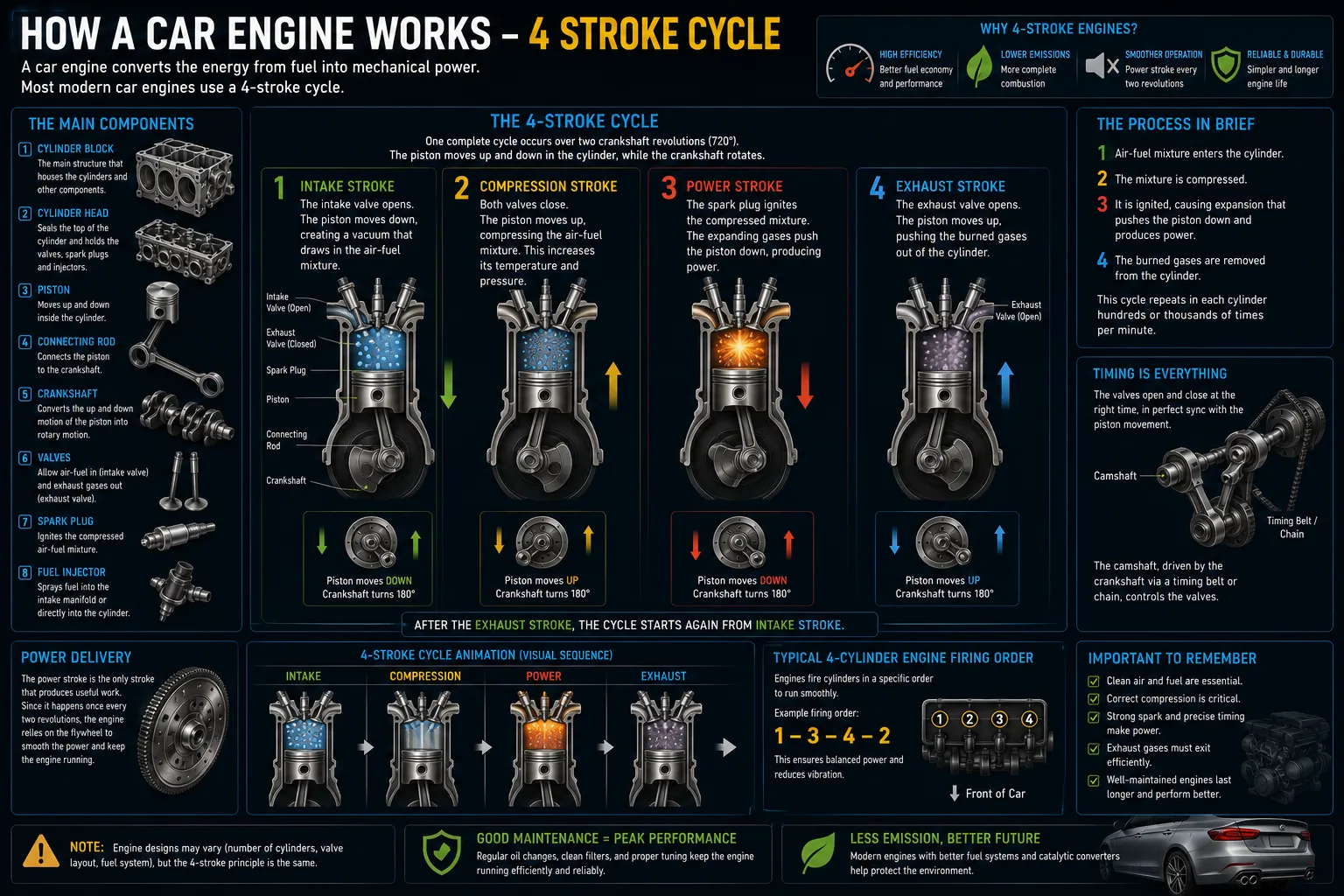
The crankshaft is the spine of your engine — it converts the up-and-down motion of the pistons into the rotation that eventually turns your wheels. At the front, a smaller crankshaft seal keeps oil in around the timing cover. At the back, the rear main seal does the same job on a much more exposed part of the shaft, right where it disappears through the back of the engine block to connect (via the flywheel) to the gearbox or torque converter. Modern rear main seals are typically a single-piece lip seal — a rubber ring with a spring-loaded lip that rides directly on a polished surface of the crankshaft. They're designed to last the life of the engine. They don't always manage it. The seal degrades with heat cycling, mileage and age; the rubber hardens and loses its spring; and on high-mileage engines, the crankshaft's sealing surface can develop a wear groove that no new seal can bridge properly. The practical problem is access. To replace the rear main seal, the gearbox (and on rear-wheel-drive vehicles, the propshaft too) has to come out to expose the flywheel, which then has to come off to reach the seal housing. It's not mechanically complicated — it's just a very large amount of labour compared to the seal itself, which costs very little. That labour cost is the honest reality of this job, and anyone quoting you otherwise is either leaving something out or planning to leave something off.
“It just quietly leaks until someone crawls underneath, takes a long look, and delivers the news you didn't want: gearbox out.”
Sound familiar?
So what's behind it?
What we do — at your door
Before anyone mentions a gearbox, we confirm the leak is actually from the rear main seal and not something else pretending to be it. This matters enormously because the sump gasket, the rocker cover, the timing cover and even a leaking oil cooler can migrate oil rearward and pool convincingly at the bellhousing. We clean the area, run the engine, and trace the actual source — saving you from paying for a gearbox-out job when the real culprit is a £30 sump gasket. Once confirmed as a rear main seal, we give you a straight quote that covers the full job: gearbox removal, flywheel off, old seal extracted, new seal (OEM-spec or genuine) pressed or driven squarely into the housing, and reassembly with a fresh clutch and flywheel bolts torqued to spec. On manual cars we'll inspect the clutch while the gearbox is out — you're already paying for that access, so it makes sense to look. We'll tell you honestly what we find and let you decide. All work is carried out at your home or workplace. We bring the equipment to you rather than asking you to arrange transport for a car that may be leaving oil wherever it stops.
What affects the price
The rear main seal itself is not expensive — a quality seal for most engines costs £15–£60. The cost of this job is almost entirely labour, and that labour is real: removing the gearbox on a typical front-wheel-drive car takes 2–5 hours depending on make, model and accessibility; rear-wheel-drive or four-wheel-drive vehicles with a separate propshaft take longer still. Automatic transmission vehicles require a torque converter to be unbolted and the ATF to be protected. On top of that: if we're already in there, replacing a worn clutch kit on a manual car at the same time saves you paying for the same gearbox removal again in the near future. Parts are modest; time is the honest cost. We quote transparently before starting, with no add-ons you haven't agreed to.
Random knowledge you didn't ask for
Questions you're probably asking
How do I know it's definitely the rear main seal and not the sump gasket or something cheaper?
Honestly, you don't — not without a proper look. Oil is remarkably good at running downhill and collecting somewhere that looks like the rear main but isn't. We clean the area thoroughly, run the engine up to temperature and trace the actual origin before recommending anything. Confirming the real source first is not optional; it's how you avoid paying for a gearbox removal when a sump gasket would have done it.
Can a rear main seal leak be temporarily fixed with an additive?
Oil stop-leak additives that claim to 'swell' seals are available, and some mechanics will tell you they've worked short-term on very minor seeps. The honest answer is that on a seal that has genuinely failed — hardened, cracked or lost its lip — no additive will restore it. They may slow a very minor weep briefly. They will not fix a real rear main seal leak, and on some cars they can cause other seals and gaskets to swell unevenly. We don't use them.
The gearbox has to come out just for a seal — is that really necessary?
Yes. The rear main seal is located behind the flywheel, which is bolted to the back of the crankshaft. To reach the seal housing you have to remove the gearbox, then unbolt and remove the flywheel. There is no shortcut. Anyone suggesting otherwise is either confusing it with a different seal or proposing something creative that will end badly. The labour is the job.
Should I replace the clutch at the same time on my manual car?
It's worth knowing that replacing a clutch while the gearbox is already out costs you only parts, not the extra labour of a separate gearbox removal later. If your clutch is above 80,000 miles or showing any slip, it is almost always more economical to do it now. We'll inspect the friction plate, flywheel and pressure plate while we're in there and give you the condition honestly — no pressure either way.
Can you do this repair at my house or does it need a garage ramp?
We can carry out this repair at your home or workplace on a hard, level surface. We work from axle stands rather than a ramp — the same way independent mechanics have done it for decades. It requires reasonable access to both sides of the vehicle and enough space to safely lower the gearbox. We'll confirm suitability when you enquire. The one thing we won't do is attempt this on a sloped or uneven surface.
Rear Main Crankshaft Seal Leak — sorted at your door
Stop procrastinating. Get a transparent quote and we'll come to you.