The Screaming Belt: Why Your Auxiliary Belt Is Trying to Get Your Attention (And Why You Should Listen)
That banshee wail from under the bonnet when you turn the key on a damp Tuesday morning — high-pitched, theatrical, gone after thirty seconds — is your auxiliary belt doing its best impression of someone who wants a word. Most people ignore it. Most people really shouldn't. The auxiliary belt (also called the serpentine belt or drive belt, depending on how technical your manual wants to be) runs your alternator, power steering pump, and air-con compressor off the crankshaft. When it snaps, you lose charging, potentially your power steering, and suddenly your 'minor squeal I was going to get looked at' becomes a breakdown on the A2 at rush hour. SOSCarFix comes to you — driveway, car park, or wherever you're stranded — diagnoses the belt, tensioner and pulleys, and replaces what needs replacing before it becomes a recovery truck story.
See our upfront pricingThat high-pitched squeal on a cold morning isn't your car being dramatic — it's the aux belt warning you. Mobile replacement, we come to you. Get a quote.
How it actually works
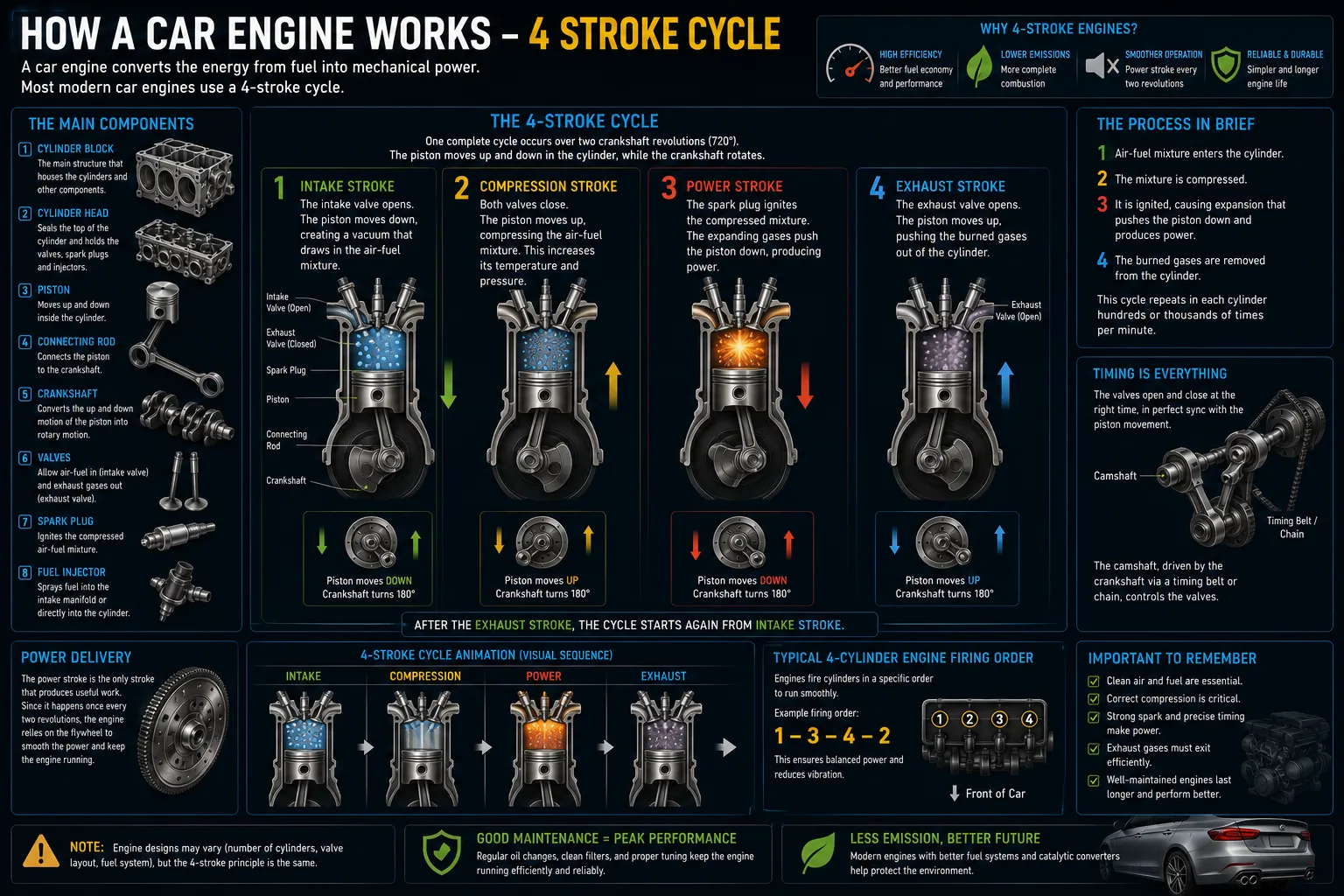
The auxiliary belt is a long, ribbed rubber loop driven directly by a pulley on the crankshaft — the main rotating shaft of the engine. As the engine runs, the belt spins and drives a series of ancillary components: the alternator (which generates your 12V electrical supply and charges the battery), the power steering pump (which makes steering feel like steering rather than arm wrestling), and often the air-conditioning compressor. Some cars split the load across two belts; most modern ones use a single serpentine belt that loops around everything in sequence. The tension is maintained by a spring-loaded tensioner pulley that automatically compensates for stretch and wear. Idler pulleys guide the belt's path without driving anything — they're just there to keep geometry sensible. When the rubber degrades, the ribbed surface glazes or cracks, and the belt begins slipping on the pulleys rather than gripping them. Slipping rubber on metal generates that very specific squeal — usually loudest on a cold start or in wet weather because moisture reduces friction further. A worn tensioner can no longer hold correct pressure, accelerating slip and wear. When the belt finally goes — and it does go if ignored long enough — everything it was driving stops. Immediately. The alternator warning light comes on, the steering goes heavy, and you pull over wondering how you missed all those squeals.
“Most people really shouldn't.”
Sound familiar?
So what's behind it?
What we do — at your door
We come to you — driveway, office car park, or roadside if it's snapped already. Before anything is quoted, we inspect the belt properly: checking for cracking, glazing, fraying and wear on the ribs; checking tensioner spring pressure and bearing condition; spinning each idler and ancillary pulley by hand to feel for roughness, wobble or drag that suggests a seized component making the belt's life difficult. If the noise is ambiguous we can run the engine with the belt removed briefly to isolate whether the squeal is belt-and-tensioner or a dying pulley bearing. We confirm exactly what needs replacing before we touch your wallet. Replacement itself means fitting an OEM-spec or reputable-brand belt and, where indicated, a new tensioner and idler kit — because fitting a new belt on a worn tensioner is false economy and we'll tell you so. We torque everything correctly, run the engine, verify the squeal is gone and the alternator is charging properly, and leave you with a car that doesn't sound like it's auditioning for a horror film.
What affects the price
The belt itself is a relatively low-cost part — the labour involved is the variable. On some engines it's straightforward: remove the cover, release the tensioner, swap the belt in fifteen minutes. On others, access requires removing engine mounts, auxiliary brackets or part of the front end, which pushes the job time up significantly. Cost factors include: engine layout and belt access (some transverse engines are far better-mannered than others); whether the tensioner and idler pulleys are being replaced at the same time (sensible if they're original and the belt is being changed anyway, as the labour is largely shared); whether any ancillary component — alternator, power steering pump, AC compressor — shows signs of bearing failure and needs to come off; and part quality chosen (a genuine or OEM-equivalent belt costs more than a budget substitute but is worth it given what it drives). We'll give you a clear itemised quote before starting. No invented numbers here — ask for a quote and we'll give you an honest one based on your specific vehicle.
Random knowledge you didn't ask for
Questions you're probably asking
My car squeals on startup but goes quiet after a minute — is that still a problem?
Yes, and it's a textbook glazed or slipping auxiliary belt. The cold squeal fades as the rubber warms up and expands slightly, improving grip. But the underlying problem — glazed belt surface, weak tensioner, or both — doesn't go away. It gets progressively worse, and the window between 'quiet after warmup' and 'snapped on the A25' is shorter than you'd like.
How urgent is a squealing aux belt? Can I leave it a few weeks?
It depends on how long it's been going and how loud it is. A mild, intermittent squeal on cold starts is a 'book it within a couple of weeks' situation. A persistent chirp at all temperatures, visible cracking on the belt, or any charging warning lights mean it's urgent — the belt is past its best and failure could come at any time. When it snaps, you lose the alternator and potentially power steering simultaneously, so driving on borrowed time on a motorway is not the move.
Does the tensioner need replacing at the same time as the belt?
Usually, yes — and we'll tell you honestly whether yours does. The tensioner spring and bearing wear at roughly the same rate as the belt. Fitting a new belt on a worn tensioner means the tensioner will fail within the life of the new belt, requiring the same labour again to fix. Where the tensioner shows wear, doing both together saves you money and a repeat visit.
Will a snapped auxiliary belt damage my engine?
On most petrol and diesel cars, the auxiliary belt is separate from the cam belt (timing belt), so snapping it won't cause internal engine damage — but it will stop the alternator and possibly the power steering pump dead. On some engines the auxiliary belt also drives the water pump, in which case snapping it and continuing to run the engine risks overheating and a significantly worse day. Check your specific model, or ask us — we'll confirm before you drive anywhere.
Can you replace an auxiliary belt at the roadside if it's already snapped?
In many cases, yes — provided we have the correct belt for your vehicle. We carry common belts for popular UK cars, and can often source and fit on the same visit. If your car is less common we may need to source the part before attending, but we'll tell you that upfront rather than turn up empty-handed and charge you for the pleasure.
The Screaming Belt — sorted at your door
Stop procrastinating. Get a transparent quote and we'll come to you.