Faulty PCV Valve & Crankcase Breather: The Tiny Part That Makes Your Engine Cry Oil Everywhere
Your engine is not a sealed vessel of calm. Every combustion cycle, a small quantity of hot, pressurised gas blows past the piston rings into the crankcase — blow-by, in the trade, and entirely normal. Left to accumulate, that pressure would push oil out past every seal and gasket the engine possesses, turning your driveway into an environmental incident and your engine bay into something that belongs on a neglect documentary. The PCV valve — Positive Crankcase Ventilation — is the humble solution: a one-way valve that routes those crankcase gases back into the inlet manifold to be burned harmlessly with the normal fuel charge, keeping crankcase pressure in check and your oil where it belongs. When it fails — blocked, stuck open, or turned to sludge — the consequences range from a maddening whistle at idle to a comprehensive distribution of engine oil across surfaces that were never designed to hold it. SOSCarFix comes to you, diagnoses which way the fault has gone, and sorts it on your driveway before your seals give up entirely.
See our upfront pricingWhistling idle, oily air filter, or oil seals pushing out? Faulty PCV valve — we replace it on your driveway. Mobile mechanic. Get a quote today.
How it actually works
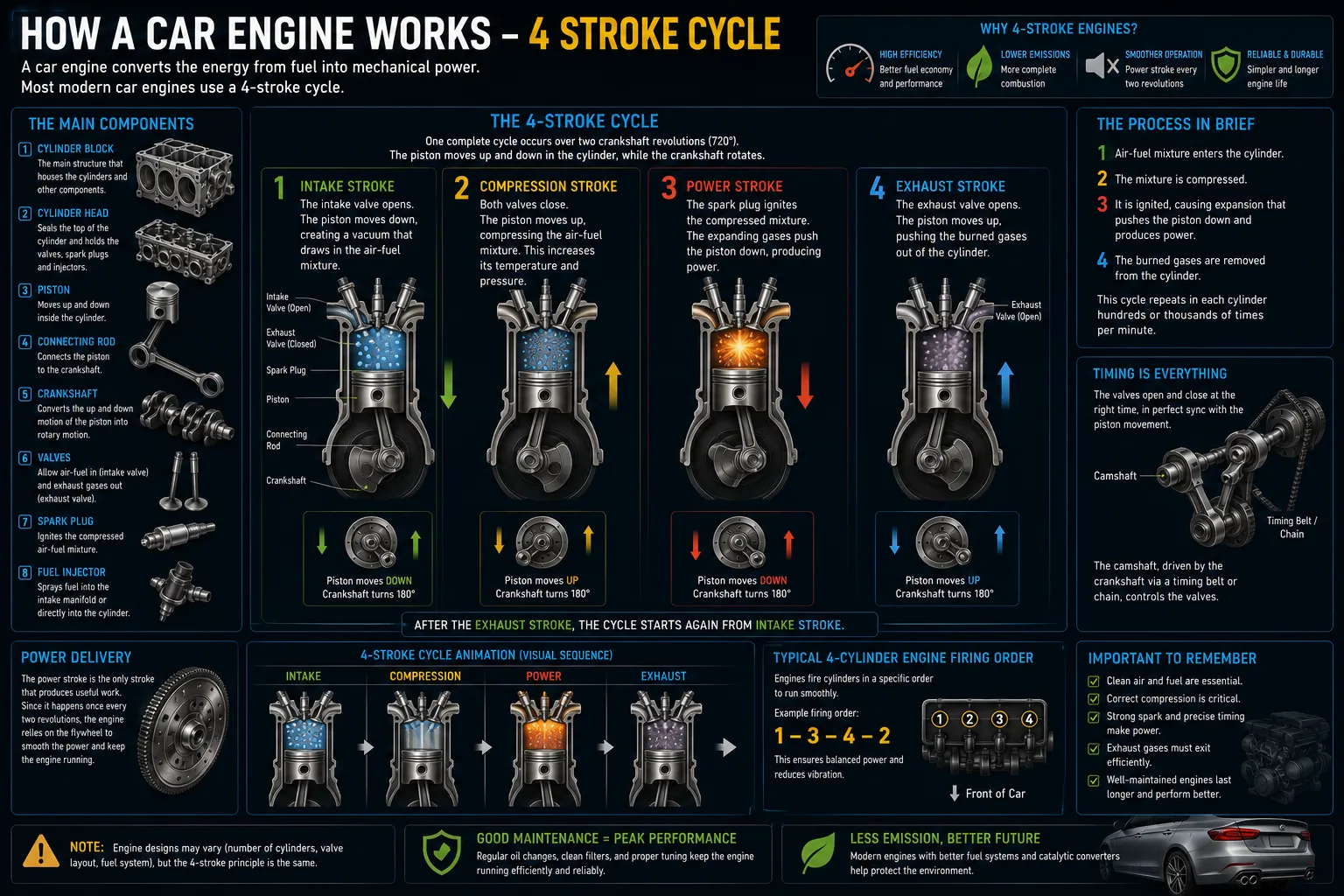
Every internal combustion engine produces blow-by: combustion gases that escape past the piston rings during the power stroke and enter the crankcase. The quantity depends on engine condition — a fresh engine with tight rings produces very little; a higher-mileage unit with worn bores can produce considerably more — but every engine produces some, by design, and the system must deal with it continuously. Without ventilation, crankcase pressure would build until it found the path of least resistance, which is invariably an oil seal or gasket. The early solution was a simple road-draft tube: a pipe from the crankcase to the underside of the car, venting blow-by gases directly to atmosphere. This worked in the sense that pressure was relieved, and it was also spectacularly illegal by modern standards, dumping unburned hydrocarbons and oil vapour onto the road with no remorse whatsoever. The UK outlawed it long ago. The PCV system replaced it. A valve — typically a spring-loaded plunger inside a small plastic or metal housing — sits between the crankcase (usually the rocker cover) and the inlet manifold. At idle, manifold vacuum is high; the spring holds the valve partly closed to prevent too much air being drawn from the crankcase, which would lean out the fuelling. At part throttle and cruise, the valve opens further, drawing blow-by gases through a breather hose into the inlet to be burned. A second hose runs from the air filter housing or intake tract back to the crankcase as a fresh air inlet, completing the circuit and ensuring a continuous sweep of the crankcase. The PCV valve is a one-way device: it closes if intake backfressure spikes (preventing crankcase oil from being pushed straight into the inlet) and it meters flow to suit the operating condition. Block it with sludge and the crankcase pressurises. Stick it permanently open and you introduce an unmetered air leak into the inlet — an unmeasured air source the ECU knows nothing about, because it entered after the mass airflow sensor. Both failure modes cause problems. Different problems, but problems with the same negligible-cost component at the centre of them.
“SOSCarFix comes to you, diagnoses which way the fault has gone, and sorts it on your driveway before your seals give up entirely.”
Sound familiar?
So what's behind it?
What we do — at your door
When SOSCarFix arrives at your driveway, we do not simply locate the PCV valve, swap it, and leave — because the valve is the most common culprit but not the only one, and replacing a £12 part while leaving a split breather hose in place solves precisely nothing. We start with a diagnostic scan to pull any fault codes relating to fuel trim, lean running, or misfires — long-term fuel trim data in particular is useful here, because a positive long-term trim means the ECU has been quietly adding extra fuel to compensate for an unmetered air source it cannot see, which is a reliable fingerprint of a breather circuit leak. We then do a thorough visual inspection of the entire PCV circuit: the valve housing, the hose from the rocker cover to the inlet manifold, the fresh-air return hose from the air filter side, any oil separator or catch-can in the circuit, and the connection points at both ends. Split hoses love to hide their cracks in the most inaccessible bends; we check all of them. On engines with diaphragm-type separator assemblies — a known failure point on a significant number of common UK cars — we inspect the diaphragm specifically and check whether the tell-tale oil ingestion pattern or lean code matches the known failure mode for that engine. If the fault is a simple blocked or failed PCV valve with intact hoses, the repair is usually straightforward and completed on-site. If hoses are cracked or a separator assembly has failed, we replace what has actually failed rather than the cheapest individual component. We will also flag if the level of blow-by we observe suggests the engine's rings deserve a closer look, because honesty now is considerably more useful to you than a short-term fix that masks a developing problem.
What affects the price
The PCV valve or breather assembly itself varies considerably by engine. On a simple older design — a standalone plunger valve on a Ford, Vauxhall, or Japanese engine — the component is often inexpensive and straightforward to access. On modern engines with integrated oil separator and diaphragm assemblies — particularly common on VAG 2.0 TDI and TSI units, BMW N-series petrol engines, and various Volvo and Jaguar Land Rover applications — the assembly is a more substantial part and the cost reflects that, though it is still far cheaper than the oil seal replacements that follow if the pressure issue is left unresolved. Hose replacement costs depend on whether the breather hoses are available as separate rubber sections (common on older vehicles, where a length of suitable hose and the right clips solve the problem) or as proprietary moulded assemblies with integrated connections (common on post-2010 vehicles, where you buy the whole moulded pipe from the parts network rather than a cut-to-length section). Labour is generally modest — the PCV circuit is usually accessible without major dismantling — though some engine designs bury the separator assembly in a location requiring ancillary components to be moved first, which adds time. We will not quote for anything without showing you what we found and why. If the diagnosis points to more than a PCV valve, we will tell you before we order parts, not after.
Random knowledge you didn't ask for
Questions you're probably asking
What does a PCV valve actually do — and what does PCV stand for?
PCV stands for Positive Crankcase Ventilation. The valve sits between the engine's crankcase (specifically the rocker cover or a dedicated port on the block) and the inlet manifold, and its job is to meter the flow of blow-by gases — the combustion gases that escape past piston rings during normal engine operation — back into the inlet to be burned rather than venting them to atmosphere or letting pressure build in the crankcase. The 'positive' refers to the active, controlled nature of the ventilation, as opposed to the old passive road-draft tube approach of simply hoping the air passing under the car would sort it out.
Can a faulty PCV valve really cause oil to leak from gaskets and seals?
Yes, and it is one of the more counterintuitive things about the system. Engine oil seals and gaskets — rocker cover gaskets, crankshaft seals, camshaft seals, sump gaskets — are designed to contain oil under the slight negative or near-zero pressure that the correctly functioning PCV system maintains in the crankcase. When the PCV valve blocks and crankcase pressure builds, those seals are suddenly being asked to hold positive pressure they were never designed for. They lose. The oil finds its way out, you find a puddle on the driveway, and the instinct is to replace the seal — which will fail again promptly unless the underlying pressure problem is fixed first.
My idle is rough and there is a whistling noise from the engine — could this be the PCV valve?
A rough, hunting idle combined with a hissing or whistling noise from the engine bay is a classic presentation for a breather circuit fault, though it shares symptoms with other vacuum leaks — a split inlet hose, a loose MAP sensor connector, a failing brake servo hose. The distinction with PCV-related leaks is often the location of the noise (near the rocker cover or the hose running from it to the inlet manifold) and the presence of an oily film in the air intake if the breather has been drawing oil mist into the inlet tract. A scan showing positive long-term fuel trims — the ECU has been adding fuel to compensate for lean conditions — supports the diagnosis. We check all of it before pointing at a part.
How often should the PCV valve be replaced as a preventive measure?
There is no universal UK service schedule that includes PCV valve replacement at a fixed interval, and on many modern cars the assembly is not listed in the manufacturer's service schedule at all — it tends to be replaced reactively when it fails rather than proactively. On engines known for sludging (any car that has had extended oil change intervals, used budget oil, or operated on short runs that never fully warm the engine) earlier inspection is warranted. Some VAG engines have well-documented separator diaphragm failures that occur broadly in the 80,000–120,000-mile range. If your oil changes have been regular and on-spec, the PCV circuit will last well; if the service history is patchy, it is worth checking sooner.
Is a PCV valve replacement something a mobile mechanic can actually do, or does it need a garage?
On the overwhelming majority of UK cars, yes — PCV valve or breather hose replacement is well within what a mobile mechanic can complete on your driveway. The PCV circuit is almost always accessible from the top of the engine without a ramp, and the repair itself does not require specialist equipment. The one exception worth noting is where the oil separator assembly is buried under an intake manifold or charge pipe that requires more extensive dismantling — certain BMW and Audi engines have done this to themselves with enthusiasm — in which case we will tell you upfront whether it is within scope for a mobile visit or whether the access requirements make a workshop more practical. We will not take the job apart on your drive and then discover it needs a ramp.
Faulty PCV Valve & Crankcase Breather — sorted at your door
Stop procrastinating. Get a transparent quote and we'll come to you.