Engine Knocking Noise: What Your Engine Is Desperately Trying to Tell You (Before It Self-Destructs)
Your engine has been making that noise for a week. You turned the radio up. Then up again. Now you're at full volume and you can still hear it — a rhythmic, hollow knock that seems to be coming from somewhere deep inside the block, the kind of sound that makes experienced mechanics wince and start mentally totalling rebuild costs. Here's the thing: engines do not knock for fun. That noise is a mechanical distress signal, and the spectrum of what it might mean runs from "mildly annoying and cheap to fix" all the way to "catastrophic internal failure that will ruin your month, your bank balance, and possibly your faith in secondhand cars." The variable that determines which end of that spectrum you're on? How quickly you get it diagnosed. SOSCarFix comes to your driveway, car park, or the layby where you've wisely pulled over, listens to your engine with a trained ear (and specialist tools), and tells you honestly what you're dealing with — before the engine decides to tell you itself in a more dramatic fashion.
See our upfront pricingThat knocking isn't your engine saying hello — it's a cry for help. SOSCarFix diagnoses engine knocks at your location before it becomes a bill with six figures. Get a quote.
How it actually works
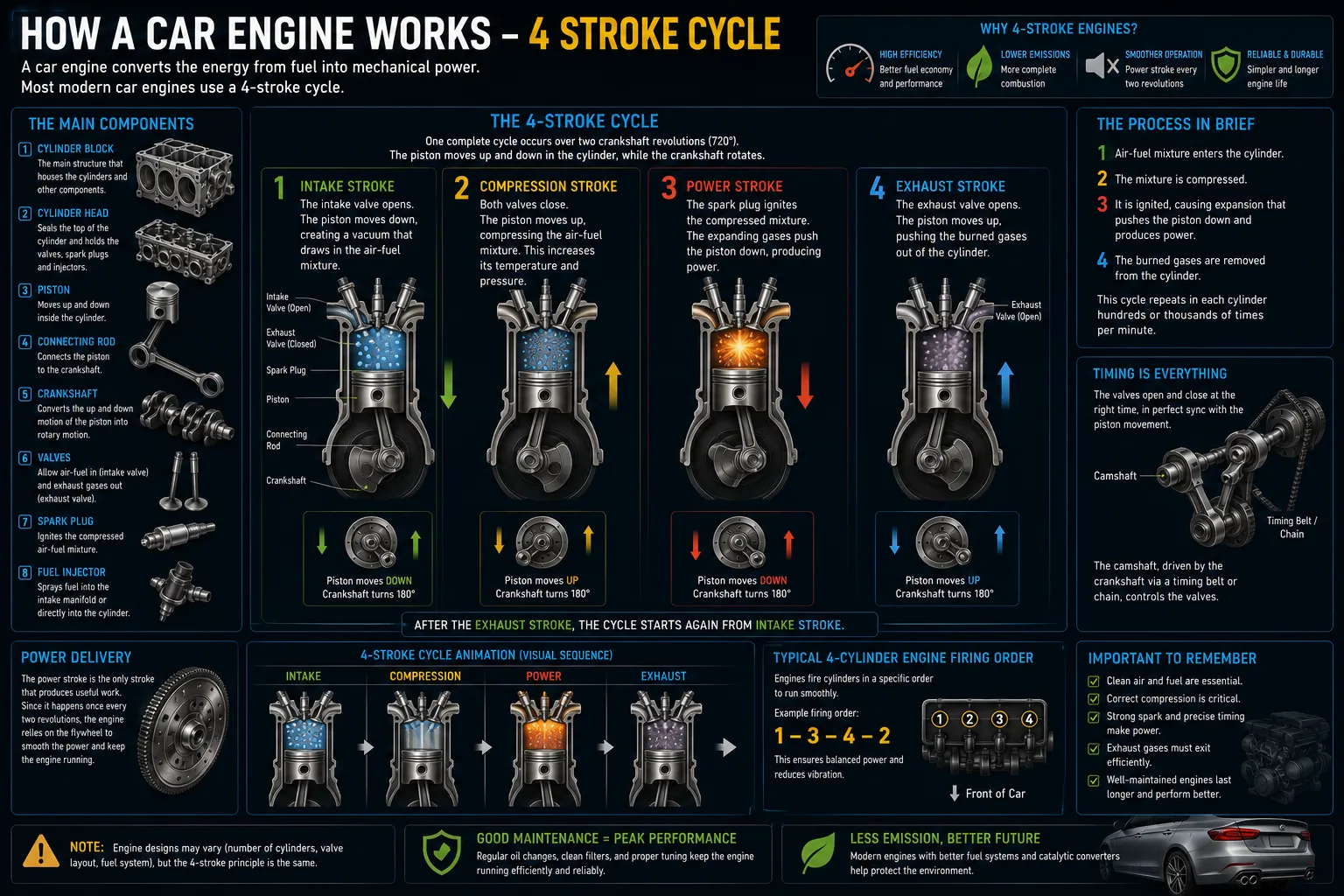
Engine knocking is a catch-all term for several distinct mechanical noises, each with its own origin story and its own level of urgency. A big-end knock is the classic headline act: a deep, heavy, rhythmic thud that gets faster as the revs rise. It means the bearing shells between your crankshaft journals and connecting rods are worn — often through oil starvation, contaminated oil, or simply very high mileage on a neglected engine. Left alone, this ends in a snapped con rod departing through the side of your block. Loud. Expensive. Irreversible. Tappet or lifter noise is a lighter, faster ticking from the top of the engine — the valvetrain. Hydraulic lifters depend on clean oil at the right pressure to keep valve clearances correct. Sludge, old oil, or a stretched timing chain can produce a distinctive rapid tick that sounds alarming but is sometimes recoverable with a proper flush and fresh oil. Then there's pre-ignition or pinking — a sharp metallic rattling or pinging under load, typically when you ask for acceleration uphill. This is fuel igniting before the spark plug fires, hammering the piston crown at the wrong moment. It can be as simple as the wrong fuel grade or as involved as a failing knock sensor, incorrect ignition timing, or carbon buildup on piston crowns causing hot spots. Accurate diagnosis is everything here. The treatments are not interchangeable.
“" The variable that determines which end of that spectrum you're on?”
Sound familiar?
So what's behind it?
What we do — at your door
A SOSCarFix mobile mechanic arrives at wherever your car currently is — driveway, office car park, supermarket, or the layby where you have sensibly stopped and turned the engine off — equipped to do a proper differential diagnosis rather than a hopeful guess. We listen to the engine with a mechanic's stethoscope to pinpoint whether the noise is top-end or bottom-end, static or rev-dependent, load-related or constant. We plug into your OBD-II port and read every fault code including pending and historical, paying particular attention to knock sensor codes, variable valve timing faults, and oil pressure flags. We check your oil level, condition, and pressure (with a mechanical gauge rather than trusting the dashboard light, which is famously late to the party). We assess whether the noise pattern fits pinking under load, lifter tick, or the more serious bottom-end knock that means you need a cost conversation before turning the key again. You get an honest written report of what we found, what it means, and what the options are — including the occasionally necessary "this engine needs a rebuild or replacement and here is how to think about that" conversation, delivered without the theatre of a dealership service reception.
What affects the price
What you end up spending depends almost entirely on what the knock actually is, and that is exactly why diagnosis before any other commitment is the only sensible move. A tappet or lifter noise resolved by a proper engine flush and an oil grade correction with a quality fully-synthetic is at the affordable end of the spectrum. A knock sensor replacement is a parts-and-labour job that varies considerably by engine accessibility — some are a twenty-minute job, others require half the intake manifold removed. Carbon decarbonisation (chemical or walnut blasting) sits in the middle range for labour intensity. Big-end bearing replacement requires the engine either out of the car or the sump dropped for access, which is a significant labour bill on top of parts — and on many modern engines with tight engine bays, the labour hours mount quickly. An engine rebuild or exchange unit is the nuclear option in terms of cost, and the right recommendation in fewer cases than garages historically suggested. Parts costs in the UK vary widely by whether you're running a common Ford or Vauxhall unit versus a lower-volume European or Japanese engine where pattern parts availability thins out. We tell you what it is before any of that spending begins.
Random knowledge you didn't ask for
Questions you're probably asking
How do I know if my engine knock is serious or something minor?
The honest answer is that you cannot reliably tell by listening alone without experience — and even experienced mechanics want a stethoscope and a fault code read before committing to a diagnosis. The rough rule: a deep, heavy thud that changes frequency with revs is bottom-end and serious. A light, rapid tick from the top is often lifter noise and potentially manageable. A pinging rattle under load is pinking and urgency depends on severity. None of them should be ignored by turning the radio up.
Can I keep driving with an engine knocking noise?
Depends entirely on the knock. Mild tappet ticking on cold start that clears after a minute is less immediately dangerous than a deep big-end knock. But the correct answer for any knocking noise you cannot identify is: stop driving it until someone tells you what it is. A big-end knock driven for another fifty miles can turn a bearing replacement job into a scrap engine situation. The diagnosis costs are trivial versus the alternative.
My engine is pinking (pinging noise under load) — is that the same as knocking?
It is a type of knocking but a different mechanism from mechanical wear. Pinking or pinging is pre-ignition or detonation — the fuel-air mixture firing at the wrong moment and hammering the piston incorrectly. It sounds like a sharp metallic rattle when you accelerate, especially uphill. First thing to try: fill with 97-99 RON premium fuel if you have been using regular 95. If it persists, you need a knock sensor check, timing check, and possibly a look at carbon buildup.
Will an engine flush fix a tapping or ticking noise?
Sometimes — and that is as honest as anyone should be. If the ticking is caused by sludge-blocked hydraulic lifters that have lost their ability to maintain correct valve clearance, then a properly done engine flush followed by quality fully-synthetic oil at the correct specification has a reasonable chance of clearing it, particularly if the noise is mild and relatively new. If the lifters have been starved long enough that they are mechanically damaged, no amount of flushing recovers them. Diagnosis tells you which situation you are in before you spend money on flushes that will not help.
How long does a mobile engine knock diagnosis take?
Typically between 45 minutes and 90 minutes at your location. We are not rushing through an eight-car workshop queue. The time is spent doing it properly: listening with a stethoscope, reading fault codes, checking oil pressure with a gauge, running the engine through different load conditions where safe to do so, and giving you a clear explanation of what we found. You are not paying for a five-second listen followed by a shrug and a booking for further investigation.
Engine Knocking Noise — sorted at your door
Stop procrastinating. Get a transparent quote and we'll come to you.