Your Car Is Eating Oil: A Symptom Guide to Why Engines Drink the Stuff They Shouldn't
Oil is the lifeblood of your engine — but it is not a fuel. It does not get used up in the combustion process. It is supposed to go round and round the engine indefinitely, lubricating, cooling and cleaning, then turn up at the next service at roughly the same level it was at the last one. So when your dipstick keeps coming up short, something has gone wrong. Either the oil is burning — ending up in the combustion chamber and going out through the exhaust as blue smoke — or it is leaking out somewhere it has no business being. Sometimes both. The amount matters too: a modern engine quietly consuming 500ml every 1,000 miles is a world apart from one that needs a litre topped up every fortnight. SOSCarFix comes to you, diagnoses the cause properly with real data, and gives you an honest picture of what you are dealing with before a penny is spent on parts.
See our upfront pricingOil disappearing between services? We diagnose valve seals, piston rings, turbo seals and PCV faults at your home or work. No garage faff.
How it actually works
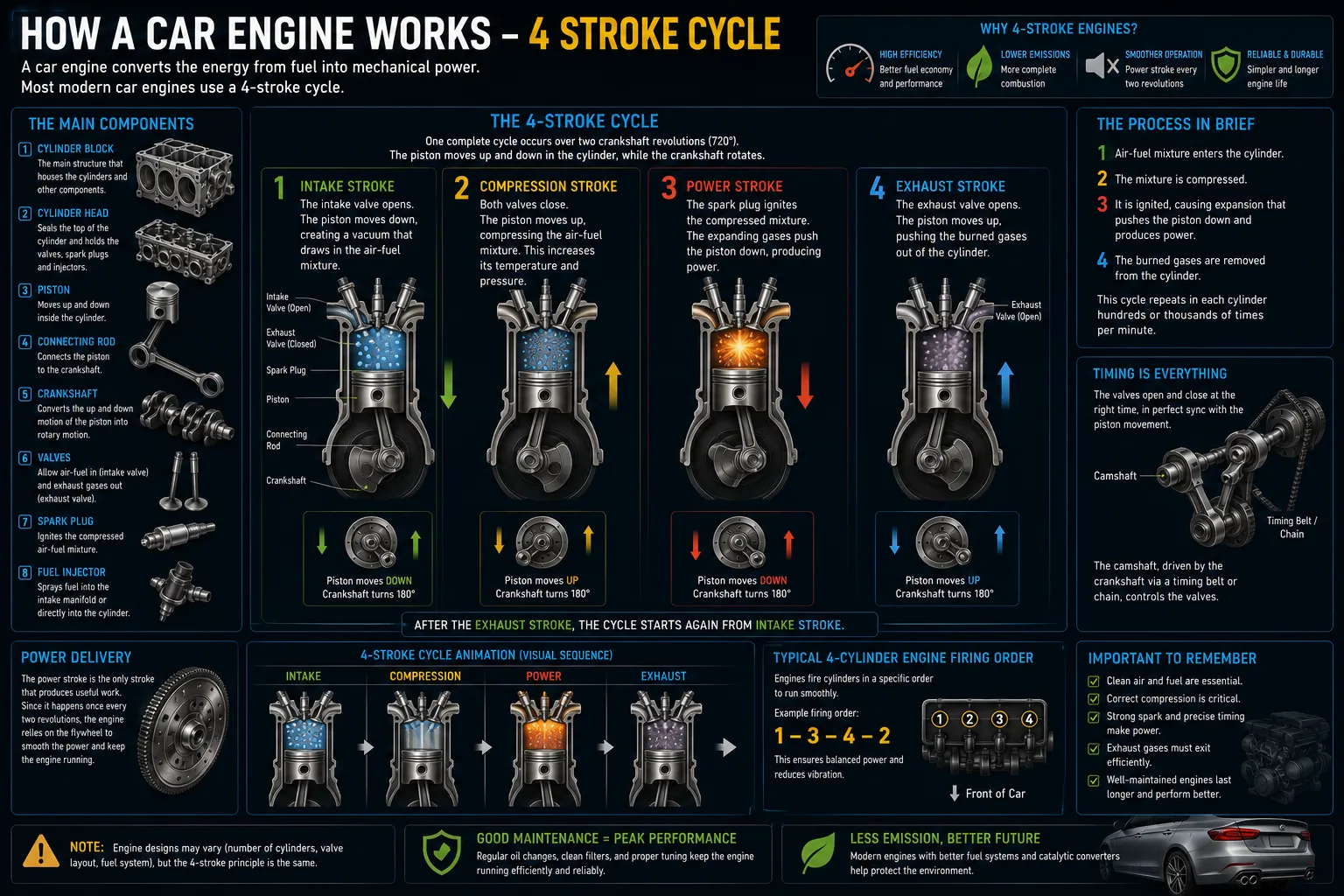
Your engine holds several litres of oil in the sump. A pump circulates it under pressure to every bearing, cam lobe, piston and turbo — keeping metal from grinding directly on metal. The only places oil is supposed to touch are the lubricated surfaces; the combustion chamber above the pistons is supposed to stay clean. Several seals and rings keep those two worlds apart. Piston rings sit in grooves around each piston and form a near-perfect seal against the cylinder wall — they keep combustion pressure in and oil out. Valve stem seals sit at the top of the combustion chamber, preventing oil from being sucked down the valve guides when intake valves open. The turbocharger (on turbocharged engines) has its own shaft seals, because it sits in a housing bathed in pressurised engine oil. And the Positive Crankcase Ventilation system (PCV) manages blow-by gases — a small amount of gas that leaks past the piston rings and ends up in the crankcase, which needs to be vented back into the intake rather than building up pressure. When any of these fail, oil finds its way into places it should not — either into the combustion process, where it burns off as blue or blue-grey smoke, or out of the engine entirely, dripping onto your driveway or burning off on a hot exhaust manifold.
“So when your dipstick keeps coming up short, something has gone wrong.”
Sound familiar?
So what's behind it?
What we do — at your door
We come to you — driveway, car park, wherever the car lives — and start with a proper on-site inspection rather than a shrug and a guess. We check the oil level and quality, look for external leaks across the engine, rocker cover, sump and seals, and inspect the PCV system for blockages or failure. We pull the spark plugs to check for oiling. Where appropriate we connect our professional scan tools and read live data — fuel trims, misfire counts and crankcase pressure readings all tell a story. If a turbo is fitted we check the intake side for oil contamination and the turbo shaft for play. We give you a plain-English explanation of what we have found — whether that is a cheap PCV valve, a leaking rocker cover gasket, or a more involved conversation about piston rings — along with an honest quote before any work starts. No garage appointment, no courtesy car stress, no waiting room with a machine that sells awful coffee.
What affects the price
Cost depends almost entirely on what is causing the oil loss, and that range is wide. A PCV valve is a cheap part and straightforward to replace; a rocker cover gasket is typically modest labour with an affordable gasket. Valve stem seals require the top of the engine to be accessed — more involved, though not always as dramatic as it sounds on some engines. Piston rings are a significant job — they require the engine to be partially stripped — and on a high-mileage engine the economics of that repair versus the car's value is a conversation worth having honestly before proceeding. Turbo seals sometimes mean a remanufactured or replacement turbo rather than a seal kit, because pulling a turbo apart is not always practical. External leaks from gaskets and seals vary widely by location — some are accessible; others are buried. We will always give you a clear, itemised quote with options where they exist.
Random knowledge you didn't ask for
Questions you're probably asking
How much oil consumption is actually normal?
The honest answer is: it depends on the engine and its age. A modern well-maintained engine should comfortably go from service to service (10,000–12,000 miles on most schedules) without needing a top-up. Consuming up to about 500ml per 1,000 miles is within the range many manufacturers call acceptable for older or high-mileage engines — but it still warrants investigation, because the cause matters. One litre per 1,000 miles and above is a problem regardless of what the manufacturer's small print says.
Is blue smoke on start-up always serious?
Not always — but it should not be ignored. Blue smoke that appears on a cold start and clears after a minute or two is a classic sign of worn valve stem seals: oil seeps past them overnight as they cool and shrink, then burns off once the engine warms up. It is not an emergency, but the seals will not improve on their own, and the longer it runs the more oil it consumes. Get it looked at before it becomes a bigger problem.
Can I just keep topping up the oil?
You can, in the short term — and yes, keeping the oil level up is far better than letting it run low. But topping up is treating the symptom, not the cause. Running with burnt or leaking oil can foul catalytic converters (which are expensive), contaminate spark plugs, and mask worsening wear. Diagnosis costs less than a catalytic converter.
Could it be the turbo rather than the engine itself?
Yes, absolutely. On a turbocharged car, the turbo is one of the first suspects for oil consumption — it runs at enormous speed, is bathed in engine oil, and its shaft seals do wear. Signs that point to the turbo rather than rings or valve seals include: blue smoke specifically under boost or on the overrun, oily residue inside the intake pipe or intercooler, and the absence of blue smoke at idle. On-site inspection and a scan for boost and fuel trim data helps narrow it down.
My car has no smoke and no drips, but the oil still goes down — why?
This is more common than people expect, particularly on direct-injection engines. Oil can burn in small quantities without producing visible blue smoke — the catalytic converter cleans it up before it exits the exhaust. The fouled spark plugs and slightly elevated fuel consumption are often the only clues. A thorough inspection, including plug condition and PCV system check, is the right first step.
Your Car Is Eating Oil — sorted at your door
Stop procrastinating. Get a transparent quote and we'll come to you.