Steering & Power Steering
AKA 'Turny Roundy Dept' — When parking becomes an arm workout.
Heavy steering? Whining noise when turning? Steering wheel off-centre? We fix power steering systems, racks, pumps, and alignment issues.
See our upfront pricingQuick Facts
What's This All About Then?
Steering should be effortless. If you're getting an arm workout every time you parallel park, something's wrong. Power steering systems - whether hydraulic or electric - take the effort out of turning the wheel. When they fail, driving becomes a chore. We diagnose and repair power steering pumps, racks, fluid leaks, electric assist motors, and all the bits that make your steering feel like steering. We also handle wheel alignment to make sure your car goes straight when you point it straight. Revolutionary concept.
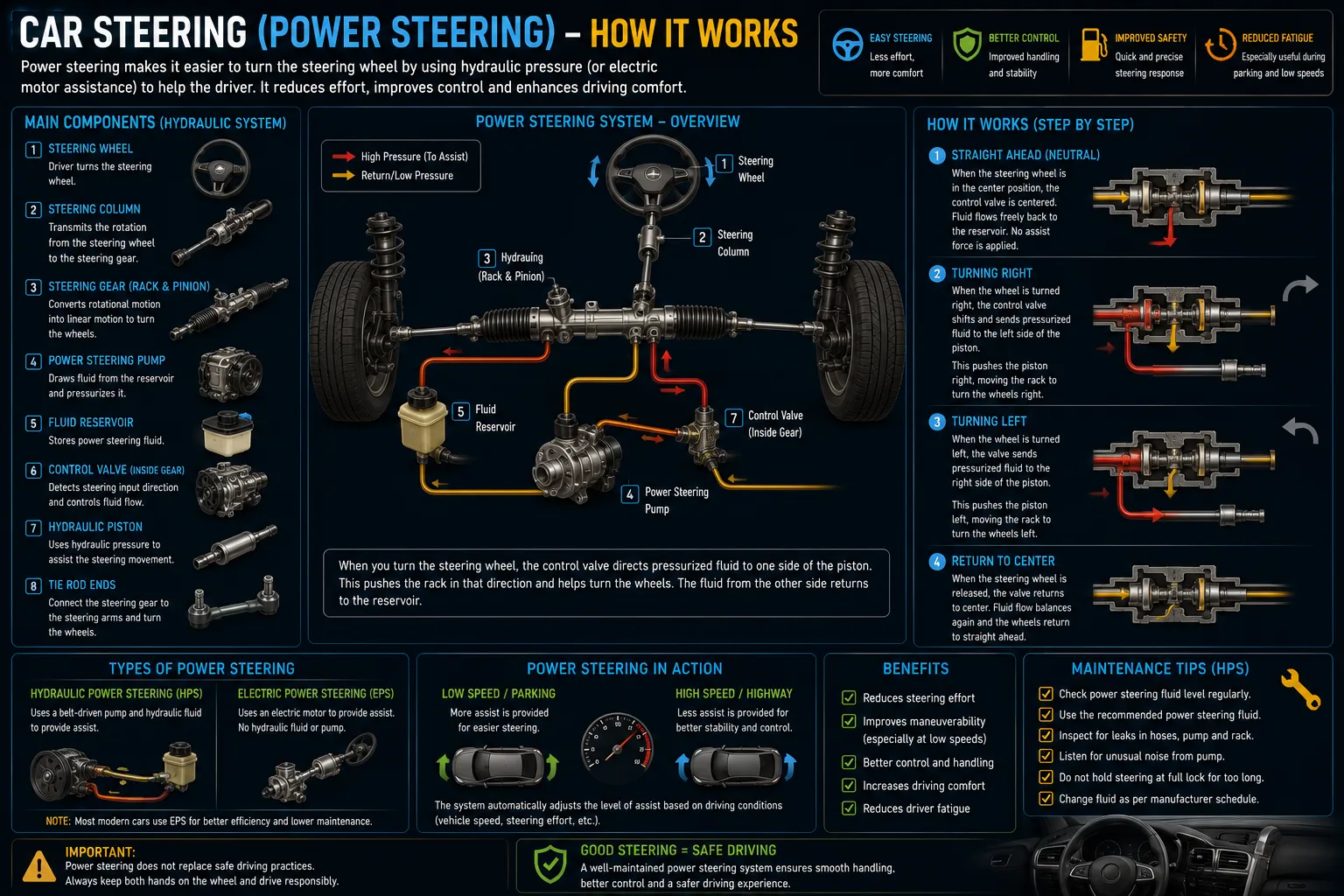
How it works
Turn the wheel and you're moving a rack — a long toothed bar that pushes and pulls the front wheels left and right through the track rods. On its own that's heavy work, so cars use power assistance. Older systems are hydraulic: an engine-driven pump pressurises fluid to help push the rack, which is why they whine if the fluid is low. Most modern cars use electric power steering (EPS), where an electric motor provides the assistance instead — no pump, no fluid, and it can vary the assistance with speed. Either way, the goal is the same: light steering when parking, firmer and more stable at motorway speed. Wheel alignment then sets the angles so the car tracks straight and the tyres wear evenly.
Warning signs to watch for
- •The car wanders or pulls to one side — often alignment, but can be a worn track rod end
- •A whine or groan when turning, especially at full lock — classic sign of low fluid or a failing hydraulic pump
- •Heavy or stiff steering — low fluid, a failing pump, or an EPS fault (often with a warning light)
- •A knocking or clunk when turning — worn track rod ends or steering rack mounts
- •Vibration through the wheel — commonly tyre balance or a wheel issue, but worth checking
- •The steering wheel is off-centre when driving straight — alignment has drifted, often after a kerb strike
Common causes
What we do
We diagnose first — is it alignment, fluid, the pump, a worn joint, or an electronic EPS fault? For EPS we can read fault codes to pinpoint it rather than guess. We top up or flush hydraulic fluid, replace worn track rod ends and pumps, and advise honestly when a specialist alignment rig is the right next step. You get a clear quote before any work, and because we're mobile, most of it happens right where your car is parked.
Steering & Power Steering — FAQs
Why does my steering whine when I turn?
In a car with hydraulic power steering, a whine — especially at full lock or low speed — usually means the fluid is low or old, or the pump is starting to fail. Low fluid is the cheap, common cause and often points to a small leak somewhere. It's worth sorting promptly, because running a hydraulic pump low on fluid can wear it out and turn a cheap fix into an expensive one.
Can you fix electric power steering, or is that a dealer job?
It depends on the fault. Many EPS problems are diagnosable with fault-code readers and fixable — a sensor, connector, or wiring issue. We can read the codes to see what's actually going on. Some faults need a replacement steering column motor or dealer-level programming, and we'll tell you honestly when that's the case rather than throwing parts at it.
Do you do wheel alignment at my home?
We can check and adjust basic tracking, and we'll always diagnose whether your pulling or off-centre wheel is alignment or a worn part. Full four-wheel alignment needs a proper laser or camera rig that lives in a workshop, so for that we'll point you to the right setup. But we'll first make sure alignment is genuinely the problem, so you don't pay for a rig you don't need.
What You Actually Get
Common Steering & Power Steering Faults We Fix
Random Knowledge You Didn't Ask For
Power steering was invented in 1951. Before that, parking was basically a gym session.
Electric power steering uses about 90% less energy than hydraulic systems. Your fuel economy thanks it.
Why Get Your Steering & Power Steering Done By Us?
We're Quick
Fast response, efficient work. No dragging things out.
We Come To You
Your driveway, your office, wherever. We travel.
We Guarantee It
If we mess up, we fix it. Simple as that.