Turbo & Supercharger Service
AKA 'Peppa Pig' — Because turbos look like Peppa Pig. Look at it. You can't unsee it now.
Turbo smoking? Lost boost? Whistling noises? We diagnose and repair turbochargers, wastegates, boost leaks, and intercoolers.
See our upfront pricingQuick Facts
What's This All About Then?
Turbos spin at up to 250,000 RPM, powered by exhaust gas hot enough to melt aluminium. They're engineering miracles that eventually wear out. Blue/white smoke, lack of power, whistling or grinding noises, and oil consumption are all signs your turbo is unhappy. We diagnose turbo problems properly before recommending replacement - sometimes it's a £20 hose, sometimes it's a £1,000 turbo. We also handle wastegate issues, boost leaks, intercooler repairs, and the oil feed lines that keep turbos alive. For performance cars, we can fit uprated turbos and intercoolers too.
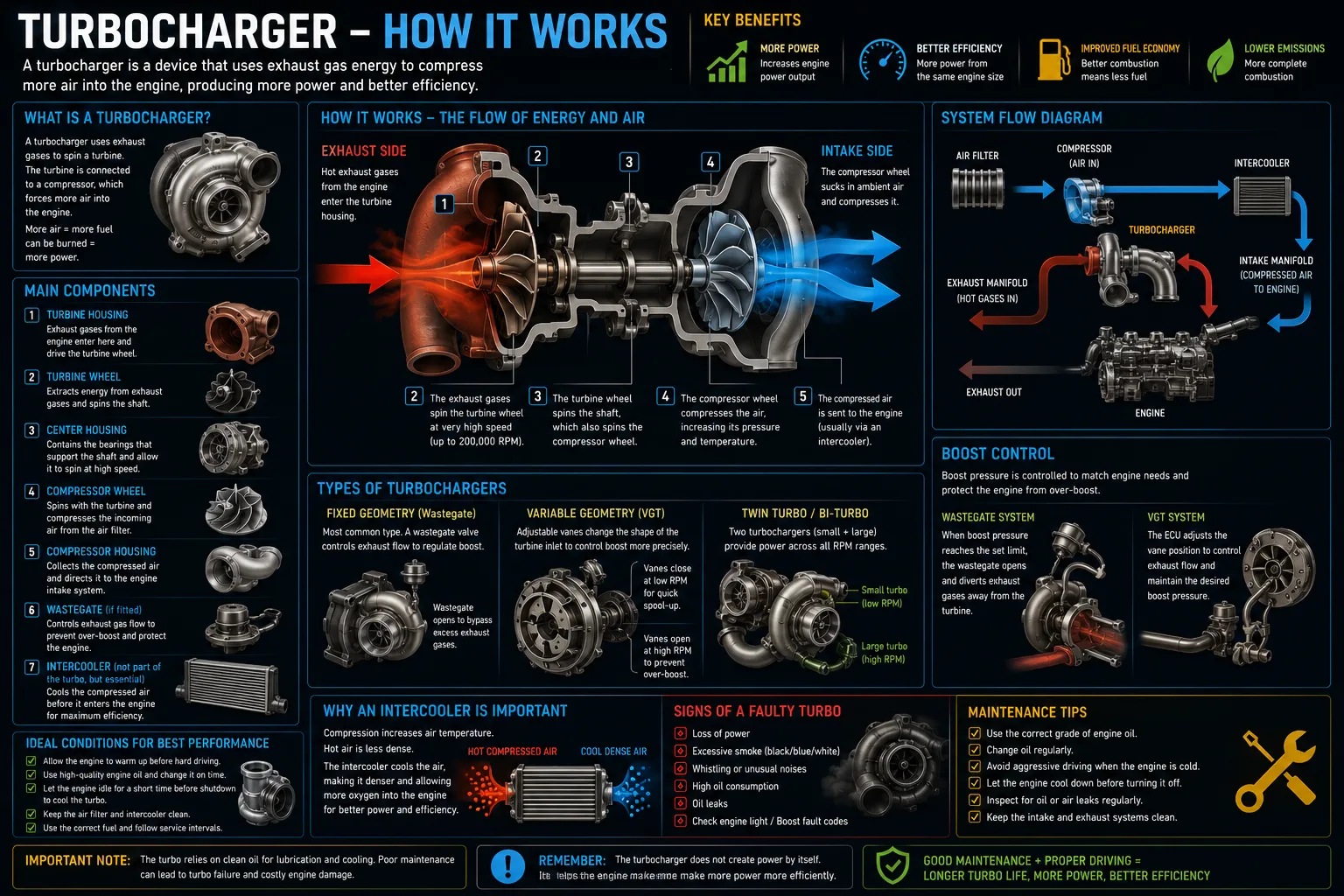
How it works
A turbocharger is an air pump driven by your engine's own waste exhaust. Hot exhaust gas spins a turbine wheel, which is joined by a shared shaft to a compressor wheel on the other side; that compressor forces extra air into the engine, so it can burn more fuel and make more power. To stop it overboosting, a wastegate bleeds off excess exhaust, and an actuator controls the wastegate based on how much boost the engine needs. It all spins at astonishing speeds — up to 250,000 rpm — on a film of engine oil, in exhaust gas that can hit 800°C or more. That's why clean oil and a proper cool-down matter so much to turbo life.
Warning signs to watch for
- •Noticeable loss of power or sluggish acceleration — the turbo isn't making its boost
- •A loud whining or siren-like noise that rises with revs — worn bearings or shaft play
- •Blue or grey smoke from the exhaust — oil getting past worn seals and being burnt
- •Excessive oil consumption with no external leak — often oil disappearing into the turbo
- •A whistling or hissing under load — a boost leak in a pipe, hose or intercooler
- •The engine light on with limp mode — commonly a stuck wastegate or actuator fault
Common causes
What we do
We check boost pressure, listen for shaft noise and inspect for oil in the intake and exhaust to work out whether it's the turbo itself, the actuator, or simply a boost leak — the last of which is a far cheaper fix. We'll test the wastegate actuator and hunt down split pipes before condemning any turbo. All done at your home or workplace, with a clear quote before we commit to anything.
Turbo & Supercharger Service — FAQs
My turbo is whining — does it need replacing?
Not necessarily. A rising whine can be worn turbo bearings, but a similar whistle is very often just a boost leak in a hose, clamp or intercooler pipe — a much cheaper fix. We test boost pressure and check for shaft play before condemning a turbo, so you don't pay for a replacement you don't need.
Why does everyone say to let a turbo car idle before switching off?
Because the turbo spins on an oil film and runs extremely hot. After hard driving, shutting off instantly stops oil flow while the turbo is still glowing, baking the oil into deposits that block the bearing feed — a slow killer. A short idle, or gentle final miles, lets it cool and protects the turbo's life.
Can a failing turbo damage my engine?
Yes, which is why it's worth catching early. Worn seals send oil into the intake, which the engine can burn or, in the worst case, run away on. A shattered compressor wheel can send debris into the engine. Blue smoke, sudden oil loss or a loud whine are signs to stop pushing it and get it checked.
What You Actually Get
Common Turbo & Supercharger Service Faults We Fix
Random Knowledge You Didn't Ask For
A turbo's turbine wheel can be hotter than volcanic lava while the compressor side stays relatively cool.
Turbos need 30 seconds of idle before shutdown. Switch off too fast and you cook the oil. Let it cool.
Why Get Your Turbo & Supercharger Service Done By Us?
We're Quick
Fast response, efficient work. No dragging things out.
We Come To You
Your driveway, your office, wherever. We travel.
We Guarantee It
If we mess up, we fix it. Simple as that.
Ready for Turbo & Supercharger Service?
That thing's not going to fix itself. We've checked.