Car Heater Blowing Cold Air: Why You're Freezing and What's Actually Wrong
A car heater that blows cold is one of those faults that starts as an irritation — cold commutes, steamed-up windows, passengers quietly judging you — and quietly tells you something is wrong with the cooling system that heats the cabin in the first place. Yes, your heater runs off waste engine heat; it is not a separate appliance you can whack on higher. When it stops working, you have a cooling system problem dressed in a winter coat. SOSCarFix comes to you, diagnoses the actual cause with live data rather than optimistic guesswork, and sorts it on the spot — whether that's topping up coolant, bleeding an airlock, replacing a thermostat, or tracking down a blend-door fault that your last garage probably missed entirely.
See our upfront pricingCar heater blowing cold air? Low coolant, stuck thermostat or a failing heater matrix — we diagnose and fix it at your door. Get a quote from SOSCarFix.
How it actually works
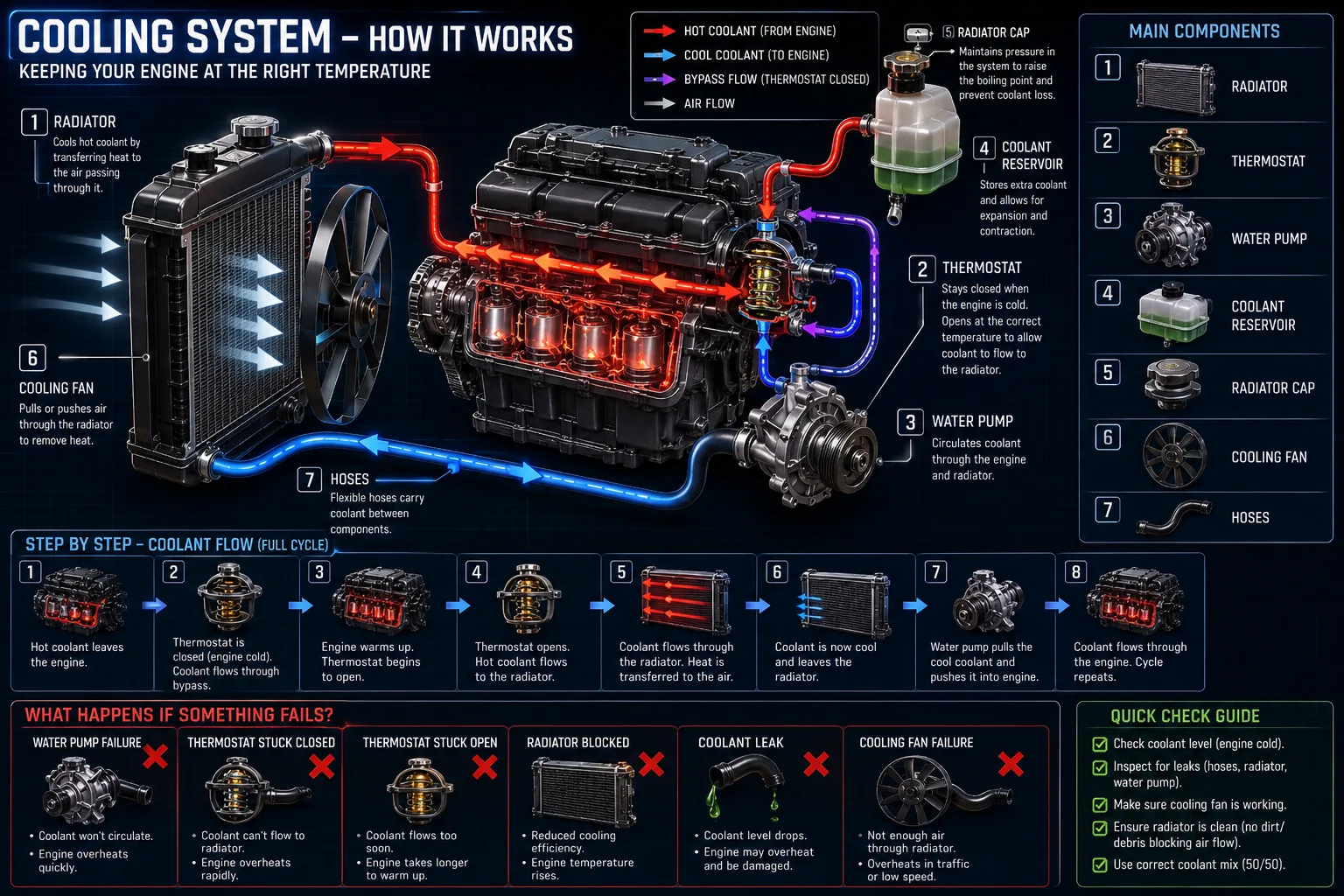
Your engine produces enormous amounts of heat — heat it needs to shed to survive. Coolant (antifreeze mixed with water) circulates around the engine absorbing that heat, then flows out to the radiator at the front to dump it into the air. A thermostat sits in the circuit and holds the coolant back until the engine reaches operating temperature, then opens to let it flow. Here's where your heater comes in: tucked behind the dashboard is a small secondary radiator called the heater matrix. Hot coolant from the engine passes through it, a blower fan pushes cabin air across the fins, and that's your warm air. A blend door (sometimes called a flap or temperature actuator, depending on the car) mixes hot matrix air with cold outside air to hit your chosen temperature. For it to work, you need: enough coolant in the system, a thermostat that actually closes and opens at the right temperature, a heater matrix that isn't blocked or leaking, and a blend door that moves when asked. Every single one of those things can go wrong independently. The cold-air symptom is where they all meet.
“Yes, your heater runs off waste engine heat; it is not a separate appliance you can whack on higher.”
Sound familiar?
So what's behind it?
What we do — at your door
We come to you — driveway, car park, work, or the layby where you've decided enough is enough. We start by checking coolant level and condition, then connect diagnostic equipment to read live coolant temperature data from the sensor and the ECU — because a gauge that reads 'normal' doesn't always tell the truth. We feel hose temperatures to identify whether the thermostat is opening correctly and whether hot coolant is reaching the heater matrix at all. If there's an airlock we bleed the system properly. If the thermostat is suspect we test it and replace it on-site — it's a straightforward job on most engines. We'll check the blend door actuator with live data and, where access allows, confirm matrix flow. If a heater matrix replacement is needed (a bigger job involving dashboard removal) we'll quote it clearly — and be honest if it's a workshop job rather than a driveway one.
What affects the price
Cost depends heavily on root cause. A coolant top-up and bleed is cheap labour and minimal materials. A thermostat is an inexpensive part and usually an hour or less to fit on most engines, though some are buried and take longer. A heater matrix itself is often a modest part price — the cost is the labour to reach it, which can run from a couple of hours on simple cars to a full-day dashboard-out job on others. Blend door actuators vary by make: some are accessible and quick, others involve significant trim removal. Coolant flush and refill adds materials cost but is often recommended if the old coolant is the reason the matrix blocked. We quote before we start — no surprises.
Random knowledge you didn't ask for
Questions you're probably asking
My temperature gauge reads normal but the heater still blows cold — how is that possible?
Airlocks. Your temperature gauge sensor sits in the engine block or head and reports coolant temperature there. An air bubble trapped in the heater matrix circuit means cold air circulates through the matrix while the engine itself is up to temperature. The gauge doesn't lie — it just can't see the airlock. We check hose temperatures and system flow to confirm it and bleed it out properly.
Could a cold-blowing heater mean my engine is actually overheating?
It can — and this is the combination you really don't want to ignore. A coolant leak severe enough to cause low coolant can produce a cold heater and an overheating engine at the same time. If your temperature gauge is climbing while your heater blows cold, stop driving, let it cool, and call us. Running an overheating engine does expensive damage fast.
My heater smells sweet and the windows keep misting — is that the heater matrix leaking?
Almost certainly yes. A leaking heater matrix seeps coolant into the cabin air — the sweet smell is ethylene glycol (antifreeze), and the oily film on the inside of your windscreen is coolant vapour depositing. It's not dangerous in small amounts but it will cause your coolant level to drop and it won't fix itself. Ignoring it risks the matrix failing further and potentially dumping coolant inside the car.
Can I just bypass the heater matrix rather than replace it?
You can — it involves joining the two heater hoses together to loop coolant past the matrix entirely. It's a legitimate short-term fix that stops a leaking matrix from draining your coolant, but it means no heater at all, ever. In the UK in winter that's a MOT advisory at best (your defroster may still work via the air-con) and a significant comfort issue. We'll tell you whether it's worth it versus proper replacement on your specific car.
Is a heater not working an MOT failure?
Not directly — the MOT doesn't specifically test heater output. However, if the rear screen demister or windscreen washers fail as a result of the underlying fault, those are testable items. More practically, a leaking heater matrix will eventually drop your coolant level enough to trigger an overheating issue, which can cause far more expensive MOT-relevant failures. Don't let it go too long.
Car Heater Blowing Cold Air — sorted at your door
Stop procrastinating. Get a transparent quote and we'll come to you.