Fan Only Works on Full Speed: The Blower Resistor Replacement Guide
Your car heater has four fan speeds, and — mysteriously — exactly one of them works. Almost certainly the fastest one. The rest are just decorative settings that produce a gentle sense of false hope. This is the heater blower resistor doing its death rattle, and it is — remarkably — one of the more affordable, less soul-destroying faults your car can develop. It is not a 'new car' situation. It is not an expensive garage drama. It is a relatively small component, usually tucked behind the glovebox or under the dashboard, doing a very specific job very badly. SOSCarFix comes to your home or workplace, confirms which component is actually at fault (the resistor, the motor, the control module, or the wiring), and sorts it out — without you having to sit in a waiting room reading a brochure for a car you cannot afford.
See our upfront pricingHeater fan only working on full blast — or certain speeds dead? Classic failed blower resistor. SOSCarFix fixes it at your door. Get a quote.
How it actually works
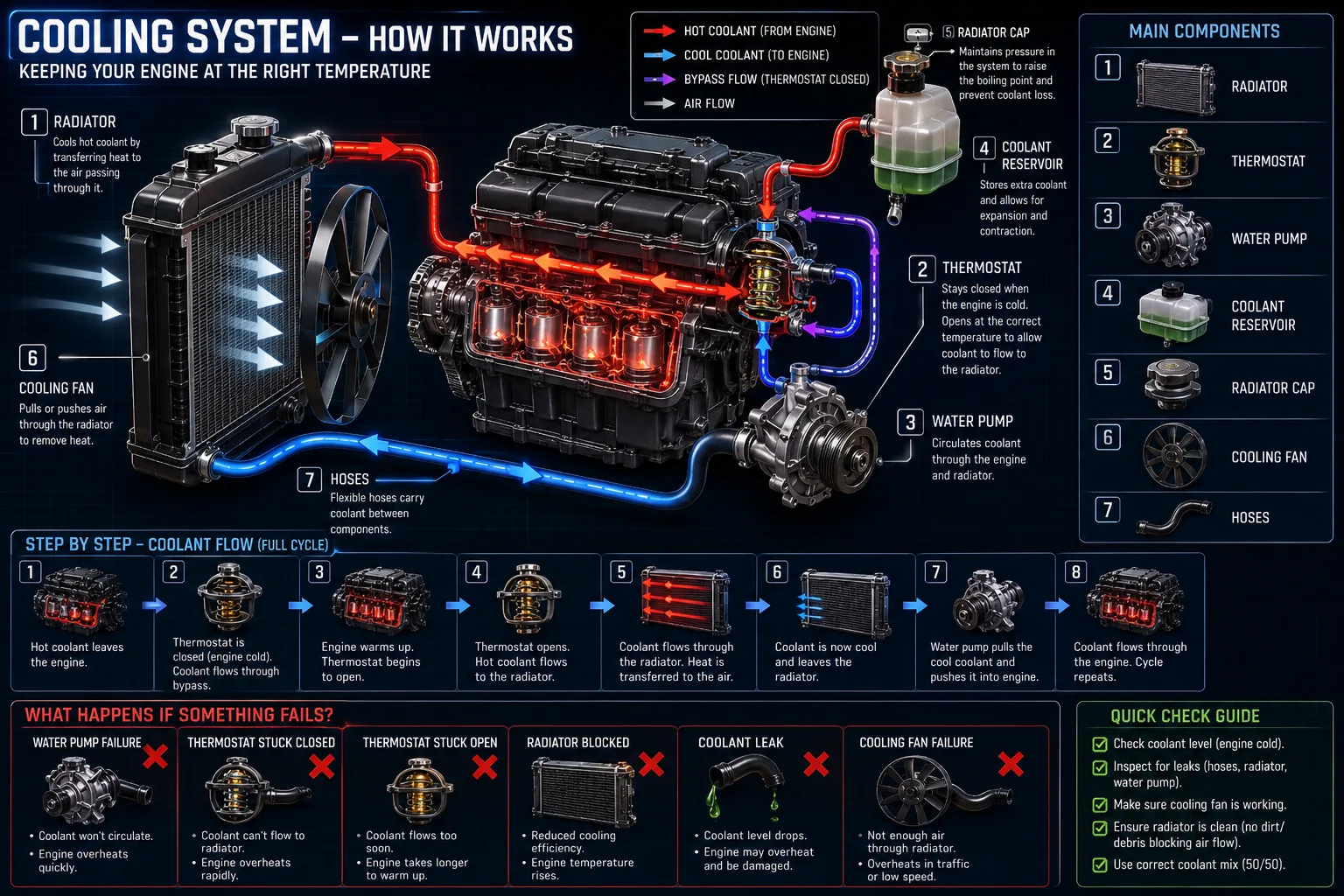
Your heater blower is a simple electric motor — it spins a fan that pushes air through the heater matrix and into the cabin. Speed control happens one of two ways, depending on your car's age and spec. On older and simpler systems, a blower resistor sits in the airflow path and drops the voltage reaching the motor. More voltage equals faster spin. The resistor limits how much reaches the motor on lower speeds. Because the resistor lives in the airflow and dissipates heat, it gets hot and cold thousands of times and eventually fails — usually starting with the lower-speed positions that pass most current through the highest-resistance part of the component. On higher-spec or newer vehicles, a more sophisticated blower motor control module (sometimes called a blower motor regulator or power module) replaces the simple resistor pack. This uses transistors to regulate current electronically. It is more capable and more expensive to replace. The fan motor itself can also be the culprit — if it has seized bearings or worn brushes, it draws excessive current, which then kills the resistor or module as a side effect. Replacing the resistor without checking the motor is the fast way to buy the same resistor twice.
“Your car heater has four fan speeds, and — mysteriously — exactly one of them works.”
Sound familiar?
So what's behind it?
What we do — at your door
We come to you — driveway, car park, or office space. First we confirm which component has actually failed: we test the motor's current draw (an over-drawing motor will kill a new resistor in months), check the fuse, inspect the connector for burning or corrosion, and verify the control panel is sending the right signal before quoting a part. If it is the resistor or control module, we replace it on site — the job typically involves dropping the glovebox or removing a lower dash panel to access the component in the heater plenum. A straightforward resistor swap usually takes under an hour. If the motor is also at fault, we will tell you clearly and quote both together — fixing the root cause rather than putting a new resistor in line to cook on an overloaded motor. No parts-cannon approach. No telling you the whole heater needs replacing when a £30 resistor will do.
What affects the price
Cost varies depending on whether your car uses a simple resistor pack or an electronic blower motor control module — the latter costs significantly more in parts. Labour is typically modest as access is usually straightforward on most common UK cars, though some models bury the component behind more trim. If the blower motor itself has seized or is drawing excessive current, that adds both parts and labour. Connector repair or wiring work adds time if the terminal has burned. OEM or quality aftermarket parts are recommended — cheap resistors fitted to an over-drawing motor will fail again quickly. Always worth confirming the motor is healthy before committing to a module replacement on higher-spec systems.
Random knowledge you didn't ask for
Questions you're probably asking
Why does my heater fan work on full speed but not the lower settings?
The blower resistor controls lower fan speeds by reducing the voltage reaching the motor. When it fails, those resistance stages burn out but the direct full-voltage circuit — bypassing the resistor entirely — survives. So speed 4 still works because the resistor is not involved at full blast. It is the electrical equivalent of only being able to shout, never speak at a normal volume.
Can I just leave it on full speed until the MOT?
Technically yes, though full blast at 6am in February impresses nobody and the underlying fault can worsen. A failing motor — if that is contributing to the resistor failure — can seize completely, leaving you with no fan at all. A burned connector will also not improve on its own. Fixing it while it is merely annoying is cheaper than fixing it once it has escalated.
Could it be the climate control panel rather than the resistor?
Unlikely but possible, especially if your car has automatic climate control rather than manual speed settings. A faulty control panel will produce similar symptoms, but the resistor and motor will test fine. This is exactly why we test the circuit rather than just fitting a part based on symptoms — fitting a new resistor into a healthy system because the panel is at fault would be an expensive non-fix.
Will you need to take the dashboard apart?
Usually no. On most common UK cars — Fiestas, Corsas, Focuses, Polos, 3 Series and the like — the resistor is accessed by dropping the glovebox or removing a small lower dash panel. It is a contained job, not a full interior strip. Some vehicles are less generous with access, which we would flag when quoting.
How do I know if the motor itself is also failing?
We test it. Signs include grinding or whirring from the fan even when it does run, the fan working but sounding laboured, or a resistor that has physically burned or melted at the connector rather than just failing cleanly. A motor drawing too much current leaves evidence. We check before fitting the new part so you are not back in the same situation six months later.
Fan Only Works on Full Speed — sorted at your door
Stop procrastinating. Get a transparent quote and we'll come to you.