White Smoke From Your Exhaust: The Difference Between Fine and Very Much Not Fine
White smoke from the exhaust is one of those symptoms that could mean absolutely nothing, or it could mean your engine is quietly destroying itself from the inside. The gap between those two outcomes is enormous, and the only way to know which you're dealing with is to actually look properly — not guess, not google, not ask a bloke at the pub. A brief puff of thin white vapour on a cold morning in January? That's condensation. Congratulations, your car works. Thick, sweet-smelling white clouds pouring out of the back on a warm Tuesday afternoon? That's coolant where coolant absolutely should not be, and your engine is trying to tell you something important before things get very, very expensive. Then there's diesel white smoke — a different beast entirely, usually injectors or glow plugs misbehaving. SOSCarFix comes to you, diagnoses it properly with real equipment, and tells you exactly what you're dealing with before quoting a penny.
See our upfront pricingWhite smoke from your exhaust? Could be harmless condensation, or it could be coolant burning in your engine. We come to you and tell you exactly which.
How it actually works
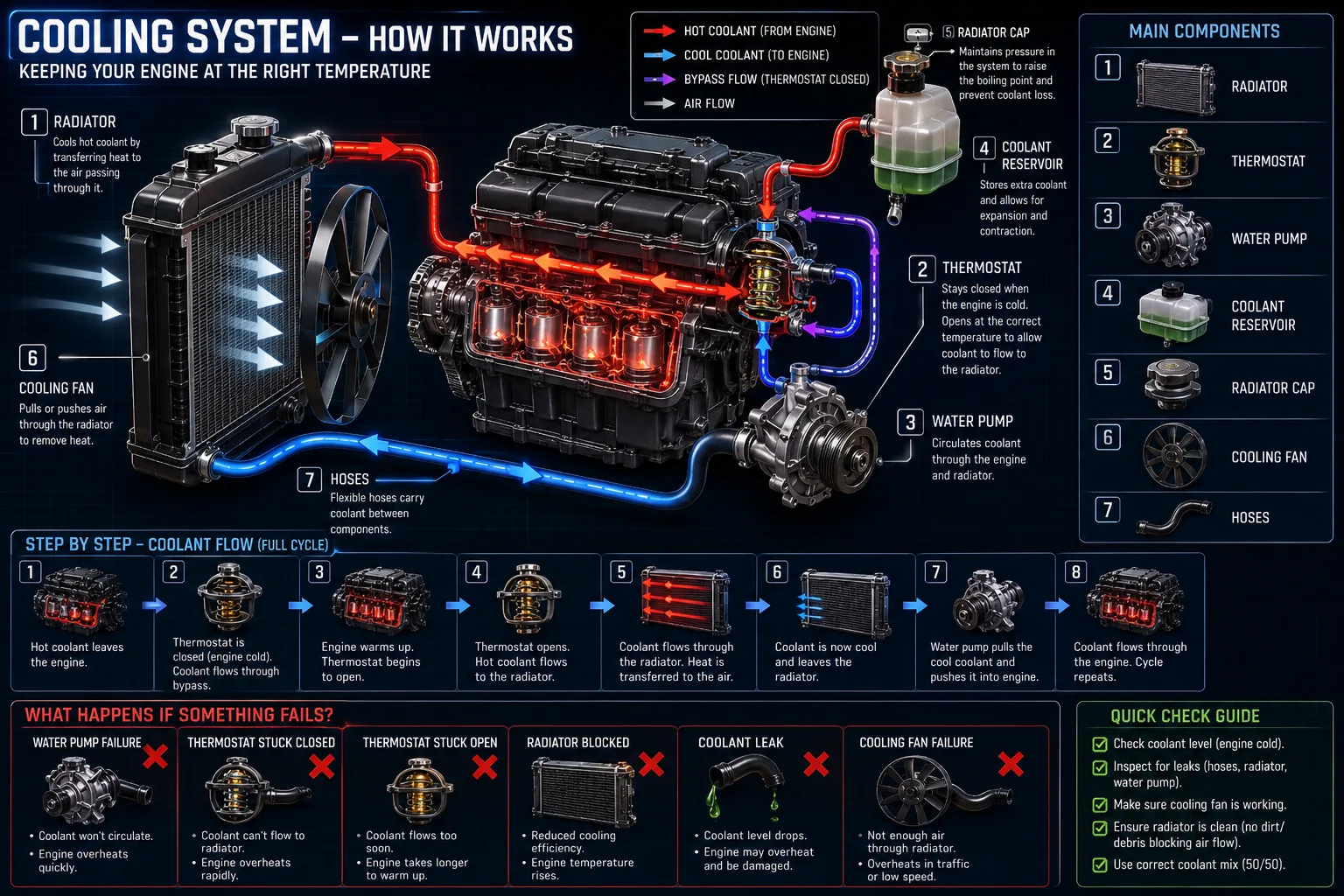
Your exhaust system is meant to expel one thing: the burnt byproducts of petrol or diesel combustion — carbon dioxide, water vapour, and trace gases. Under normal circumstances, the water vapour condenses in the cooler parts of the exhaust and exits as a thin white wisp before the system warms up. That's physics. That's fine. The problem starts when something other than fuel gets into the combustion chamber. Coolant is the classic culprit. Your engine relies on coolant passages running through the cylinder head and engine block to prevent it from melting itself. Those passages are separated from the combustion chambers by the head gasket — a thin but critically important seal. When that gasket fails, coolant can leak into the combustion chamber, get burned with the fuel, and exit as thick, sweet-smelling white smoke. At that point you're no longer burning fuel efficiently; you're slowly consuming your cooling system. On diesel engines, white or grey-white smoke at startup or under load points somewhere different: unburned fuel entering the exhaust, usually caused by injectors not atomising fuel correctly, or glow plugs failing to pre-heat the chamber so cold diesel can't combust properly. Same visual result, completely different diagnosis, completely different fix. Getting this wrong wastes money. Getting it right saves your engine.
“Then there's diesel white smoke — a different beast entirely, usually injectors or glow plugs misbehaving.”
Sound familiar?
So what's behind it?
What we do — at your door
We come to you — your driveway, your workplace, wherever the car is sitting — and we don't guess. The first thing we do is observe: is the smoke thick or thin, does it clear when warm, what does it smell like? Then we pull out the proper tools: a combustion gas analyser checks for exhaust gases in the coolant header tank (if it turns yellow, you've got combustion gases in there — head gasket territory). We scan the engine with a professional-grade OBD tool to read live coolant temperature data, fuelling corrections and any fault codes pointing to injector or misfiring issues. On diesels we check glow plug resistance and injector return rates. We look at the oil filler cap for the mayonnaise residue that no mechanic ever wants to find. Only when we have a proper picture of what's actually happening do we give you a diagnosis and a quote — not the other way around. No upselling phantom problems. Just what the car's actually telling us.
What affects the price
What you'll pay depends enormously on what the diagnosis uncovers. Glow plug replacement on a diesel is towards the more manageable end of the scale — labour and parts vary by how accessible they are, and some diesels hide them more than others. Injector cleaning or replacement is a step up again, and varies by vehicle and injector type. Head gasket replacement is the big one: it's labour-intensive, involves stripping significant parts of the top end, often requires a professional skim of the cylinder head to ensure it's perfectly flat, and on some engines the access alone adds hours. The parts cost is modest compared to the labour. Head gaskets caught early — before the engine has been allowed to overheat repeatedly — are far cheaper to deal with than those left until the head has warped. On certain engines known for head gasket issues (the 1.6 HDi, the K-series, older 2.0 TDCIs, some VAG 1.8Ts), catching it at the first sign of white smoke can be the difference between a repair and a write-off. We give you honest, itemised quotes on-site after diagnosis.
Random knowledge you didn't ask for
Questions you're probably asking
How do I tell if the white smoke is just condensation or something serious?
Condensation is thin, wispy and clears completely within a minute or two of the engine warming up. It's most common on cold mornings and disappears entirely once the exhaust system is up to temperature. If the smoke is thick, billowy, has a sweet or chemically smell, and persists long after the engine is warm — that's coolant burning, and that's a conversation we need to have. If you're not sure, note whether it clears by the end of your road. If it does, you're probably fine. If it's still going ten minutes in, it probably isn't.
Can I keep driving if I have a head gasket leak?
Briefly, and carefully, if the car isn't overheating. The moment the temperature gauge starts climbing, stop — an overheating engine with a compromised head gasket can destroy itself in minutes. A slow coolant-into-combustion leak might let you limp to a diagnosis appointment, but driving with a failing head gasket and ignoring it is how a repairable situation turns into a scrapyard visit. Keep an eye on the temperature gauge and coolant level, and book it in as soon as possible rather than hoping it gets better on its own. It won't.
My diesel only smokes at startup on cold mornings — is that a problem?
A small amount of white or grey smoke on a cold diesel start, clearing quickly, can be normal — it's partly unburned fuel until the engine reaches operating temperature. If it's heavy, takes a long time to clear, or comes with hard starting or misfiring, then glow plugs are the first suspect. Worn glow plugs are a relatively straightforward fix that gets ignored far too often. Running a diesel through winter on failing glow plugs puts extra strain on the starter motor, battery and injectors, so it's worth dealing with rather than waiting for a worse problem.
What is the combustion gas test and why does it matter?
It's a chemical test — a probe is held over the coolant header tank while the engine runs. The chemical in the tester changes colour (typically yellow) if it detects hydrocarbons, which means combustion gases are entering the cooling system through a breach in the head gasket. It's far more definitive than the mayonnaise on the oil cap test, which can have innocent explanations. It's the difference between 'we think it might be' and 'it is.' We use it as part of our on-site diagnosis before recommending any expensive repair.
Will fixing white smoke be covered by any warranty?
Depends entirely on the vehicle and any warranty you have in place. Most used car warranties cover head gasket failure as a named item, but always check the exclusions carefully — some have clauses about pre-existing conditions or require an approved repairer. If you've bought the car recently and the white smoke appeared within weeks, it's worth raising with the seller first under the Consumer Rights Act 2015, which gives you protections on second-hand cars sold by dealers. We can give you a written diagnosis report to support any warranty or consumer rights claim.
White Smoke From Your Exhaust — sorted at your door
Stop procrastinating. Get a transparent quote and we'll come to you.