That Whining Noise: It's Your Car Asking Nicely Before It Starts Screaming
A whine that climbs with your revs or road speed is one of those noises that starts quietly — barely worth mentioning — and then becomes impossible to ignore. The tricky bit is that at least five different components can produce virtually identical sounds, from a power steering pump that's running dry to a wheel bearing that's been slowly disintegrating since last winter. The noise itself tells you the pitch; it takes proper diagnosis to tell you the source. SOSCarFix comes to you — driveway, office car park, or wherever the car is trying to ruin your morning — listens, scans, tests and pinpoints the culprit before quoting a penny's worth of work.
See our upfront pricingCar whining when you put your foot down? Could be a bearing, belt, pump or diff. We diagnose on your driveway — no garage faff. Get a quote today.
How it actually works
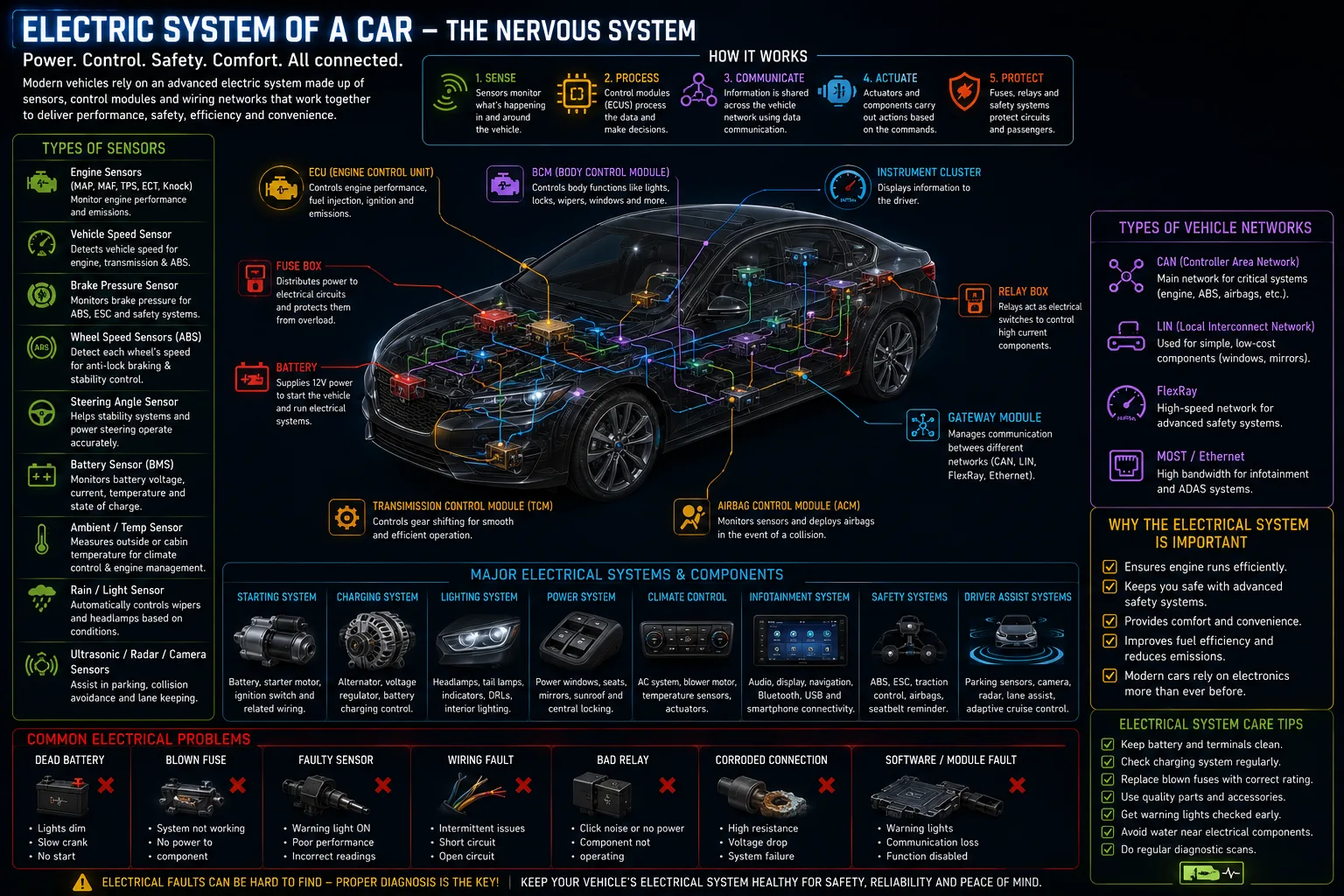
A rising whine tied to engine speed or road speed is a mechanical or hydraulic system under stress. The key diagnostic split is simple: does the noise change with engine RPM regardless of speed, or does it change with road speed regardless of gear? If it rises in pitch as you rev in neutral, you're likely looking at something driven by the engine — the alternator, power steering pump, or a supercharger. If it tracks road speed (and changes when you gently swerve left or right), you're almost certainly dealing with a wheel bearing or differential bearing. If it only screams on hard acceleration and then fades, a gearbox input bearing or transmission whine becomes more likely. Wheel bearings produce a distinctive drone or growl that shifts tone when you load the opposite wheel — so swaying gently at 40mph can tell you more than a stethoscope. Power steering pumps whine loudest at full lock or on cold starts when the fluid is thick. Alternator and belt tensioner bearings produce a steady whirr that follows engine speed exactly. Superchargers produce a high-pitched whine that's considered a feature by some people and maddening by everyone else. Each pattern points at a different part — which is why listening carefully before quoting is not optional.
“The noise itself tells you the pitch; it takes proper diagnosis to tell you the source.”
Sound familiar?
So what's behind it?
What we do — at your door
We come to you — wherever the car is — and start by listening properly. We'll take it for a short test drive to isolate whether the noise tracks revs or speed, and perform the classic slow-speed sway test to load and unload each wheel bearing in turn. Back on site, we use a stethoscope probe and an OBD scan tool to check for any related fault codes: a failed wheel bearing often shows up as an ABS speed sensor fault, and a struggling alternator will flag in the charging-system live data. We check power steering fluid level and condition, inspect the auxiliary belt and tensioner by hand and with a torch, and listen at each accessory with the engine running. Once we've narrowed it down, we give you a plain-English explanation of what we found, which component needs attention, and an honest quote — before anything comes apart. No guessing, no "let's replace the cheap bit and see." All of this happens on your driveway.
What affects the price
Costs vary widely depending on which component is at fault. A belt tensioner or idler pulley is relatively inexpensive in parts; a wheel bearing replacement involves removing the hub assembly and takes longer — rear bearings on some cars can be more involved than fronts. Power steering pump replacement varies by whether your car has hydraulic or electro-hydraulic steering and how accessible the pump is. Differential bearings on rear-wheel-drive and four-wheel-drive cars are a more involved job than a front-drive gearbox. Supercharger nose cone bearing kits exist for common units but the labour to access them varies by engine layout. We'll always tell you the full cost before starting, and diagnosis is a separate transparent charge — not bundled into a repair quote that pressures you to commit on the spot.
Random knowledge you didn't ask for
Questions you're probably asking
Can I keep driving with a whining wheel bearing?
It depends how far gone it is. Early-stage bearing noise is usually safe for a short while, but it will get worse and it won't get better. A bearing that's past the growling stage and into serious play or heat can fail without much further warning — at which point the wheel becomes structurally compromised. Get it checked rather than hoping for the best.
The whine only happens when I turn the wheel — is that definitely the power steering pump?
It's a strong indicator, yes. Hydraulic power steering pumps work hardest at full lock because that's when they're building maximum pressure against the rack. Low fluid, a worn pump or a partially blocked filter can all cause whine under those conditions. It's also worth checking that the fluid reservoir isn't just low — sometimes that's the entire fix.
My car makes a whirring noise but only when moving, not when revving in neutral. What does that narrow it down to?
That pattern points clearly at a speed-dependent source rather than an engine-speed source — so wheel bearings, differential bearings or a gearbox issue are the prime suspects. The fact it's absent in neutral with the clutch up rules out most engine-driven accessories. A sway test at around 40mph will quickly tell us which side the wheel bearing is on, if that's what it turns out to be.
Is a whining alternator dangerous to ignore?
The bearing whine itself won't stop the car immediately, but it's a warning that the alternator is on borrowed time. When the bearing fails completely the alternator can seize — which snaps or sheds the serpentine belt, at which point you lose power steering (on hydraulic-assist cars), the cooling fan belt if shared, and the charging system. That's a broken-down car rather than a noisy one.
How much does it cost to diagnose a whining noise?
Diagnostic charges vary depending on complexity and how much time it takes to isolate the source. We charge transparently for the diagnostic visit and quote the repair separately — you're never pressured to commit to a repair to 'get the diagnosis included.' We'd rather you know exactly what you're paying for at every stage.
That Whining Noise — sorted at your door
Stop procrastinating. Get a transparent quote and we'll come to you.