Rain & Light Sensor Fault: When Your Car Decides It Knows Better Than You — And Gets It Completely Wrong
There is something uniquely maddening about a rain sensor fault. Your wipers thunder away on a perfectly dry motorway, smearing nothing dramatically across a clean windscreen. Or — the other way — it starts drizzling in earnest and the wipers sit perfectly still while you squint through a blurring wash of rainwater, waiting for the car's brain to catch up. Either way, the system that was supposed to remove one minor task from your life has instead created a new, active annoyance every time you get behind the wheel. The rain and light sensor — that small, golf-ball-sized lump tucked behind your rear-view mirror and glued to the inside of the windscreen — is one of those features that works brilliantly until it doesn't, and when it goes wrong it takes your confidence in the whole auto-wiper and auto-headlight setup with it.
See our upfront pricingAuto wipers smearing in the dry? Headlights stuck on at noon? Your rain/light sensor has lost the plot. SOSCarFix diagnoses and sorts it at your door. Get a quote.
How it actually works
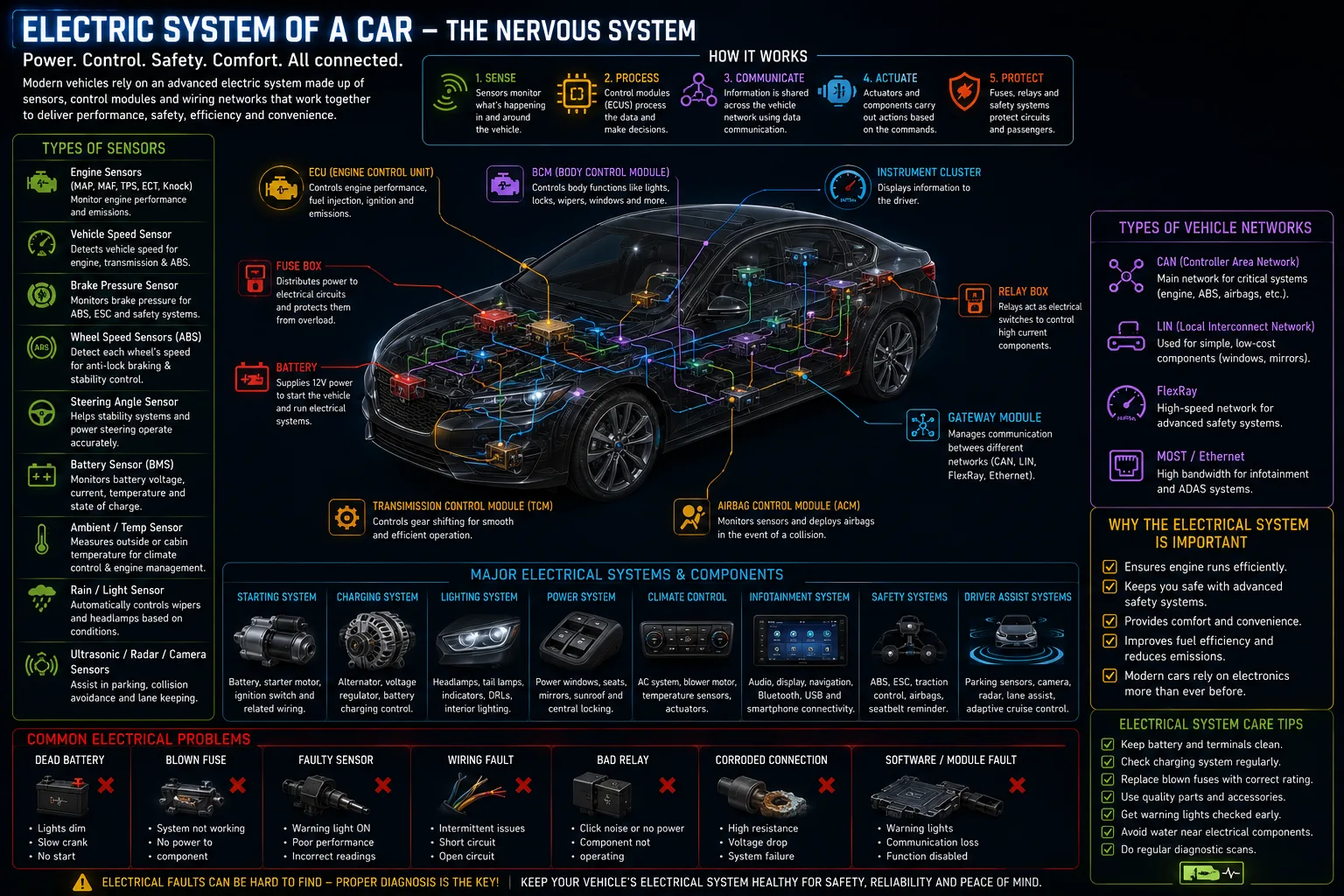
The rain/light sensor is an optical device bonded to the inside of the windscreen, usually clustered behind the rear-view mirror, via a dedicated optical gel pad. It uses infrared light: an LED shines a beam at an angle into the glass, and a photodetector measures how much bounces back. On a dry screen, most of that infrared returns cleanly. When water droplets land on the outer surface, they refract the beam — some of that light scatters outward instead of bouncing back, so the returning signal drops. The ECU (often the body control module, or BCM) interprets the size and rate of that signal drop as rainfall intensity and instructs the wiper motor to run at the appropriate speed. The same unit often houses a separate ambient light sensor — a photodiode measuring visible light levels — which tells the BCM when it's dark enough to activate the automatic headlights. On some cars a forward-facing camera is integrated into the same bracket and shares the same wiring, which is why calibration matters: the camera needs to know exactly where it's pointing after any windscreen-related disturbance. The BCM doesn't just flip wipers on or off; it calculates a sweep interval proportional to rain intensity, so a light drizzle gives you one leisurely wipe every few seconds while a downpour brings continuous operation. Clever in theory. Irritating when miscalibrated.
“Your wipers thunder away on a perfectly dry motorway, smearing nothing dramatically across a clean windscreen.”
Sound familiar?
So what's behind it?
What we do — at your door
We come to wherever your car is sitting — driveway, office car park, roadside — and start with a proper scan tool rather than a stab in the dark. Live data from the BCM tells us exactly what signal the rain/light sensor is outputting: we can see in real time whether it's reporting rain when it's bone dry, whether it's dead flat, or whether it's working perfectly and the fault sits somewhere else in the circuit. We check the gel pad condition and sensor bonding, inspect the wiring and connector for damage (especially important if a windscreen has been replaced recently), and test ambient light sensor output separately from the rain-detection function. If the sensor itself has failed we'll replace it and, crucially, ensure the optical coupling to the new glass is correct — fitting the sensor without a fresh gel pad is how you buy the same problem twice. Where ADAS camera calibration is required after a sensor or screen change, we'll tell you upfront and handle the booking. No guesswork, no part-swapping on hope.
What affects the price
Cost varies more than you'd expect for what looks like a small sensor. The sensor unit itself ranges from a modest aftermarket part on common cars to a substantially pricier OEM assembly on premium German and Scandinavian brands, where the rain sensor, light sensor, lane-keeping camera and heating elements are all built into one integrated bracket. Gel pad replacement is inexpensive but essential — skipping it is a false economy. Labour is generally modest since access is straightforward on most cars, though some models require mirror base removal or trim work. Where the BCM itself needs attention (software recalibration or coding after a sensor change) that adds time. If the fault follows a windscreen replacement and you're still in warranty with the glass fitter, push them first — this is a known windscreen-swap consequence and a reputable fitter should sort it. On cars with ADAS (lane assist, autonomous emergency braking) the camera calibration after any windscreen or sensor work is a separate, unavoidable cost that requires a calibration rig — we'll always be clear about that before you commit.
Random knowledge you didn't ask for
Questions you're probably asking
My windscreen was just replaced and now the auto wipers are all over the place — is this normal?
Infuriatingly, yes — it's a common post-replacement issue. The rain sensor has to be carefully debonded from the old glass and rebonded to the new one with a fresh optical gel pad, correctly aligned. If the gel pad is old, missing, or the sensor isn't centred on the bonding zone, the IR optics are reading distorted nonsense. A good windscreen fitter should prevent this, but if they haven't, get them back — or we can rectify it.
Can I just switch to manual wipers and ignore the rain sensor fault?
Technically yes — the wiper stalk still works in manual mode regardless. But on cars where the rain sensor module also handles the automatic headlights, ignoring the fault means potentially driving without lights in fading light without realising it. It's also worth noting that some ADAS systems share the same bracket: a sensor fault can accompany a lane-keeping or AEB camera fault, and those are not things you want quietly misbehaving.
Does fitting an aftermarket sensor void any warranty or cause issues?
On older or simpler cars an aftermarket sensor works fine. On newer vehicles where the sensor unit is integrated with a camera or advanced driver assistance systems, the BCM may refuse to communicate with a non-OEM part or require coding to accept it. We'll advise on whether aftermarket is sensible for your specific car before we quote anything.
Why do my wipers wipe once every time the car wakes up, even when it's dry?
That single 'wake-up wipe' is actually normal behaviour on many cars — the BCM runs one sweep on ignition as a self-test or to clear any overnight debris. It's only a fault if the auto wipers then continue running inappropriately or refuse to run in actual rain. If yours is doing a full performance every time you unlock, that's the sensor or BCM miscommunicating and worth investigating.
How do I know if my car has a combined rain/camera module that needs ADAS calibration?
Generally, if your car has lane departure warning, lane keep assist, or automatic emergency braking, it has a forward-facing camera — and on the majority of cars built in the last decade that camera lives in the same bracket as the rain sensor, right behind the mirror. Any rain sensor replacement or windscreen change on these cars should be followed by ADAS calibration. We check this at the diagnostic stage and flag it before any work starts.
Rain & Light Sensor Fault — sorted at your door
Stop procrastinating. Get a transparent quote and we'll come to you.