Parking Sensors Gone Rogue: When Your Car Thinks Everything Is a Wall
Parking sensors are, in principle, a wonderful invention — a polite electronic chorus that tells you there's a wall behind you before you discover it the expensive way. In practice, they spend a surprising portion of their lives either screaming at nothing (a wet bumper, a crisp packet, the general concept of rain), or going completely silent at the exact moment you need them. The beep that used to warn you about the bollard now just doesn't happen, because one sensor is cracked, corroded, or has had a quiet word with gravity and dropped out of the bumper entirely. SOSCarFix turns up at your driveway, car park or office, plugs in the diagnostic gear, and works out whether the problem is a dead sensor, a wiring fault, or the module that runs the whole show — then fixes the actual thing, rather than guessing and billing you anyway.
See our upfront pricingParking sensors beeping constantly, going silent, or screaming at fresh air? Mobile diagnosis and repair at your door across Kent and beyond. Get a quote.
How it actually works
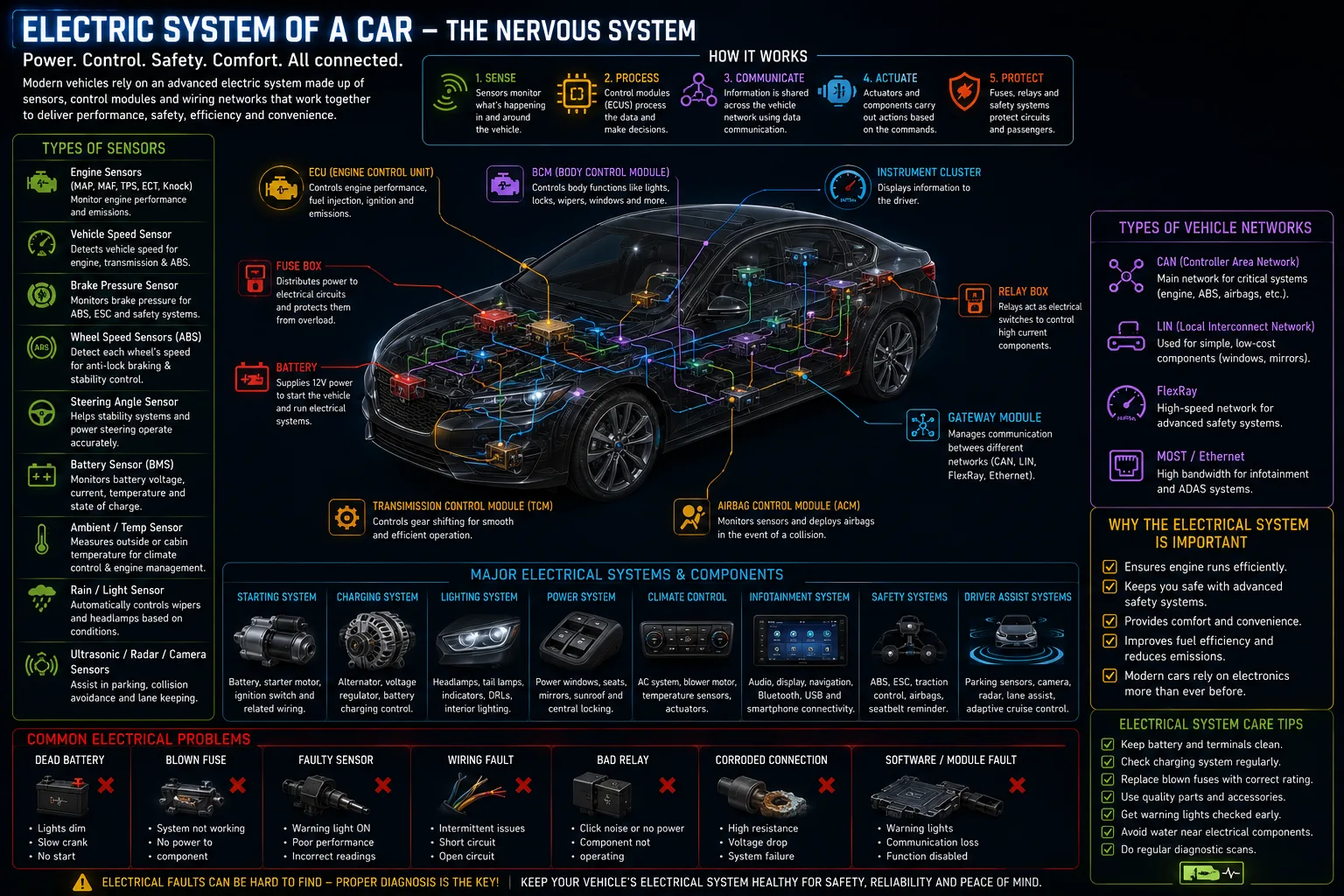
Parking sensors — formally called PDC (Park Distance Control) systems — work on ultrasound. Each sensor is a tiny transducer: it fires a pulse of sound at a frequency humans can't hear, then listens for the echo bouncing back off whatever is in range. The time between the outgoing pulse and the returning echo tells the control module how far away the obstacle is. The module then converts that distance into an audible tone (faster beeping = closer), a visual display on the dash or reversing camera screen, or both. Most cars have four sensors in the rear bumper; many modern ones have four in the front too, and some have side sensors for tight parallel parks. The sensors themselves sit in small circular housings pressed into the bumper. They're usually held in by a clip and connected via a small loom to the PDC control module, which can live almost anywhere on the car. The module talks to the rest of the car over the CAN bus, and many faults show up as stored diagnostic trouble codes as well as the obvious symptom. That module-level communication is also why a parking sensor fault can sometimes trip a warning light or interfere with the reversing camera display — they're all part of the same system. Water intrusion, physical damage, corroded connectors and broken wiring are the main reasons the whole thing stops working, and each has a different fix.
Sound familiar?
So what's behind it?
What we do — at your door
We arrive at wherever suits you — driveway, office car park, layby — with a diagnostic tool that talks to your PDC module properly, not just reads generic OBD codes. We pull the live sensor data to see exactly which sensors are responding, compare signal strengths, and check for stored faults in the module. From there we physically inspect every sensor, its housing and its wiring, test the earths, and work out what's actually failed rather than replacing the whole set on spec. If a sensor needs replacing, we source the correct part for your bumper colour where possible (yes, some sensors are painted to match), fit it cleanly, test the whole system, and reset any faults. If it's a module, wiring or connector job we handle that too — all at your car, with no need to drag it to a garage and wait three days for a booking slot that suits everyone except you.
What affects the price
What the job actually costs depends on a few honest variables that are worth knowing before you assume the worst. A single sensor replacement is usually the cheapest scenario — the sensor itself is often modestly priced, though some manufacturer-specific ones cost noticeably more than generic equivalents, and sensors that need painting to match the bumper add to the bill. Replacing the full set of four rear sensors costs more but is sometimes the sensible move if the car is older and two are already struggling. Wiring and connector faults take diagnostic time — chasing a break in a loom that routes through the boot floor is more labour than swapping a sensor. A PDC module replacement is the pricier end of the spectrum, and some modules need coding to the car after fitting, which adds a step. Aftermarket PDC kits for cars that didn't come with sensors from the factory are a different job entirely — a supply and fit from scratch. We quote per-job before starting, so there are no surprises when you come out to sign it off.
Random knowledge you didn't ask for
Questions you're probably asking
Can I drive without working parking sensors?
Legally, yes — parking sensors aren't an MOT item, and their absence won't fail your test. Practically, it depends entirely on your parking confidence. If you've managed without them before, you'll manage without them again. But if you've come to rely on them and one corner is silent, that's precisely when an unnoticed bollard will introduce itself to your bumper. Worth fixing sooner rather than later.
Why does my parking sensor beep constantly in the rain or after a car wash?
Because the sensors are doing their job correctly — they're detecting the water on the bumper face as a very close obstacle. It's one of the genuine design limitations of ultrasonic systems: they can't tell a water droplet from a wall. Persistent false alarms in dry weather, however, usually mean a cracked or contaminated sensor, a faulty module, or a wiring issue — that's a real fault worth diagnosing.
One sensor seems dead but the others work — do I need to replace the whole set?
Usually not. A single dead sensor is often just that sensor or its connector. We identify exactly which one has failed using live module data, then replace the faulty unit. Replacing a full set is occasionally worth considering on older cars where multiple sensors are borderline, but we'll tell you honestly whether it makes sense — not just quote you four when you need one.
Will a replacement sensor need painting to match my car?
Depends on your car and how much the finish matters to you. Some sensors come pre-painted in common colours, others arrive unpainted and need a colour-match coat. Functionally, paint has no effect as long as it's not too thick — manufacturer guidance is typically a maximum of 0.2mm or so. We'll advise on the options when we quote.
My sensors worked fine until someone reversed into my bumper and had it repaired. Now they're useless — why?
The most common culprit after a bodyshop repair is paint over the sensor faces — a common mistake when masking isn't done carefully. The ultrasound signal can't penetrate a full paint layer and the sensor reads blank. It's also possible a sensor was disturbed during the repair and the connector wasn't properly reseated. Both are fixable without touching the bumper repair itself.
Why are my parking sensors beeping constantly for no reason?
There's always a reason — the sensors just aren't telling you which one. Constant beeping in dry conditions with nothing near the bumper usually means one of three things: a cracked or contaminated sensor transmitting garbage data, a corroded connector feeding false signals to the PDC module, or the module itself has developed a fault and is panicking at ghosts. Occasionally a towball or cycle carrier sitting inside the detection zone is the culprit — mundane but common. A proper diagnostic scan pulls live sensor data and narrows it down in minutes rather than guessing.
Parking Sensors Gone Rogue — sorted at your door
Stop procrastinating. Get a transparent quote and we'll come to you.