EPC Warning Light: What It Means, Why Your VAG Car Is Sulking, and What To Do About It
The EPC light — Electronic Power Control — is the VAG Group's way of telling you that your car's engine management and throttle system have had a disagreement and someone's sulking. It appears on Volkswagen, Audi, Seat and Skoda models, and it's a catch-all: it can mean something minor like a dodgy brake-light switch (really), or something more serious like a failed throttle body or a pack of misfiring ignition coils. The light is almost always accompanied by a distinct loss of power — your car entering what the industry politely calls "limp mode" and what you will call "embarrassingly slow." SOSCarFix comes to you with proper diagnostic kit, reads the live data, finds the actual fault rather than guessing at parts, and gives you a straight quote before anything gets replaced.
See our upfront pricingEPC light on your VW, Audi, Seat or Skoda? Could be a £20 sensor or a £300 throttle body. We diagnose on your driveway — get a quote today.
How it actually works
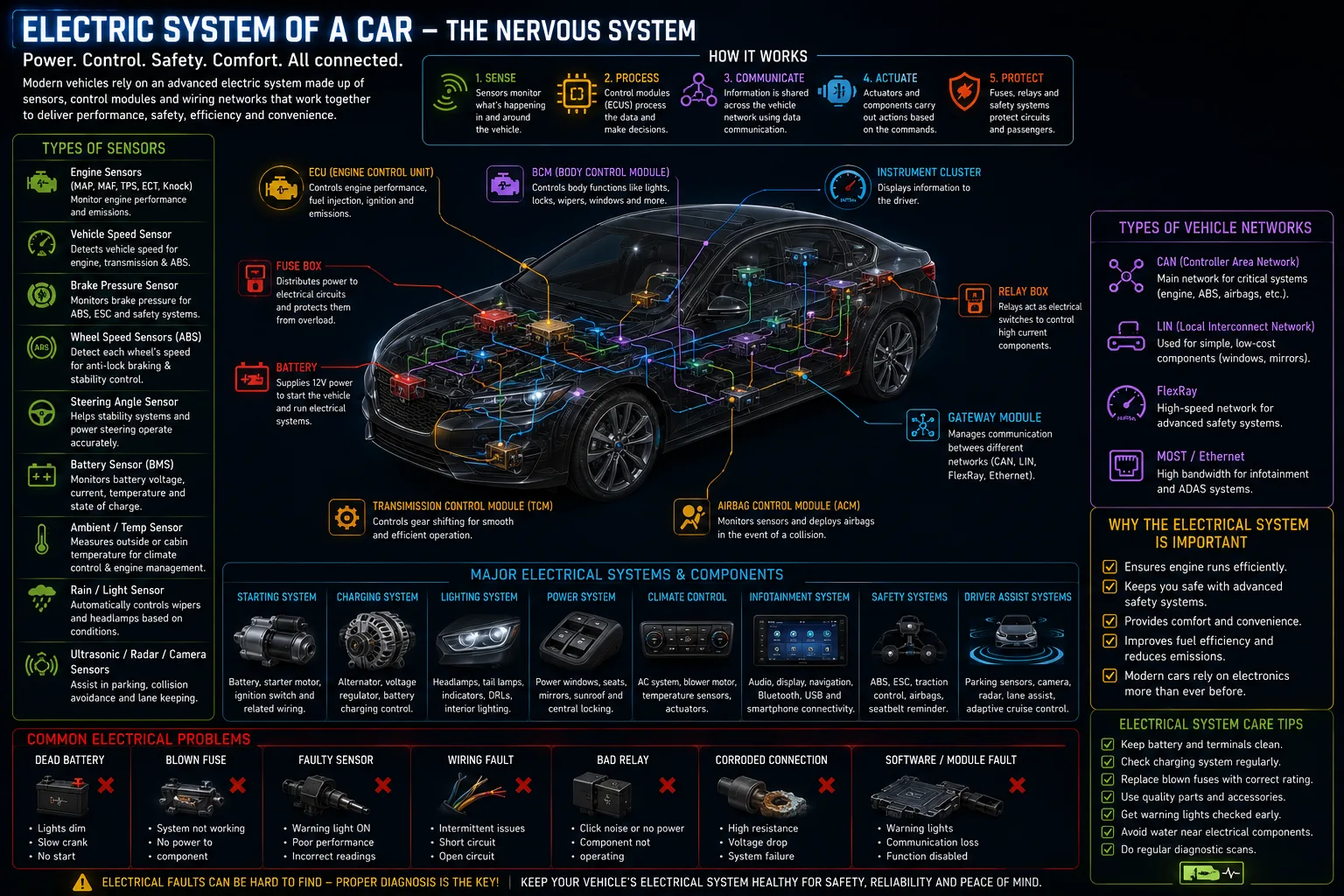
On VAG Group cars — that's VW, Audi, Seat, and Skoda — the throttle is controlled electronically rather than by a cable between your right foot and the engine. When you press the accelerator pedal, a sensor (the Accelerator Pedal Position sensor, or APP) sends an electrical signal to the Engine Control Unit (ECU). The ECU then tells the throttle body — a motorised valve in the intake — exactly how far to open. No mechanical link; it's all signals and instructions. The EPC system monitors this entire chain: the pedal sensors, the throttle body motor and its position sensors, the brake-light switch (because the ECU needs to know when you're braking to manage engine braking and cruise control), the ignition system, and various inputs from the ABS module and power-steering system. If any one of these falls outside its expected range, the ECU logs a fault, illuminates the EPC light (sometimes alongside the engine management or ABS light), and often drops the car into a protective limp mode — restricting engine output to prevent potential damage. It's a sensible system. It's also spectacularly unhelpful without a diagnostic scanner that can actually interrogate it properly.
Sound familiar?
So what's behind it?
What we do — at your door
We come to you — driveway, car park, wherever the car is stranded or parked up — with a professional-grade diagnostic scanner that speaks VAG's native diagnostic protocols (VCDS-compatible), not the generic £30 reader from a well-known German tool shop that misses half the fault codes. We pull every stored and pending fault code across all modules, then look at live sensor data: throttle body position versus commanded position, pedal sensor voltages (both channels), brake-light switch state, coil performance data, and ABS inputs. That live data is what tells us whether it's a £20 brake-light switch, a throttle body that needs an adaptation reset after cleaning, or a coil pack that's genuinely given up. We won't quote you a throttle body if a sensor is the actual fault — that's how mobile diagnostics should work.
What affects the price
What you actually pay depends entirely on what the fault turns out to be — and that's exactly why proper diagnosis matters before anyone orders parts. A brake-light switch is a modest repair; a complete throttle body replacement on a 2.0 TSI is considerably more, with genuine VAG or quality OEM parts costing more than budget pattern parts but lasting significantly longer. Coil packs vary by engine: replacing all four at once is often sensible if one has failed on a high-mileage car, since the others are typically the same age. Labour on a mobile job is straightforward because there's no ramp needed — throttle bodies, pedal sensors and brake-light switches are all accessible with basic hand tools. If the throttle body needs removing and cleaning rather than replacing, plus a throttle adaptation reset via the scanner, that's a meaningfully cheaper outcome than a straight swap.
Random knowledge you didn't ask for
Questions you're probably asking
Is it safe to drive with the EPC light on?
It depends on whether limp mode has kicked in. If the car is running normally with just the light on, you can drive cautiously to get it checked — but don't leave it long, because the underlying fault can worsen. If the car has gone into limp mode and feels gutless, drive it as little as possible: limp mode exists to protect the engine, and thrashing it in that state is exactly the kind of thing it's trying to prevent. Get it diagnosed promptly.
Can I reset the EPC light myself and will that fix it?
You can clear the code with an OBD reader, and if it was a one-off glitch or a fault that's been fixed, it won't come back. But if the underlying problem is still there — worn sensor, dirty throttle body, knackered coil — it will return, often immediately. Clearing codes without diagnosing first is just turning off a smoke alarm while the fire's still going. Not recommended.
Why does the EPC light sometimes come on with the ABS light?
Because the EPC system and ABS/ESP systems share data — specifically, wheel speed sensor signals that both the stability control and the engine management system rely on. A failing wheel speed sensor can trip both warning lights simultaneously. It looks alarming but it means the diagnostic scan needs to cover all modules, not just the engine ECU. We do this as standard.
My VW/Audi keeps going into limp mode and coming back out. What's going on?
Intermittent limp mode is a classic sign of a sensor or wiring fault that only shows up under certain conditions — a specific throttle position, engine temperature, or vibration that rattles a dodgy connector into contact then out again. These are genuinely the most frustrating faults to chase, which is exactly why live data matters: we can watch the sensor readings in real time and catch the dropout as it happens, rather than guessing.
Does the throttle body actually need replacing, or can it be cleaned?
Often it can be cleaned — carbon buildup on the valve plate and bore is the most common cause of throttle body faults on higher-mileage VAG engines, and a proper clean plus a throttle adaptation reset via the scanner fixes it. Replacement is needed when the internal motor or position sensors have failed, which the live data will show clearly. We'll tell you which applies before quoting for parts.
EPC Warning Light — sorted at your door
Stop procrastinating. Get a transparent quote and we'll come to you.