The Engine Management Light: One Symbol, Five Thousand Possible Explanations
Somewhere in a design meeting circa 1996, an engineer decided that the entire complexity of a modern combustion engine — hundreds of sensors, thousands of fault codes, emissions systems, fuel systems, ignition systems — should be communicated to the driver via a single amber icon of a tiny engine. No message. No context. Just: something is wrong. Maybe. Possibly. Could be serious. Could be nothing. Good luck. Welcome to the Engine Management Light (EML): the most unhelpfully vague warning in motoring history. It is technically an OBD (On-Board Diagnostics) fault flag, and it can be triggered by over 5,000 different fault codes. A loose fuel cap gets the same light as a failing catalytic converter. A dodgy sensor gets the same light as imminent engine damage. The car knows exactly what the problem is — it is storing a specific fault code right now — it just chose to tell you absolutely nothing useful about it. The real insult is what happens next. People buy a £15 Bluetooth dongle off the internet, plug it in, get a code number back, and Google it. Now they have gone from zero information to dangerously approximate information. A code tells you which system flagged a fault. A diagnosis tells you why. Those are very different things, and the gap between them is where expensive mistakes live. SOSCarFix comes to you — your driveway, your workplace, wherever the car is sitting with its little amber grudge — and we do an actual diagnosis. Not a code recitation. A diagnosis.
See our upfront pricingThat little amber engine gremlin could mean anything from a loose fuel cap to something your wallet won't enjoy. SOSCarFix comes to you, reads it properly, and actually tells you what's wrong.
How it actually works
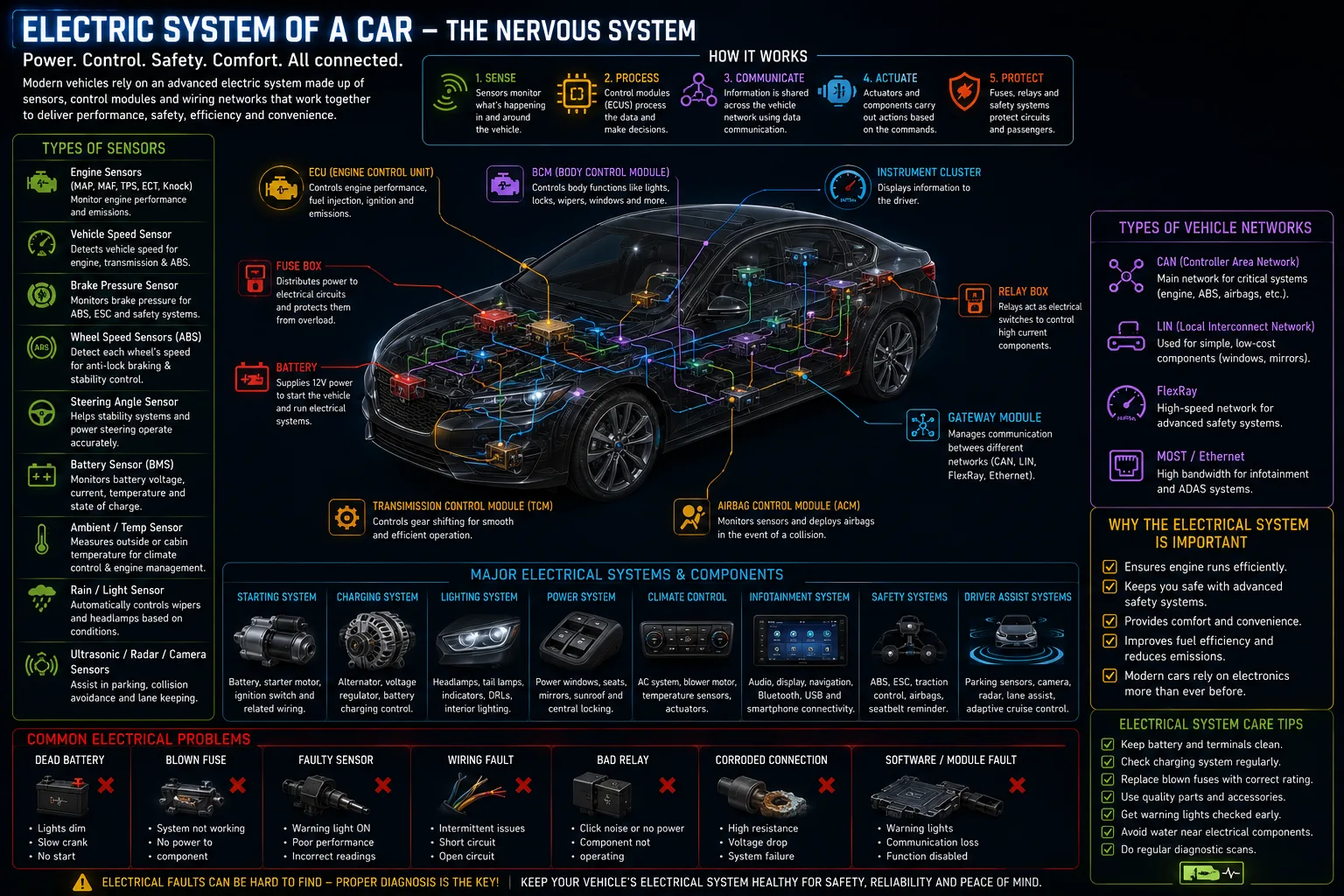
When something falls outside the parameters the ECU expects — a sensor reading that is too high, too low, or absent entirely — it logs a Diagnostic Trouble Code (DTC) and illuminates the EML. The code is filed under a structured system: P-codes for powertrain, B for body, C for chassis, U for network. Each one points to a system, not necessarily a component, and certainly not a root cause. This is where the cheap code reader earns its bad reputation. It reads P0420 and confidently announces "catalytic converter efficiency below threshold." Which sounds conclusive. But P0420 can mean a genuinely knackered cat, or a failing lambda sensor giving false readings, or an exhaust leak upstream, or a recent misfiring episode that temporarily poisoned the cat. Replacing the catalytic converter on the strength of a code alone is how people spend several hundred pounds solving the wrong problem. A proper diagnosis involves reading the live data streams — what the sensors are actually reporting in real time — cross-referencing freeze frame data (the snapshot the ECU took when it logged the fault), checking for multiple codes that paint a more complete picture, and applying the kind of mechanical reasoning that costs more than £15 and comes from actually knowing what you are doing. That is the bit we bring to your door.
“It is technically an OBD (On-Board Diagnostics) fault flag, and it can be triggered by over 5,000 different fault codes.”
Sound familiar?
So what's behind it?
What we do — at your door
We arrive at your location with professional-grade diagnostic equipment — not a consumer dongle, actual workshop-standard kit that reads live data, freeze-frame data, and all stored codes across every module. We do not just read the code back to you and shrug; we interpret it, cross-reference it with live sensor data, and tell you what is actually wrong and what it will take to fix it. If the fault is something we can address on the spot — a sensor replacement, an ignition coil, a fuel cap issue confirmed on-site — we can often sort it then and there. If it is something more involved, we give you a straight assessment: what it is, what caused it, what happens if it is left, and what fixing it involves. No garage jargon designed to obscure, no upselling parts you do not need. If the EML is on and your MOT is coming up, bear in mind that an illuminated EML is an automatic MOT failure under current DVSA guidelines — it has been since the 2018 reforms tightened the classification system. Clearing the code without fixing the underlying fault is not a plan; the ECU will log it again, usually within a few drive cycles. We fix the fault. The light goes off because the problem is gone, not because we pointed a reader at it and hit clear.
What affects the price
The cost of an EML fix spans an enormous range, and that is entirely because the EML spans an enormous range of problems. What drives the cost in any given case comes down to a few key factors. The component involved matters most — an oxygen sensor is a very different job to a catalytic converter, and a fuel cap is a very different job to either. Labour time varies significantly depending on how accessible the part is on your specific vehicle: the same sensor swap takes twenty minutes on one engine and ninety minutes on another. Your vehicle's make, model, and age affects parts pricing considerably — main dealer parts versus quality aftermarket parts is a genuine choice with real cost implications, and we will always discuss that with you honestly. Whether the fault is a standalone issue or a symptom of something upstream also matters: fixing the code without addressing the root cause means the fault returns. A misfire that damaged a catalytic converter, for example, needs the ignition fault sorted first or the new cat will suffer the same fate. We give bespoke quotes after diagnosis — because quoting before we know what is actually wrong is guesswork dressed up as a price.
Random knowledge you didn't ask for
Questions you're probably asking
Can I drive with the engine management light on?
A steady EML usually means you can drive carefully to get it diagnosed, but you should not ignore it or leave it indefinitely — some faults deteriorate and cause secondary damage. A flashing EML is a different matter entirely: that indicates an active misfire that can overheat and destroy a catalytic converter. If the light is flashing, ease off, avoid high revs, and get it looked at promptly.
Will the engine management light fail my MOT?
Yes, automatically. Under current DVSA guidelines introduced with the 2018 MOT reforms, an illuminated EML at the time of the test is a major defect and an immediate failure — regardless of whether the car runs perfectly and regardless of what the underlying fault actually is. The exemptions only apply to older vehicles: petrol cars registered before July 2003 and diesels before July 2008.
I read the code myself and it says P0420 — do I need a new catalytic converter?
Not necessarily, and not before a proper diagnosis. P0420 (catalyst system efficiency below threshold) is one of the most commonly misdiagnosed codes in existence. It can mean a genuinely degraded cat, but it can equally mean a failing downstream oxygen sensor giving false readings, an exhaust leak upstream of the sensor, or previous misfire damage. Replacing a catalytic converter on the strength of a code alone — without checking live sensor data and ruling out other causes — is a very expensive way to potentially fix the wrong thing.
The light came on, then went off by itself — is it sorted?
Almost certainly not. The ECU logs faults and illuminates the EML; if the fault is intermittent or the ECU hits its internal limit for logging that particular code, the light can extinguish itself. The stored fault code remains in the system's memory and the underlying issue is still present. It will return. If anything, an intermittent fault that clears and resets can be harder to diagnose than one that stays on — so getting it read while recent freeze-frame data is still stored is worthwhile.
The Engine Management Light — sorted at your door
Stop procrastinating. Get a transparent quote and we'll come to you.