DSG Clutch Pack Judder: When Your "Clever" Gearbox Turns Into a Comedy Prop
The DSG — dual-clutch, direct-shift, whatever your manufacturer decides to call it this week — was sold to you as the pinnacle of modern motoring. The smooth-shifting, fuel-efficient, best-of-both-worlds transmission that rendered the traditional manual gearbox obsolete. And then one morning you pull away from a junction and the car shudders like it's cold and embarrassed. Every kangaroo impression at under 10mph is your DSG's clutch packs telling you something is wrong — and the answer is not always a four-figure bill, but it will require someone who actually understands how these things work before quoting you anything. SOSCarFix comes to you, plugs in, listens, and diagnoses it properly on your driveway.
See our upfront pricingDSG judder pulling away? Shudder at low speed? Could be the clutch packs, could be the mechatronic. We diagnose before we quote. We come to you.
How it actually works
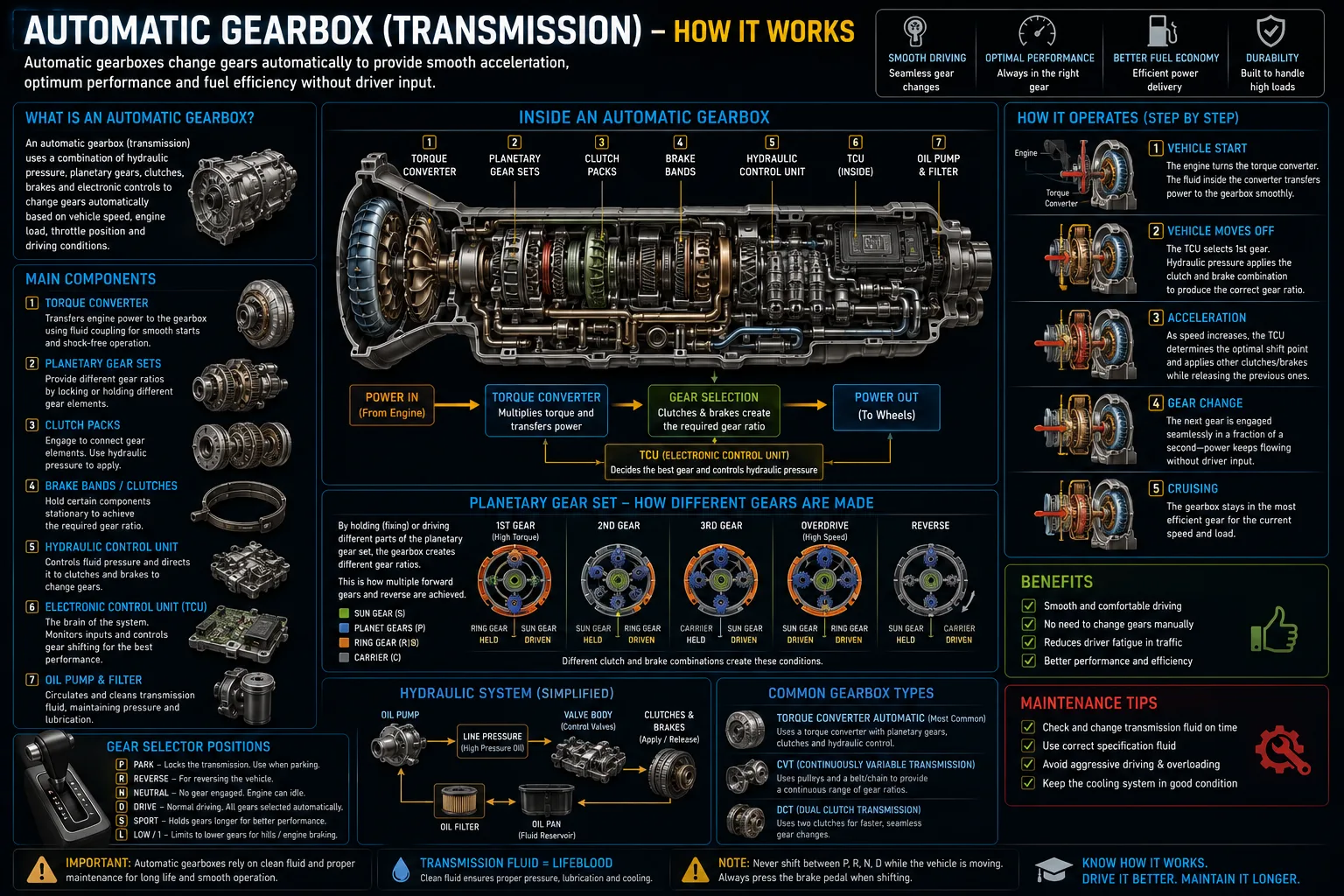
A DSG (or DCT — dual-clutch transmission) is essentially two gearboxes in one housing, each served by its own clutch. One clutch handles odd gears (1, 3, 5, 7), the other handles even gears (2, 4, 6) and reverse. While you're in second gear, the box has already pre-selected third — so the shift is almost instantaneous: one clutch releases as the other engages. Clever. Genuinely clever. The critical distinction for diagnosis is whether your DSG is dry or wet. Dry DSGs — common on smaller-engined VW Group cars (the DQ200 six-speed unit fitted to many Polos, Golf 1.4s, A3s) — use clutch packs without oil bathing them, like a conventional clutch. Wet DSGs — the DQ250 and the larger DQ500 unit found in heavier cars — run the clutch packs submerged in their own dedicated transmission fluid. Dry clutches are cheaper to produce and slightly more efficient; they are also more sensitive to wear and to incorrect adaptation values stored in the mechatronic unit (the combined hydraulic controller and electronic brain bolted to the side of the gearbox). When the clutch packs wear, become contaminated, or when the mechatronic unit loses its calibration or develops a fault, you get judder — that unmistakable shudder and hesitation at low speed. The box can't modulate clutch engagement smoothly, so it catches and releases in tiny, rapid pulses instead. Not pleasant. Not safe to ignore.
“The smooth-shifting, fuel-efficient, best-of-both-worlds transmission that rendered the traditional manual gearbox obsolete.”
Sound familiar?
So what's behind it?
What we do — at your door
We come to you — driveway, office car park, wherever the car lives. Before anything comes apart, we connect a professional OBD diagnostic tool (not a generic reader — a proper scan tool with live data access for your gearbox module) and read the stored fault codes alongside real-time mechatronic data: clutch engagement positions, adaptation values, clutch temperature, and any flagged deviations from factory calibration. Then we do the thing most workshops skip: we ask you to demonstrate the fault. A short, low-speed test drive with live data streaming tells us an enormous amount — whether the judder correlates with a specific clutch (odd or even gear set), whether adaptation values are wildly out of range, or whether the mechatronic is commanding normal pressure and the clutch simply isn't responding properly. From there, we can distinguish between: a software/adaptation issue (resolved without removing the gearbox), a fluid-related problem (DSG fluid and filter service), a mechatronic unit fault (the unit can sometimes be replaced independently), or genuine clutch pack wear requiring a full gearbox-out clutch pack replacement. We quote each option honestly, separately, and in plain English before we touch anything.
What affects the price
DSG repairs span a wide range and the difference between a £150 and a £1,200+ job is the actual diagnosis — so that step is non-negotiable. Cost factors include: whether it's a dry or wet DSG (dry clutch pack replacement is a larger, more involved job; wet systems are sometimes more accessible); whether the mechatronic unit needs replacement or just recalibration (mechatronic units vary considerably in price depending on whether a genuine, remanufactured or used unit is fitted); whether a software update or adaptation reset resolves the problem entirely (considerably cheaper than any mechanical repair); the vehicle make and model (VW Group DQ200 parts are widely available; some other platforms are much more expensive to source); and whether fluid and filter replacement alone is sufficient (the cheapest intervention, appropriate when fluid is the primary cause). Always get the diagnosis first — guessing at DSG faults and replacing parts without data is how bills escalate unnecessarily.
Random knowledge you didn't ask for
Questions you're probably asking
Can a DSG fluid and filter change fix the judder, or is that just wishful thinking?
Sometimes it genuinely is the fix — particularly on wet DSGs where the fluid has degraded or was incorrectly specified. Fresh fluid can restore clutch pack friction characteristics and resolve low-speed shudder. It is also the cheapest first step if diagnosis confirms the fluid is the likely cause. On dry DSGs it won't help, because those clutches don't run in fluid. That's why diagnosis comes first — to find out which type you have and what the actual problem is.
Is DSG judder dangerous, or just annoying?
Mostly annoying in early stages, but it can develop. Severe judder in heavy traffic or on hill starts creates a real risk of unexpected lurching or loss of control during slow manoeuvres. A gearbox that drops into limp-home mode unexpectedly on a dual carriageway is a different kind of problem. Don't leave it once it's progressed to warning lights or intermittent loss of drive.
My dealer says I need a new mechatronic unit. Is that always true?
Not always. Mechatronic faults can sometimes be resolved with a recalibration or software update rather than replacement, and used or remanufactured units are a legitimate alternative to main-dealer prices on new units. That said, mechatronics do fail mechanically and a confirmed fault code pointing at the unit, with normal clutch live data, does usually mean the mechatronic is at fault. The key is having the data to support the recommendation before spending the money.
Can SOSCarFix do the adaptation reset or software update at my home?
For software updates (which require manufacturer-level tooling like ODIS for VW Group), we carry professional diagnostic equipment. Adaptation resets — which recalibrate the gearbox's learned clutch positions — can be performed on-site with a suitable scan tool. We'll confirm what's possible for your specific vehicle and software version before booking.
How long does a DSG clutch pack replacement take?
A full clutch pack replacement requires removing the gearbox, and on most platforms that is a half-day to full-day job. A mechatronic unit swap with adaptation and fluid change is quicker — typically a few hours. A fluid and filter service alone is usually under an hour. We give you a realistic time estimate when we quote, and we'll only recommend the job the diagnosis actually supports.
DSG Clutch Pack Judder — sorted at your door
Stop procrastinating. Get a transparent quote and we'll come to you.