Your Car Keeps Jumping Out of Gear: The Uninvited Neutral Nobody Asked For
There you are, cruising along in third gear, and then — nothing. The engine revs, the car slows, and you're suddenly in neutral despite having done absolutely nothing to deserve it. Your gearbox has just ejected your chosen gear like a bouncer removing someone who didn't quite meet dress code. This is not normal. It is not something that "sorts itself out." It is a gearbox fault, and left to its own devices it will get progressively worse until your car decides to pop out of gear at a roundabout, on a hill, or at exactly the worst possible moment. SOSCarFix comes to you — driveway, car park, or wherever this nonsense has stranded you — diagnoses the actual cause on-site, and gives you a straight answer before touching anything.
See our upfront pricingYour car's playing a delightful game of spontaneous neutral. We diagnose gearbox faults on your driveway. Get a quote — no garage faff.
How it actually works
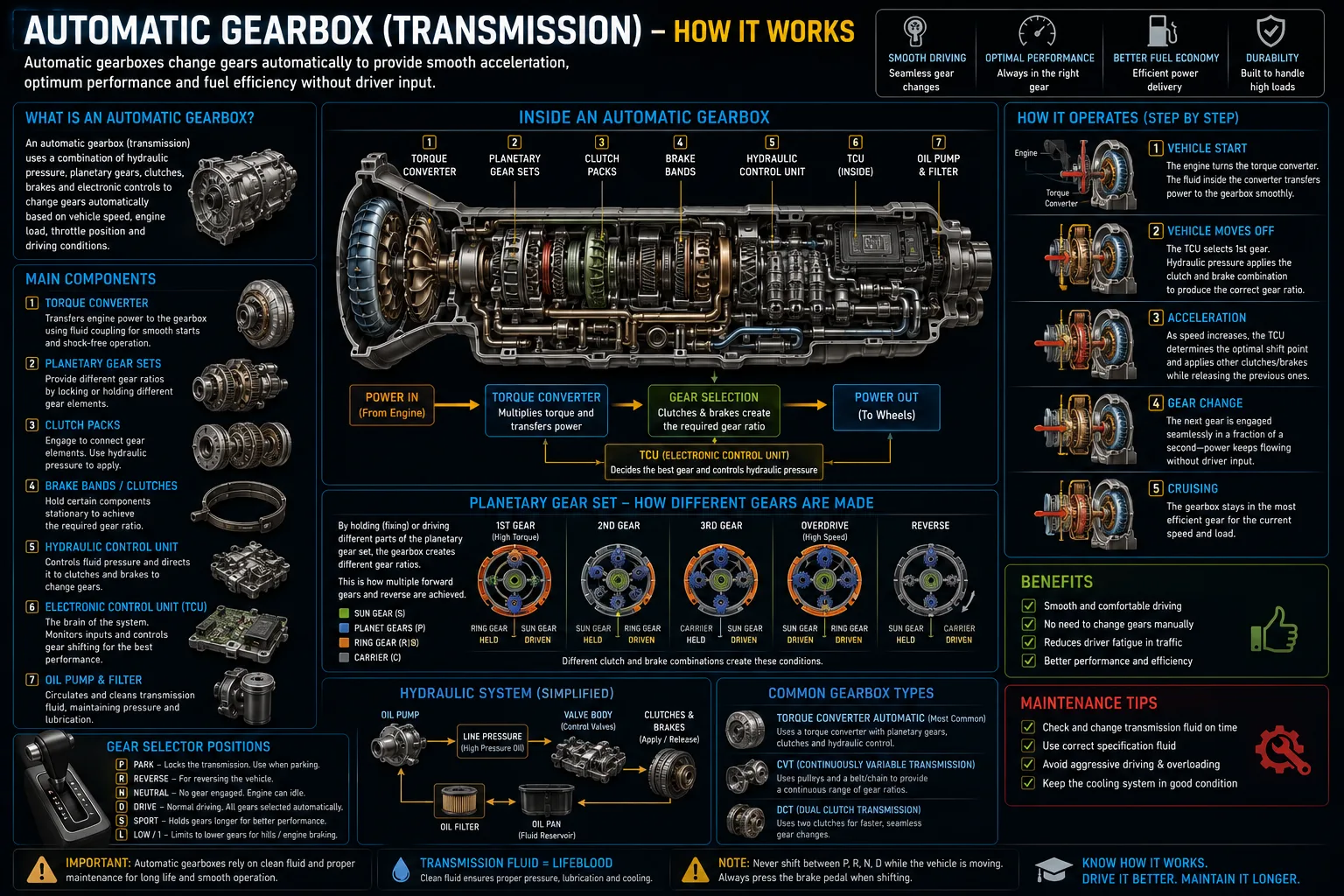
A manual gearbox is a cleverly engineered stack of spinning shafts, gears and synchroniser rings (synchros) all bathed in gear oil. When you select a gear, a selector fork moves a synchro hub to lock that gear to the output shaft — that physical connection is what transmits drive to your wheels. Synchros are also responsible for the smooth "blending" of speeds between shaft and gear as you change; they're the reason you can shift without crashing the box. Two things keep a selected gear actually selected: the detent mechanism (a spring-loaded ball or plunger that clicks into a groove and holds the selector in position) and the synchro hub staying engaged under load. When either of those is compromised — worn detent spring, worn selector fork, worn gear teeth — the rotating forces inside the box under drive or overrun can literally push the selector out of gear. Your gearbox essentially votes itself back to neutral. Gear oil is the unsung hero here. It lubricates every moving surface, helps the synchros do their job and keeps operating temperatures sane. When it's old, contaminated or just plain low, wear accelerates dramatically. Sometimes a gearbox that jumps out of one specific gear (notorious culprits: second and third) has been doing so quietly for months before it becomes impossible to ignore.
“The engine revs, the car slows, and you're suddenly in neutral despite having done absolutely nothing to deserve it.”
Sound familiar?
So what's behind it?
What we do — at your door
We come to you — your driveway, your workplace, or wherever the car currently resides in its awkward half-fixed state. Before recommending anything expensive, we work through the diagnosis properly: we check the external linkage and selector cables for play and wear, inspect the gearbox oil level and condition (dark, metallic or low oil tells its own story), check the gearbox and engine mounts for movement, and road-test to confirm exactly which gear is affected and under what conditions — load, overrun or both. If the external bits check out, we connect scan tools to check for any transmission or drivetrain fault codes, and use the symptom pattern (which gear, when, cold or warm) to narrow down whether this is a linkage job, a mount job, an oil-and-hope job, or an internal box strip. We give you a clear, itemised quote before any work starts. Some faults — linkage, mounts, oil changes — we fix on-site. Internal synchromesh work means the box needs to come out; we'll tell you that honestly and won't dress it up.
What affects the price
Cost varies enormously depending on root cause. Gearbox mount replacement is a relatively accessible job. Selector cable or linkage repairs are likewise moderate. A gearbox oil change is the cheapest intervention and worth doing first if the oil is in a poor state. Internal synchro or selector fork work requires removing the gearbox — labour-intensive — and the cost depends on whether a rebuilt/reconditioned unit or a strip-and-repair is the right route for your car's age and value. We don't invent prices; we assess first, quote honestly, and let you decide. Parts and labour vary by vehicle make, model, and which gear is affected.
Random knowledge you didn't ask for
Questions you're probably asking
Is it safe to keep driving if my car jumps out of gear?
Short answer: no, not really. A car that pops out of gear unexpectedly can cause you to suddenly lose drive at motorway speed, on a hill, or mid-junction — none of which are situations that benefit from surprise neutral. It also tends to get worse, not better. Get it diagnosed soon rather than hoping it'll settle down, because it won't.
Why does it only pop out of second gear and not the others?
Second gear takes the most punishment in everyday UK driving — it's the gear you're in constantly in town traffic, pulling away, accelerating out of junctions. The synchromesh and selector fork for second wear faster than other gears as a result. It's the gearbox equivalent of the middle seat on a sofa: most used, first to go.
Could it just be the gear linkage and not the actual gearbox internals?
Yes, and we always check this first because it's cheaper and fixable on-site. Worn linkage bushes, stretched cables or a loose selector rod can all cause a gear to feel vague or pop out without there being anything wrong inside the box itself. A proper diagnosis separates the external from the internal — don't let anyone quote you a gearbox rebuild before they've checked the obvious stuff.
What's the difference between a synchro fault and worn engagement dogs?
Synchro rings smooth the speed-matching as you select a gear; when they wear, you get crunching on engagement and the gear can pop out under load. Engagement dogs are the actual locking teeth that hold the gear in mesh — when those round off, the gear spins out even under sustained drive. Synchro issues are more common; worn dogs are more serious and usually mean a rebuild or replacement unit.
Can a gearbox oil change fix a jumping gear?
Sometimes — if the fault is early-stage and caused or accelerated by degraded lubricant, fresh oil can reduce the immediate symptoms. It's not a magic fix for worn internals, but it's a sensible first intervention on a box with unknown service history or visibly poor oil. We'll tell you honestly whether it's likely to help or whether the wear is already beyond what fresh oil can rescue.
Your Car Keeps Jumping Out of Gear — sorted at your door
Stop procrastinating. Get a transparent quote and we'll come to you.