Your Diesel Is Choking: The Fuel Filter Change You've Been Putting Off
The diesel fuel filter is quietly one of the most neglected service items on the calendar — right up until it isn't quiet anymore, and your engine is stumbling down the dual carriageway like it's had a big lunch. It filters every single millilitre of fuel before it reaches your injectors, catching dirt, rust particles, wax crystals and the genuine filth that lurks inside fuel tanks and bulk diesel deliveries. Block it enough and your engine starves for fuel at exactly the wrong moment — usually overtaking. SOSCarFix comes to you, swaps the filter, primes and bleeds the fuel system so your engine fires cleanly, and checks for the water contamination that often goes hand-in-hand with a blocked filter. No garage, no faff, no waiting room staring at a coffee machine that charges £1.80 for tepid brown water.
See our upfront pricingYour diesel's hesitating, cutting out, or throwing a water-in-fuel warning? Blocked filter. SOSCarFix comes to you, changes it, bleeds it, done. Get a quote.
How it actually works
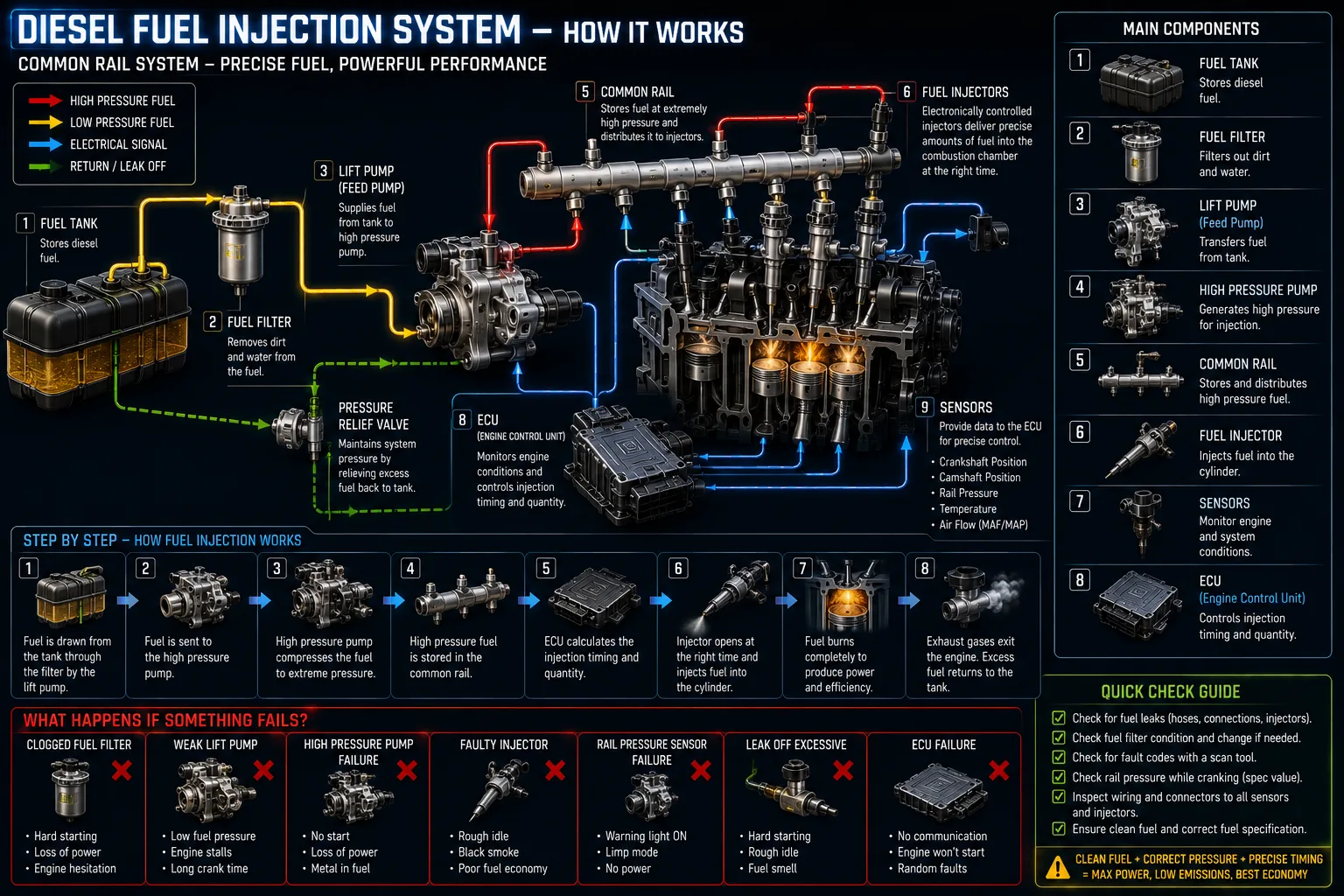
Diesel engines run at extremely high fuel pressures — modern common rail systems typically operate between 1,500 and 2,500 bar. At those pressures, even a tiny particle of dirt becomes a precision-machined injector's worst nightmare. The fuel filter sits between the tank and the high-pressure fuel pump, and its job is to catch anything that shouldn't be in there: dirt from the tank, rust flakes from ageing fuel lines, biological growth from sitting fuel, and water — which diesel, being hygroscopic, attracts from the air over time. Most diesel filters have a built-in water separator — a bowl at the base where water (heavier than diesel) drops out and collects until it trips a sensor or is manually drained. When the filter itself gets clogged, fuel flow restricts. At idle the engine might manage, but demand more fuel (accelerating, hills, a loaded van) and it simply can't keep up. The fuel pump then has to work harder to pull through a blocked element, which shortens its life considerably. Manufacturer service intervals for diesel fuel filters typically range from every 20,000 to 40,000 miles depending on the vehicle, though some manufacturers — optimistically — quote longer. Budget diesel from certain forecourts and high-mileage use means change it sooner. After replacement, the system must be primed and bled of air to avoid a hard-start or no-start after the job.
“Block it enough and your engine starves for fuel at exactly the wrong moment — usually overtaking.”
Sound familiar?
So what's behind it?
What we do — at your door
We come to you — your driveway, workplace car park, or the layby you've rolled to a stop in — with the correct filter for your vehicle already on the van. Before we start, we check for fault codes with a scan tool to confirm the fuel system is the culprit and rule out anything else contributing (a fuel pressure sensor code alongside a blocked filter tells a fuller story than either alone). We replace the filter, drain any accumulated water from the separator, prime the new filter with fuel, and bleed air from the system so it starts cleanly rather than cranking itself breathless. We then run the engine up through its rev range to confirm fuel delivery is restored and no warning lights return. If there are signs of diesel bug or heavy contamination, we'll advise on a fuel system treatment and whether the issue is likely to return quickly. Clear findings, honest assessment, no upselling parts that aren't needed.
What affects the price
Filter cost varies considerably by vehicle — a filter for a common Ford Transit or Vauxhall Astra diesel is a different proposition to one for a BMW 5 Series or Land Rover that integrates into a housing assembly. Vehicles where the filter is buried inside the engine bay, behind undertray panels or integrated with the fuel pump housing take longer to access and bleed, which affects labour. If the water separator bowl or drain plug is seized (very common on high-mileage vehicles), that adds time. Vehicles with self-priming systems are faster to bleed than older diesels that need manual priming. If a diesel bug treatment or full fuel system flush is needed on top, that's an additional cost worth discussing before the job starts. We quote specifically for your vehicle — no generic flat rates that turn out to include surprises.
Random knowledge you didn't ask for
Questions you're probably asking
How often should I change the diesel fuel filter?
Most manufacturers recommend somewhere between 20,000 and 40,000 miles, but that's under ideal conditions with clean fuel. If you use your vehicle for short trips, run it low on fuel regularly, or buy from varied sources, err earlier. High-mileage vans and work vehicles doing dirty environments are best done annually. Check your service book — it's in there, quietly being ignored.
Can I drive with a blocked fuel filter?
Short answer: you're already doing it, and it's getting worse. A partially blocked filter won't immediately strand you, but it's working the fuel pump harder than it should be, and eventually it will restrict flow enough to cause a breakdown — usually at the most inconvenient moment. It's also progressively shortening the life of your high-pressure pump, which costs considerably more to replace than a filter.
Why is my diesel hard to start after a fuel filter change?
Air gets into the fuel lines when the filter is removed, and diesel engines don't tolerate air in the fuel system — they need to prime the new filter and purge that air before the engine will fire properly. A good filter change includes priming and bleeding the system correctly. If yours was done and it's still cranking endlessly, air in the system is the most likely culprit.
What is the water-in-fuel warning light and how urgent is it?
It indicates water has accumulated in the fuel filter's water separator to the point where it's tripping the sensor. Water in the fuel system is genuinely damaging — it causes corrosion in the high-pressure pump and injectors, and it doesn't compress the way fuel does, which can cause injector damage at operating pressures. Don't ignore it and don't keep running the car. At minimum, the water separator needs draining; at worst, the filter needs a full change.
What is diesel bug and should I be worried?
Diesel bug is a genuine microbial contamination — bacteria and fungi that grow at the interface between diesel and water inside fuel tanks. They produce a dark, tar-like sludge that blocks filters aggressively. It's most common in vehicles that sit unused for weeks at a time, boats, and agricultural equipment. If your filter keeps blocking quickly or the drained fuel looks brown and murky, it's worth treating the tank with a biocide before fitting a new filter.
Your Diesel Is Choking — sorted at your door
Stop procrastinating. Get a transparent quote and we'll come to you.