Car Cutting Out While Driving: When Your Engine Decides It's Had Enough Mid-Journey
Nothing focusses the mind quite like your engine going completely silent at 60mph on a dual carriageway. No warning, no drama, no polite dashboard announcement — one moment you're driving, the next you're coasting, watching the power steering stiffen and the brakes go heavy while you perform a very unplanned deceleration exercise. Sometimes it restarts. Sometimes it doesn't. Sometimes it does it twice and then behaves perfectly for three weeks, leaving you genuinely wondering whether you imagined the whole thing. You did not imagine it. The engine cutting out while driving is one of the more alarming fault presentations a car can produce, and also one of the more frustrating to diagnose — because the culprit could be a crank sensor lying about whether the engine is turning, a fuel pump quietly giving up, an ignition system that's lost the will to spark, or a loose earth connection playing havoc with everything it supplies. SOSCarFix comes to you, brings proper diagnostic equipment, and does not guess. We find it, we fix it, and your dual-carriageway experiences go back to being mundane.
See our upfront pricingEngine dying mid-journey and restarting (or not)? Crank sensor, fuel pump, ignition — we diagnose it on your driveway. Don't guess. Get a quote today.
How it actually works
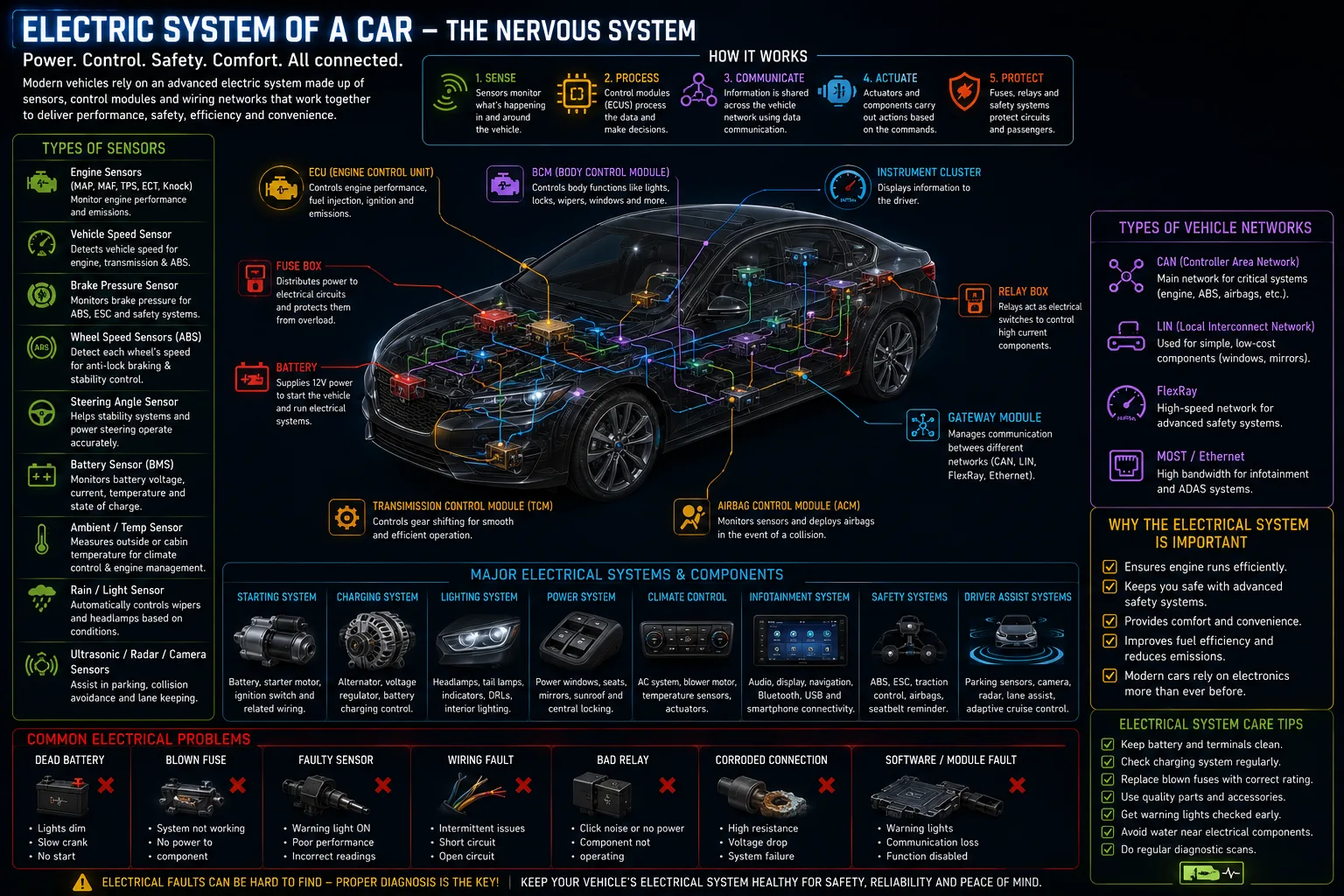
Your engine needs three things happening simultaneously, every single combustion cycle: air, fuel, and a spark at precisely the right moment. Remove any one of those and the engine stops. It's not rude — it's physics. The question when your car cuts out is which of those three (or the systems that enable them) failed, and why. The crankshaft position sensor is the engine's heartbeat monitor. It watches a toothed reluctor wheel on the crank and tells the ECU exactly where the pistons are and how fast the engine is rotating — information without which the ECU cannot calculate injection timing or ignition timing. If this sensor drops its signal, even momentarily, the ECU loses its reference point and shuts fuel and spark down. The engine dies. If the signal returns (because the sensor is failing intermittently due to heat or a cracked internal winding), the engine restarts, perhaps after cooling for a few minutes. Classic. The camshaft position sensor does a similar job for valve timing, cross-referencing with the crank sensor to confirm which stroke each cylinder is on. A cam sensor fault can cause stalling, though often it's less abrupt than a crank sensor dropout. The fuel pump lives inside your fuel tank, permanently submerged in petrol or diesel, pushing fuel to the injectors at the correct pressure. When it starts failing — through worn brushes, overheating, or age — it may deliver adequate fuel at idle but collapse under load, or cut out entirely when hot and then recover when cold. Fuel pressure tells you the truth here; swapping the pump based on a hunch tells you nothing. Ignition system failures — coil packs, HT leads on older petrol engines, ignition modules — can cause misfires, or a complete no-spark condition that kills the engine without warning. And then there are earth faults: the mundane, unglamorous loose or corroded earthing strap that causes the ECU, fuel pump relay, or ignition module to lose its reference ground and simply stop working mid-journey. We check all of it, methodically, with data rather than gut feeling.
“Nothing focusses the mind quite like your engine going completely silent at 60mph on a dual carriageway.”
Sound familiar?
So what's behind it?
What we do — at your door
When SOSCarFix arrives at your address — driveway, workplace, or the layby you've been sitting in questioning your life choices — we do not guess, because guessing with an intermittent cutout fault is how you spend £400 replacing a fuel pump and then discover it was the crank sensor all along. We start with a full diagnostic scan, pulling every fault code in every module, including any intermittent codes stored in the ECU's freeze-frame memory from the actual moment the engine cut out. Freeze-frame data is the crucial bit here: it captures the live sensor readings at the exact instant the fault was logged — fuel pressure, crank signal, coolant temp, RPM — which often tells you definitively what dropped out first. From there we work through the circuit systematically. We check live crank and cam sensor signals with a scope or oscilloscope if needed, watching for signal dropouts or pattern anomalies that don't show up at rest but appear under vibration or heat. We test fuel pressure at rest, during cranking, and under simulated load, and check whether rail pressure holds after shutdown (a failing non-return valve bleeds pressure down, causing difficult hot restarts). We test earth path resistance with a voltmeter — a two-minute check that finds the kind of corroded chassis earth that causes six months of misdiagnosis at garages that don't look for them. If the fault is intermittent and won't reproduce on the day, we'll tell you honestly rather than fitting parts speculatively. Sometimes the stored fault codes and the fault pattern are sufficient to make a confident diagnosis; sometimes we need to return when it's acting up. Either way, everything is diagnosed before anything is replaced, and you'll receive a clear explanation of what we found and why we're recommending what we're recommending. No shotgunning parts at your wallet and hoping one of them was right.
What affects the price
What determines the cost of diagnosing and fixing an engine that cuts out while driving? Several honest variables. Diagnostic time is the first factor: intermittent faults that won't reproduce on demand take longer to pin down than ones that trigger a clean, current fault code, and chasing an earth fault through a wiring loom is a different afternoon to swapping a sensor that's failed completely. The component itself varies enormously — a crank position sensor for a common Ford or Vauxhall is a modest part; the same sensor on a prestige German car or a vehicle requiring turret or reluctor wheel removal to access is a different conversation. Fuel pump replacement is typically the most substantial job in this fault category, involving dropping the tank or removing a rear seat access panel depending on the vehicle, and the pump itself varying significantly by make. Earth fault repair is usually low in parts cost but requires time to correctly trace and clean the affected connections. A failed coil pack or ignition module sits somewhere in the middle. We will always tell you what the diagnostic found before quoting any repair, and we won't recommend replacing a part we haven't confirmed is faulty.
Random knowledge you didn't ask for
Questions you're probably asking
My car cuts out and then restarts fine after a few minutes — why does waiting help?
The classic thermal recovery pattern. Crank and cam sensors contain internal windings that can develop hairline cracks; when hot, the crack opens and the signal is lost. After a few minutes cooling on the roadside, the metal contracts, the crack closes, and the signal returns — the car starts, runs fine, and you drive home baffled. Fuel pumps do a similar thing: a pump running at its wear limit may overheat under load, cut out, and recover after cooling. Either way, the waiting is the fault telling you exactly what category it falls into.
Could a loose earth really cause my engine to cut out completely?
Absolutely, and it's more common than most people expect. The ECU, fuel pump relay, and ignition module all reference the same earthing network — if a chassis or body earth develops high resistance from corrosion, those components may lose their reference ground under load. An ECU without a clean earth path can behave unpredictably, triggering safety shutdowns that look exactly like a sensor failure. The maddening part is that a bad earth often doesn't trigger a specific fault code, making it easy to chase expensive components that aren't actually the problem.
The rev counter dropped to zero when the engine cut out — what does that mean?
That's a strong indicator of a crank sensor signal loss rather than a fuel or ignition issue. The tachometer on most modern cars reads directly from the crankshaft position sensor signal — no signal, no rev counter reading. If the rev counter stays live while the engine dies, the ECU can see the crank still turning, which shifts suspicion toward a fuel supply or ignition failure. It's a simple but genuinely useful distinction that narrows the diagnostic before you've plugged in a single piece of equipment.
Can the immobiliser really cause the engine to cut out while driving?
Yes, though it's less common than sensor or fuel faults. The immobiliser communicates with the key transponder continuously on some systems, not just at startup. A failing transponder coil ring around the ignition barrel, a key with a cracked transponder chip, or a deteriorating immobiliser module can cause the security system to decide mid-journey that it doesn't recognise the key and cut the fuel or ignition authorization. This typically shows as an immobiliser warning light or a specific fault code in the body control module rather than an engine management code, which is one reason a full multi-module scan matters more than just reading engine codes.
How long does a mobile diagnostic for engine cutting out take?
The initial diagnostic scan and fault code review takes around 30 to 45 minutes. If the fault is present and active — meaning the car is misbehaving on arrival or the codes are current rather than intermittent — that's often enough to reach a confident diagnosis. Intermittent faults that are currently hiding take longer, because live data checks, earth resistance testing, and fuel pressure assessment all add time. We'll give you an honest assessment of what we've found and what we'd recommend before proceeding to any repair, so there are no surprises on the invoice.
Car Cutting Out While Driving — sorted at your door
Stop procrastinating. Get a transparent quote and we'll come to you.