Brake Pad Replacement: The Cheap Heroes Dying So Your Discs Don't Have To
Brake pads are the unsung martyrs of your car. They're designed to wear away — deliberately, gradually, nobly — so that your brake discs (which cost considerably more and take considerably longer to replace) stay pristine. Think of them as the bodyguard who takes the hit. They even come with a built-in last-gasp warning system: a tiny metal tab that starts screeching against your disc once the friction material gets too thin. That squeal is not your car being dramatic. That's the polite heads-up before the full, grinding, wallet-destroying scream kicks in. SOSCarFix comes to you — driveway, car park, or layby of shame — fits your new pads, and sends you on your way before things escalate from a squeak to a catastrophe.
See our upfront pricingBrake pads quietly sacrifice themselves so your discs survive. SOSCarFix replaces them at your door before the polite squeal becomes a full metal meltdown. Get a quote today.
How it actually works
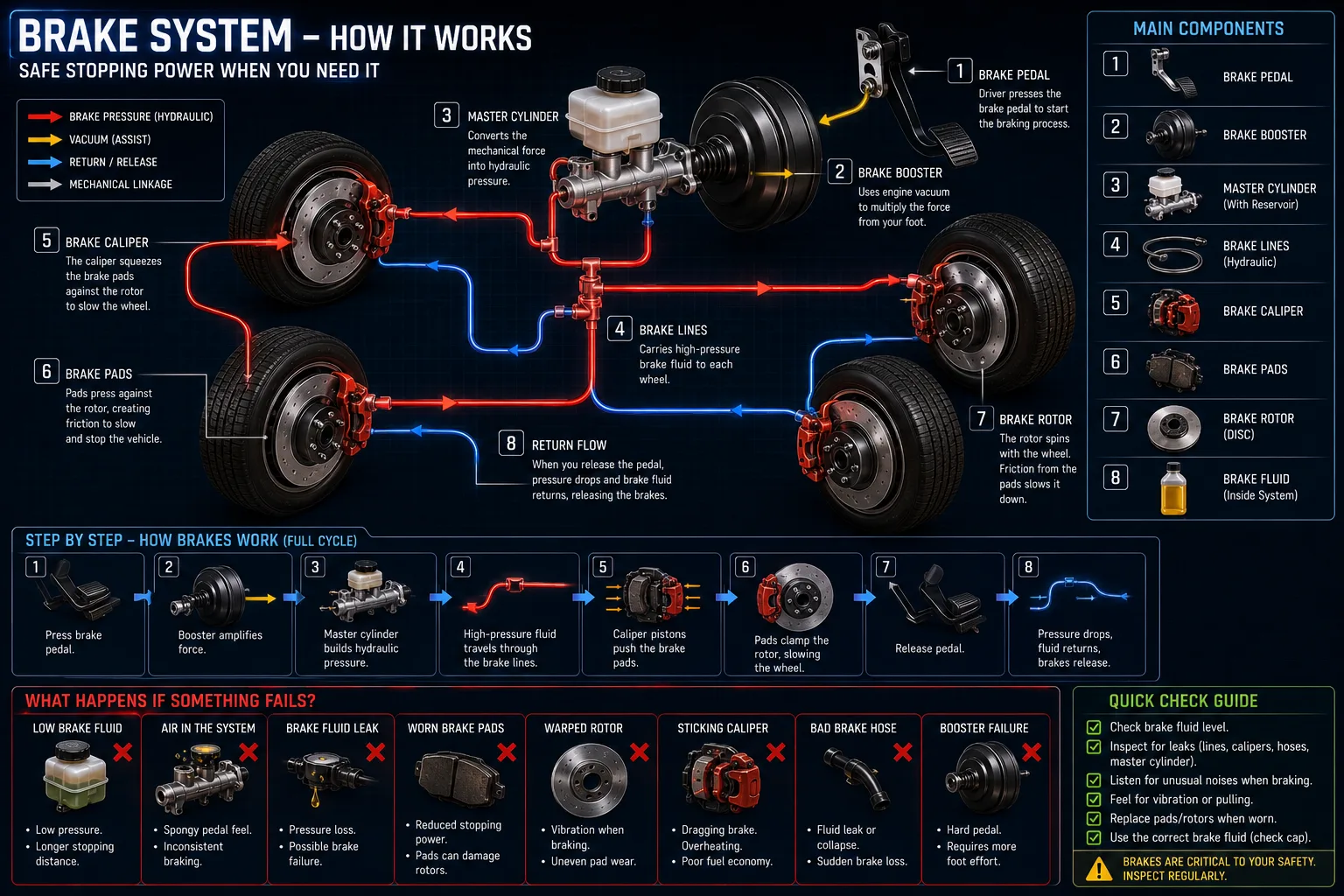
Here's the noble little cycle your brake pads go through on your behalf. Every time you press the brake pedal, hydraulic pressure pushes the brake caliper's pistons outward, squeezing a pad either side of your spinning brake disc. Friction converts your forward momentum into heat, and a thin layer of the pad's friction material gets sacrificed in the process. Repeat that a few thousand times across city traffic, country lanes, and one especially spirited roundabout exit, and eventually the friction material wears thin. Most pads are fitted with a mechanical wear indicator — a small metal tang — that contacts the disc when the material reaches a critical thinness, producing that distinctive high-pitched squeal. Newer cars often have an electronic sensor that warns you via a dashboard light at around 3mm remaining, which is still safe but firmly in "sort this soon" territory. The UK legal minimum is 1.5mm — at that point your MOT tester and your stopping distances both have opinions. SOSCarFix turns up, pulls the wheels, inspects the pads and disc condition, fits the correct pads for your vehicle, and checks everything is bedded in properly before we leave. No garage required. No tow truck needed — provided you got there before the metal-on-metal finale.
“That's the polite heads-up before the full, grinding, wallet-destroying scream kicks in.”
Sound familiar?
So what's behind it?
What we do — at your door
We come to you. That's the whole model — no booking a garage slot, no organising a courtesy car, no sitting in a reception area pretending to enjoy the complimentary biscuits. You tell us where the car lives; we turn up with the right pads for your specific vehicle, swap them out properly, and make sure the calipers are moving freely and not quietly planning revenge on the next set. We inspect the brake discs at the same time, because there's no point fitting fresh pads onto a disc that's already been chewed up — we'll tell you honestly what we find. If it's just pads, it's just pads. If the discs need attention too, we'll tell you that plainly and sort it in the same visit where possible. Front pads, rear pads, or the full set — we handle it. And because we're mobile, the repair happens while you get on with your day rather than around your day.
What affects the price
Several things influence what a brake pad replacement actually costs on your specific car. The make and model matters enormously — pads for a Ford Focus and pads for a Range Rover Sport are not in the same conversation, and neither is the labour involved. Whether you need just pads or pads and discs together shifts the picture significantly, as does whether it's front axle, rear axle, or all four corners. The type of pad — organic, semi-metallic, or ceramic — affects both price and performance characteristics. And on vehicles with electronic wear sensors, those sensors need replacing alongside the pads or the warning light will simply stay on indefinitely as a passive-aggressive reminder. We give bespoke quotes based on your actual vehicle, so you know exactly what you're getting before we arrive.
Random knowledge you didn't ask for
Questions you're probably asking
How long do brake pads last in the UK?
Front pads typically manage 25,000 to 50,000 miles; rears often outlast them significantly, sometimes reaching 70,000 to 100,000 miles. The range is huge because driving style, vehicle weight, and whether you spend your life in city traffic or on motorways all make a genuine difference. There's no universal mileage — when the squeal starts, that's your cue.
Can I drive on squealing brake pads?
For a short while, yes. The squeal from a wear indicator means you're getting the polite warning — you still have some friction material left. But short while means days, not weeks. If you ignore the squeak long enough that it becomes a grinding metal growl, you're past the polite warning stage and into active disc damage territory. Sort it while it's still just pads.
Do front and rear pads need replacing at the same time?
Not necessarily — they wear at different rates because of the weight transfer under braking. It's perfectly normal to replace the fronts and leave the rears for another visit, or vice versa. We'll check both axles when we're there and give you a straight answer on what actually needs doing.
Why does only one pad sometimes wear faster than the other?
Almost always a stuck caliper piston or slide pin. If the caliper isn't releasing cleanly, one pad stays pressed lightly against the disc while the other sits clear — one works constantly, the other barely at all. The result is a pair where one pad is nearly gone and its partner still has plenty of life left. Fitting new pads without addressing the caliper just repeats the same pattern with fresh materials.
Why do my brakes squeal only when reversing?
This one trips people up because it feels backwards. When reversing, the brake pad contacts the disc from the opposite direction, which can cause the wear indicator tab — designed to squeal under forward braking — to skip or chatter differently and produce a squeal even when the pad still has material left. More commonly though, it's light surface rust on the disc being scrubbed off at low speed, or a rear pad sitting slightly loose in its carrier. Neither is an emergency, but both are worth a proper look before the occasional squeak becomes a permanent statement.
How long do brake pads and discs last?
Pads typically last 25,000–50,000 miles; discs 60,000–100,000 — but "typically" does a lot of heavy lifting there. City driving, aggressive braking, cheap aftermarket parts, and a habit of riding the pedal can halve those figures. Rear pads often outlast fronts because the fronts do around 70% of the work. There's no set replacement interval, so the honest answer is: inspect them regularly. If you're hearing a squeal, feeling reduced bite, or you simply don't know when they were last changed, get them checked before you find out the expensive way.
Brake Pad Replacement — sorted at your door
Stop procrastinating. Get a transparent quote and we'll come to you.