Brake Caliper Repair & Replacement
Somewhere on your car, one brake caliper has decided it is deeply, emotionally attached to that brake disc. It is not letting go — not when you've stopped, not at 30mph, not on the motorway. Just quietly half-squeezing, 24 hours a day, cooking that corner like it's got a personal grudge. The disc glows, the pad grinds itself to powder, the tyre gets a bit warm, and you're down on fuel wondering why. That's a seized or sticking caliper — and it will not sort itself out. SOSCarFix mobile mechanics come to your home, your work, wherever you've parked the sulking thing — and we fix it properly, without you ever visiting a garage.
See our upfront pricingSeized or sticking brake caliper dragging on one corner? SOSCarFix mobile mechanics come to you anywhere in the UK — no garage, no faff, sorted on your drive.
How it actually works
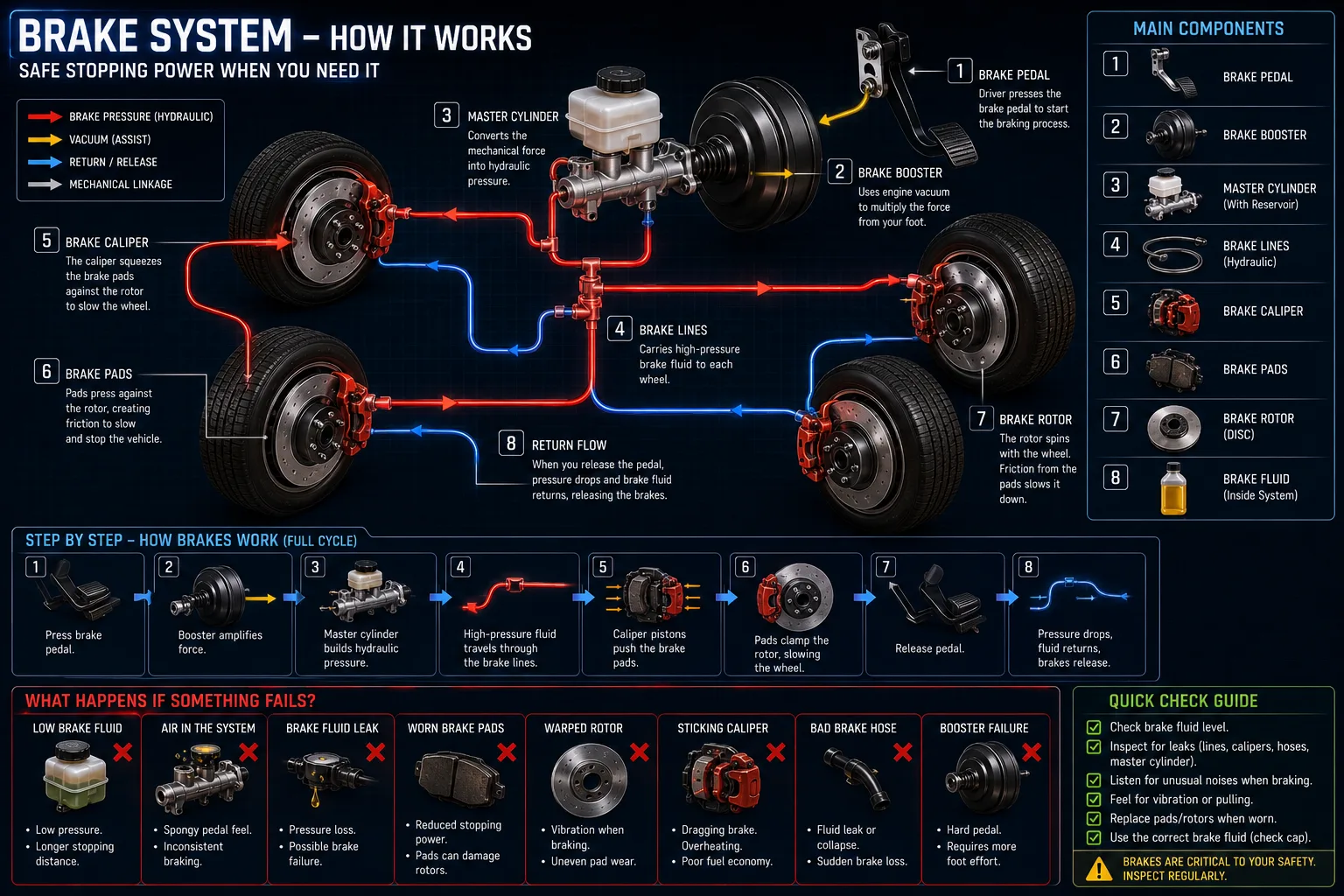
The brake caliper is the hydraulic clamp that lives over your brake disc. Press the pedal, brake fluid pushes a piston (or several) outward, the pads grip the disc, the car slows. Release the pedal, the hydraulic pressure drops, the piston seal flexes back, pads retract, everyone moves on with their lives. Simple, elegant, reliable — when it works. The problem is the caliper has to do this hundreds of times a day in all weather, covered in road grime, salt spray, and whatever it is lorries are trailing down the motorway. Over time, the rubber dust seals crack, moisture sneaks into the piston bore, corrosion takes hold, and the piston stops retracting cleanly. The caliper slides (floating calipers run on guide pins, which corrode too) stop sliding. And so your brake caliper turns into that clingy housemate who never quite leaves — maintaining just enough pressure on the disc to ruin your fuel economy, your brake pads, and eventually your rotor, all without ever giving you a clear warning light to go on.
“The disc glows, the pad grinds itself to powder, the tyre gets a bit warm, and you're down on fuel wondering why.”
Sound familiar?
So what's behind it?
What we do — at your door
A SOSCarFix mobile mechanic will come to your location, pull the wheel, and properly assess whether the caliper can be rebuilt or needs replacing outright. Minor seizures on guide pins can sometimes be resolved with a thorough strip-clean and regrease — pins out, bores cleaned, fresh high-temperature grease, new rubber boots if needed. A piston that's corroded internally, or a caliper body that's cracked or leaking, gets replaced with a quality part. We'll also check the brake pads on that corner (they'll likely need replacing, given what they've been through), inspect the disc for heat damage, and bleed the brakes properly so the hydraulic system is clean and pressured correctly. If the brake fluid is old and moisture-laden, we'll recommend a full flush — because there's no point fitting a new caliper and leaving the thing to corrode all over again from the inside. Everything done at your driveway, your workplace, wherever suits you.
What affects the price
Several things determine what a brake caliper job comes to: whether it needs a rebuild or a full replacement unit; whether it's a front or rear caliper (rears with integrated electric or mechanical handbrake mechanisms are more involved); how badly the guide pins, slide hardware, and bleed nipples have corroded (a snapped nipple turns a straightforward job into a proper afternoon); the make, model, and age of the vehicle, since a caliper for a common hatchback is a different conversation to one for an older German executive car; whether the pads and disc on that corner have been damaged by the prolonged dragging and need attention at the same time; and the condition of the brake fluid and whether a system flush is advisable while we're in there. We'll tell you exactly what you're looking at before we start.
Random knowledge you didn't ask for
Questions you're probably asking
Can I drive with a seized brake caliper?
Technically yes, in the sense that the car will still move. Wisely, no. A dragging caliper generates serious heat — enough to warp the disc, destroy the pad, and in worst cases cause brake fade or a tyre fire. It also affects your ability to stop in a straight line. Get it looked at promptly rather than hoping it works itself out, because it won't.
Can a seized caliper be repaired, or does it always need replacing?
Depends what's seized. Corroded guide pins are often cleanable and regreased, with new boots fitted — that's a repair. A piston that's corroded in its bore, or a caliper body that's cracked or leaking fluid, needs replacement. We'll tell you which before we start, not after.
Why is only one brake caliper seizing — shouldn't they both wear the same?
In theory, yes. In practice, one side often sees slightly more moisture, gets a stone chip that cracks a dust seal, or just has guide pin boots in a slightly worse state. Calipers are also sometimes replaced on one side only during previous repairs, leaving a newer and an older unit on the same axle. The weaker link seizes first.
How often should brake fluid be changed to help prevent this?
Most manufacturers recommend every two years regardless of mileage, because the hygroscopic absorption is time-based rather than use-based. It's genuinely one of the more worthwhile routine services — fresh fluid has a proper boiling point and won't be silently corroding your caliper pistons from the inside.
Brake Caliper Repair & Replacement — sorted at your door
Stop procrastinating. Get a transparent quote and we'll come to you.