Airbag / SRS Warning Light: The Dashboard Bully That Will Fail Your MOT
That little orange person-with-a-circle on your dashboard looks almost friendly. It is not. The airbag / SRS (Supplemental Restraint System) warning light means the car has detected a fault in the system designed to stop your face from meeting the steering wheel at speed. This is the one you absolutely cannot park at the back of your mind until MOT time — because since September 2018, a lit SRS light is an automatic MOT failure (a 'major' defect). Not an advisory. A fail. Beyond the administrative inconvenience, the actual problem is that a system which might need to fire explosively and precisely in a crash could be compromised. SOSCarFix comes to you, plugs in properly, finds the real fault and fixes it on your driveway — no tow truck required, no garage sitting-around tax.
See our upfront pricingAirbag light on? It's an MOT failure since 2018 — not something to ignore until next year. We diagnose SRS faults at your door. Get a quote.
How it actually works
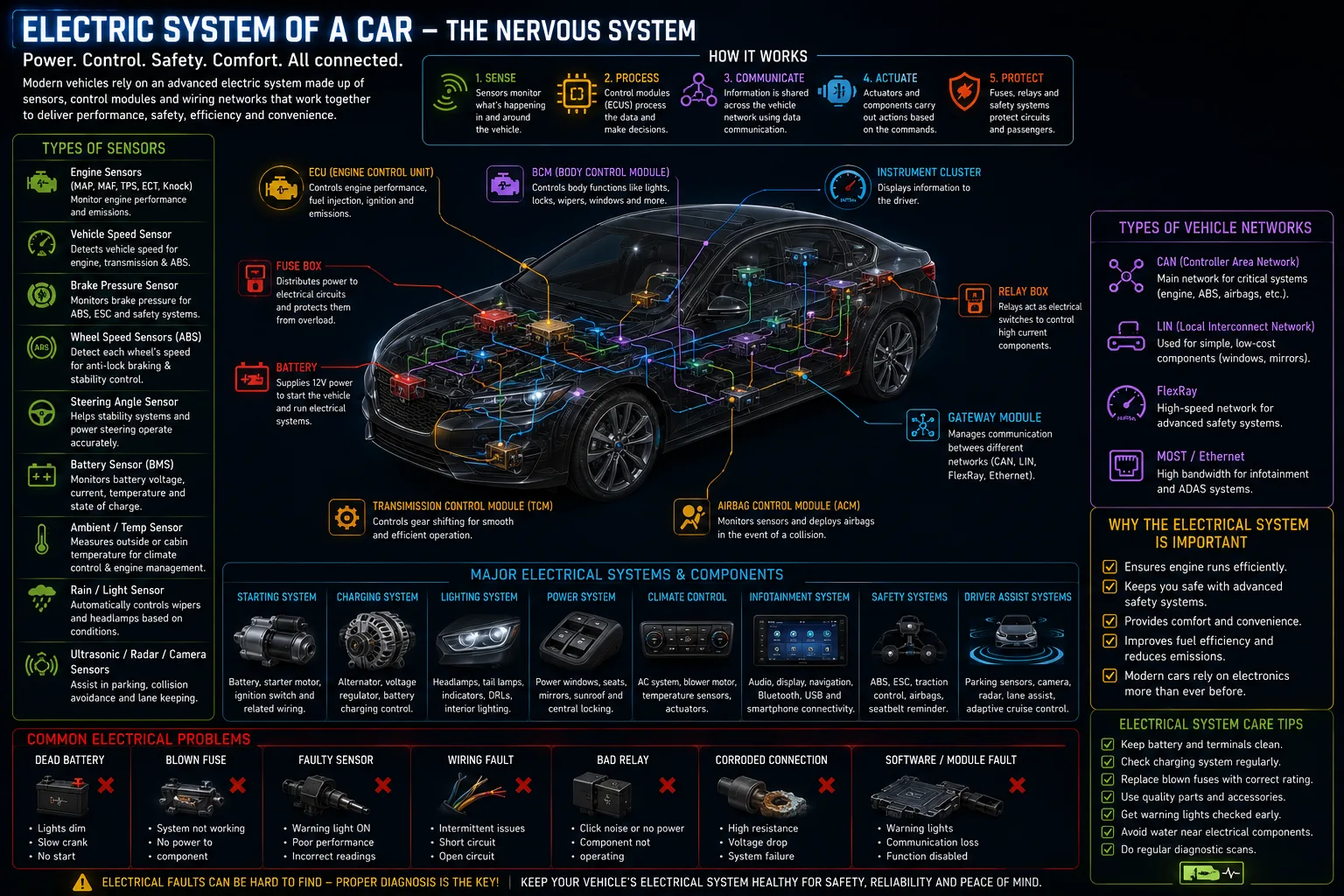
The SRS is a network of components that work together to cushion an impact that lasts roughly 30–50 milliseconds — faster than you can blink, let alone react. The airbag control module (ACM) sits at the centre: it receives signals from impact sensors and, in a serious collision, triggers the relevant airbags and seat-belt pretensioners (which yank the belt tight a fraction of a second before impact). The ACM monitors the whole network continuously, including crash data stored from previous incidents. Spiral into this system are the clock spring — a coiled electrical connector inside the steering column that lets the wheel turn while keeping the horn, airbag and controls wired up — seat-belt pretensioners at each seat, seat-occupancy sensors in the passenger seat (so the car knows whether to fire the front passenger airbag), and sometimes side and curtain airbags with their own sensors. The ACM logs a fault the moment anything reads outside expected parameters: a broken circuit, a sensor out of range, incorrect resistance, or crash data that was never cleared after an impact. That's your SRS light. A steady light means a stored fault; a light that flashes on startup but goes out is usually normal (bulb check); a light that stays on after 6–8 seconds means the system has a live fault and has disabled itself.
“That little orange person-with-a-circle on your dashboard looks almost friendly.”
Sound familiar?
So what's behind it?
What we do — at your door
We come to you — driveway, office car park, wherever the car sits — with proper manufacturer-grade diagnostic equipment that reads SRS fault codes the way they're meant to be read: not just the code number, but the stored crash data, the resistance readings, the sensor states and the live data from every component the ACM can see. A £20 code reader from a petrol station forecourt will tell you 'airbag fault' and charge you for the privilege of knowing nothing useful. We interpret what's actually wrong — is the clock spring broken or just a connector? Is there genuine crash data, or did a child seat confuse the occupancy sensor? — then give you a clear, honest quote before we touch anything. Depending on the fault, we can repair or replace the faulty component on the spot, clear stored crash data once the underlying issue is fixed, and confirm the system has returned to 'ready' status. The SRS light goes off when the system is happy, not when someone waves a reset tool at it and hopes for the best.
What affects the price
Cost varies considerably because the SRS is a network and the faults range from a corroded connector (cheap) to a failed airbag control module that needs replacing and programming to the vehicle (considerably less cheap). Diagnosis comes first and is always a flat charge — we won't quote blind. A clock spring replacement is a moderate parts-and-labour job; seat occupancy sensor mats sit in a similar bracket. Clearing crash data alone, once the physical fault is confirmed resolved, is labour time only. Replacement airbag modules need programming to your specific car — add coding time and sometimes a link to the manufacturer's servers. Genuine parts are generally more expensive than pattern alternatives, and on safety-critical systems we will always advise which is appropriate. What we won't do is reset the light without fixing what caused it — that's not a repair, it's just a very short delay until your MOT examiner finds it instead.
Random knowledge you didn't ask for
Questions you're probably asking
Is it safe to drive with the airbag light on?
Legally and practically: not ideal, and not for long. The system has detected a fault and disabled itself — which means in a serious accident the airbags and pretensioners may not fire. Beyond the safety issue, it has been an MOT failure since September 2018, so if your ticket is due soon the light will sink you. Short necessary journey to get it sorted? Fine. Ignoring it for months? Not fine.
My airbag light came on after a small bump in a car park — do I need a new airbag?
Not necessarily. A low-speed impact can store crash event data in the airbag control module without deploying anything — the module just remembers that something happened and flags it. In those cases the fix is a proper diagnostic read, confirmation that no components were damaged or deployed, and a crash-data clear with the correct software. That's considerably cheaper than a new airbag.
Can the airbag light come on from a dodgy connection rather than an actual fault with the airbag?
Yes, and it's one of the most common causes we find. The yellow SRS connectors under the front seats get knocked by feet, caught in seat runners and corroded by damp. A single bad connection reads as a broken circuit to the ACM, which immediately stores a fault and lights the warning. Cleaning and reseating the connector fixes it — no parts needed.
I had the airbag light reset at a garage but it came back on within a week. Why?
Because resetting the light without fixing the underlying fault is pointless — the ACM keeps monitoring, finds the same problem it found before and logs it again. A reset should be the last step, after the root cause is confirmed fixed. If it came back, the fault is still there and wasn't properly diagnosed in the first place.
Will an airbag light definitely fail my MOT?
Yes. Since the September 2018 MOT rule changes, a lit airbag / SRS warning light is classified as a major defect and results in an automatic failure. There are no ifs, no advisories, no 'retest if you get it done within ten days' — it's a fail. Get it sorted before you book the MOT, not after.
Airbag / SRS Warning Light — sorted at your door
Stop procrastinating. Get a transparent quote and we'll come to you.