Central Locking Repair: Because Manually Locking Four Doors Like It's 1987 Is Not a Lifestyle
Central locking is one of those things you only truly appreciate the moment it stops working — usually when it's raining sideways on a car park in Wolverhampton and you've got shopping in both hands. Modern central locking sounds simple enough: press button, all doors lock. In practice, you've got a Body Control Module making decisions, door-lock actuators physically moving the rods, microswitches telling the system what each door is doing, wiring runs buried inside door cards and through rubber grommets that crack with age, and a key fob with a battery so small it makes a watch battery feel robust. When any one of those things throws a wobble, the system misbehaves in increasingly infuriating ways. SOSCarFix brings the diagnostic gear, the actuators, and the patience to your driveway, office car park, or wherever your uncooperative car is currently sitting — no garage visit, no booking it in for next Tuesday, no sitting in a waiting room watching Jeremy Kyle on a wall-mounted telly.
See our upfront pricingCentral locking stopped working? One door dead, fob useless, or actuator given up entirely? SOSCarFix comes to you and fixes it. Get a quote.
How it actually works
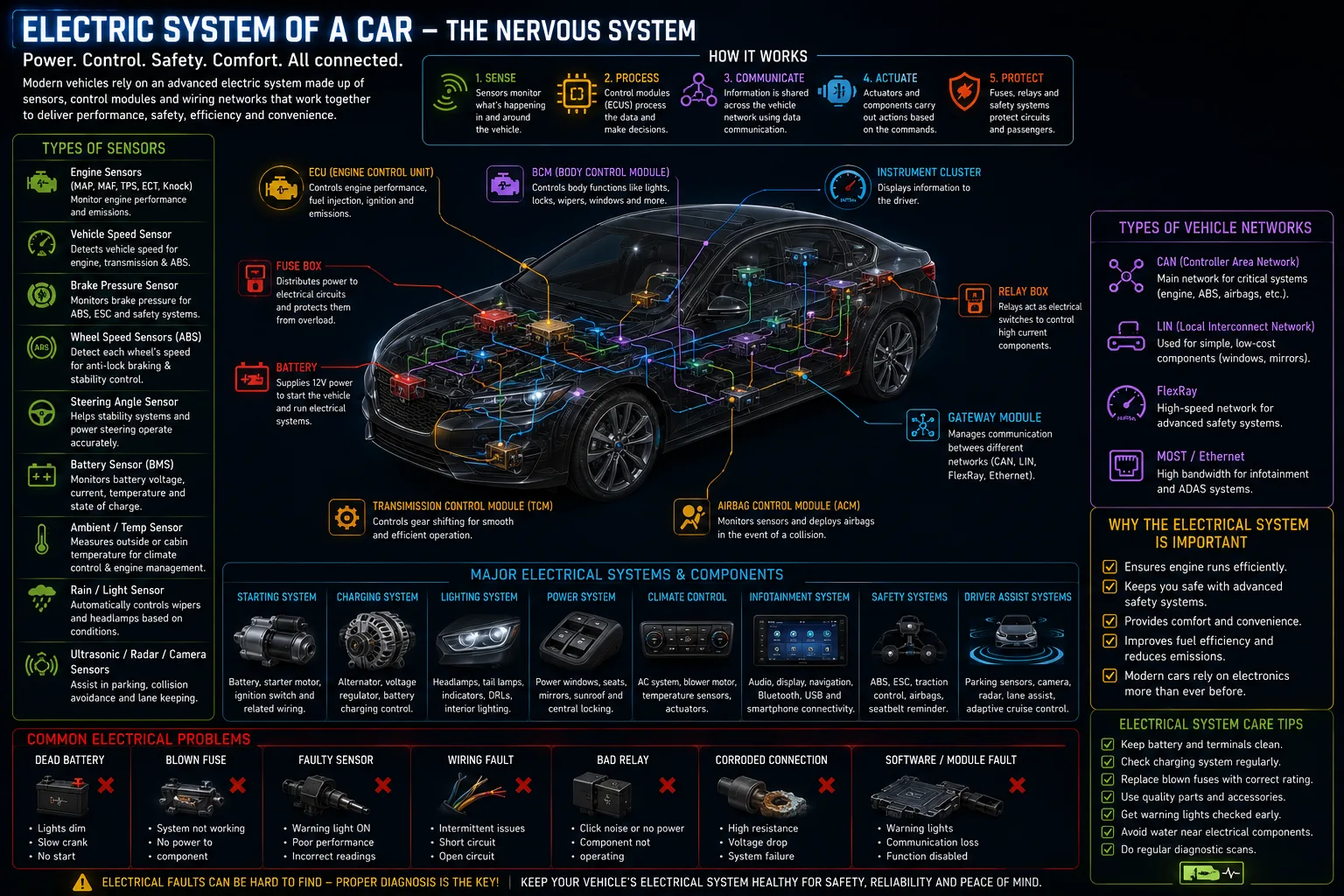
Here's what's actually happening when you press that fob button. Your key fob transmits a rolling-code radio signal (typically 433 MHz in UK-market vehicles), the car's receiver module recognises it, and the Body Control Module (BCM) or a dedicated central locking module sends a 12V pulse to each door-lock actuator in sequence. Those actuators are small electric motors with a worm-gear mechanism that physically shoves the locking rod up or down. Each door also has a microswitch or hall-effect sensor that reports its lock status back to the BCM — which is why the system knows you've opened a door and can chirp at you if you've left one unlocked. That's a lot of moving parts to go wrong. Diagnosing central locking faults properly means checking the fob signal and frequency, testing the receiver module, scanning for BCM fault codes, live-data testing each actuator's power and ground feed, and physically checking the mechanical linkage inside the door. The classic shortcut — just replacing the actuator of whichever door stopped working — is fine if it's obviously dead. But if the actuator is getting no power because a broken wire in the door-rubber-grommet is the actual culprit, you've just wasted a part. We check before we swap. Radical, we know.
“When any one of those things throws a wobble, the system misbehaves in increasingly infuriating ways.”
Sound familiar?
So what's behind it?
What we do — at your door
We come to you — your driveway, workplace car park, or wherever the car currently lives — with OBD diagnostic equipment to pull any BCM fault codes and live-data the locking system, a decent multimeter and wiring diagrams to trace power and ground to each actuator properly, a fob frequency tester to confirm the key is actually transmitting, and the actuators most likely to be needed based on your car's make and fault pattern. We'll tell you exactly what's failed and why before anything gets replaced, which means you're not paying for parts that weren't the problem. If it's a dead fob battery, you'll feel slightly sheepish but be fifty quid better off than if you'd gone straight to the dealer. If it's a broken grommet wire, we splice it properly — heat-shrink and solder, not electrical tape and optimism. Door cards come off, actuators go in, everything gets tested, and the job's done in your driveway. No towing, no waiting, no phoning round garages who'll tell you they can't look at it for a week.
What affects the price
What drives the cost of central locking repair in the UK comes down to a handful of honest variables. The actuator itself ranges from budget patterns for common Fords and Vauxhalls through to dealer-priced units on premium German cars that cost roughly as much as a small child's birthday party. Labour time varies too — some actuators bolt out in twenty minutes once the door card's off; others are buried behind vapour barriers, plastic rivets that disintegrate on removal, and wiring connectors that were clearly designed by someone who hated mechanics. Diagnostic time is a real cost if the fault is intermittent or involves chasing a broken wire through a grommet — that's skilled work, not guesswork. If you need a fob replacement or programming, that adds to the bill depending on whether we're talking a basic £15 cover replacement with a battery, or a proximity key that needs pairing to the car's receiver. Water ingress damage can multiply the job if multiple actuators and connectors are corroded. The honest answer: diagnosis first, parts and labour quoted before we start, no surprises.
Random knowledge you didn't ask for
Questions you're probably asking
My key fob stopped working but the car locks fine from the button inside — is it just the fob battery?
Probably yes, and we'd always check that first because it's embarrassing for everyone if the answer was a £2 battery. CR2032 or CR2025 cells are the usual suspects. However, if a new battery fixes nothing, the fob's internal PCB or antenna could be damaged. If you've ever dropped it hard onto concrete, the crystal inside can shift frequency slightly and stop the receiver recognising it. At that point you need either a fob repair or a new fob programmed to the car.
One door won't lock or unlock with central locking but works fine manually — what is it?
Almost certainly the door-lock actuator on that door has given up. Actuators have a motor and a plastic worm-gear mechanism that physically moves the locking rod, and when they fail they either stop responding entirely or buzz pointlessly without moving anything. The good news is it's a contained repair — door card off, actuator swapped, door card back on. The less good news is on some cars, particularly rear doors on German saloons, someone clearly designed the access as an afterthought.
My central locking started playing up after heavy rain — is water damage expensive to fix?
It depends entirely on what the water got to. If it's pooled in the door bottom and corroded the actuator connector, that's a connector clean or replace job, not catastrophic. If the door drain holes were blocked long enough to submerge the actuator, the motor will have corroded internally and needs replacement. If water tracked through a grommet into the BCM or door modules, that's a more involved diagnosis. We assess what's actually damaged before quoting — there's no point assuming the worst.
Can I just replace the actuator myself to save money?
Physically, yes — door cards come off with trim tools and the actuator usually unclips from the locking rod then unplugs. Where DIY goes wrong is buying the wrong actuator (fitment varies enormously even within the same model range by year and trim level), snapping the plastic trim clips on the door card, or missing that the actual fault is a broken wire feeding the actuator rather than the actuator itself. If you're handy with trim tools and confident you've correctly diagnosed the faulty door, a pattern actuator from a reputable supplier is a reasonable approach. If you're not sure what's failed, diagnosis first saves money.
The car locks itself randomly with no input from me — is it haunted or is this a real fault?
Definitely a real fault, unfortunately, because haunted would at least be interesting. Random self-locking usually comes from a faulty microswitch or sensor in one of the doors that's generating a spurious signal — the BCM thinks a door has been opened or tampered with and triggers the locking cycle in response. It can also come from a moisture-damaged BCM or central locking module interpreting noise on the wiring as a lock command. Diagnostic scan usually points us at which door's input is misbehaving, and from there it's a switch or module replacement.
Why won't my central locking lock or unlock one door?
Nine times out of ten it's the door actuator — a small electric motor that's given up the ghost on that specific door. They fail independently, so the rest of your locks working perfectly is completely normal and not reassuring at all if you're trying to secure your car. Less commonly it's a broken wire in the door loom (especially on high-mileage cars where the rubber grommet wears through), or a duff door lock relay. A mobile mechanic can diagnose and replace the actuator on your driveway, usually within the hour.
Central Locking Repair — sorted at your door
Stop procrastinating. Get a transparent quote and we'll come to you.