Door Lock Actuator Replacement: When Your Car Decides One Door Should Live By Its Own Rules
Central locking is one of those features you entirely take for granted — until the day one door refuses to join the group activity. The other three lock. This one just sits there, either completely inert or producing a determined little clicking noise that means absolutely nothing is happening mechanically. That clicking is your door lock actuator: a small electric motor with a gearbox or linkage that physically throws the lock mechanism. When the motor's brushes wear out, the gearbox strips, or the plastic internals crack (and they always crack eventually), you get the full range from "works sometimes if it feels like it" to "utterly ignoring your key fob entirely." SOSCarFix comes to you, drops the door card, replaces the actuator, and restores the democratic principle that all four doors should behave identically.
See our upfront pricingDoor won't lock or unlock? Clicking away but going nowhere? We replace door lock actuators at your home or work. Get a quote — no garage required.
How it actually works
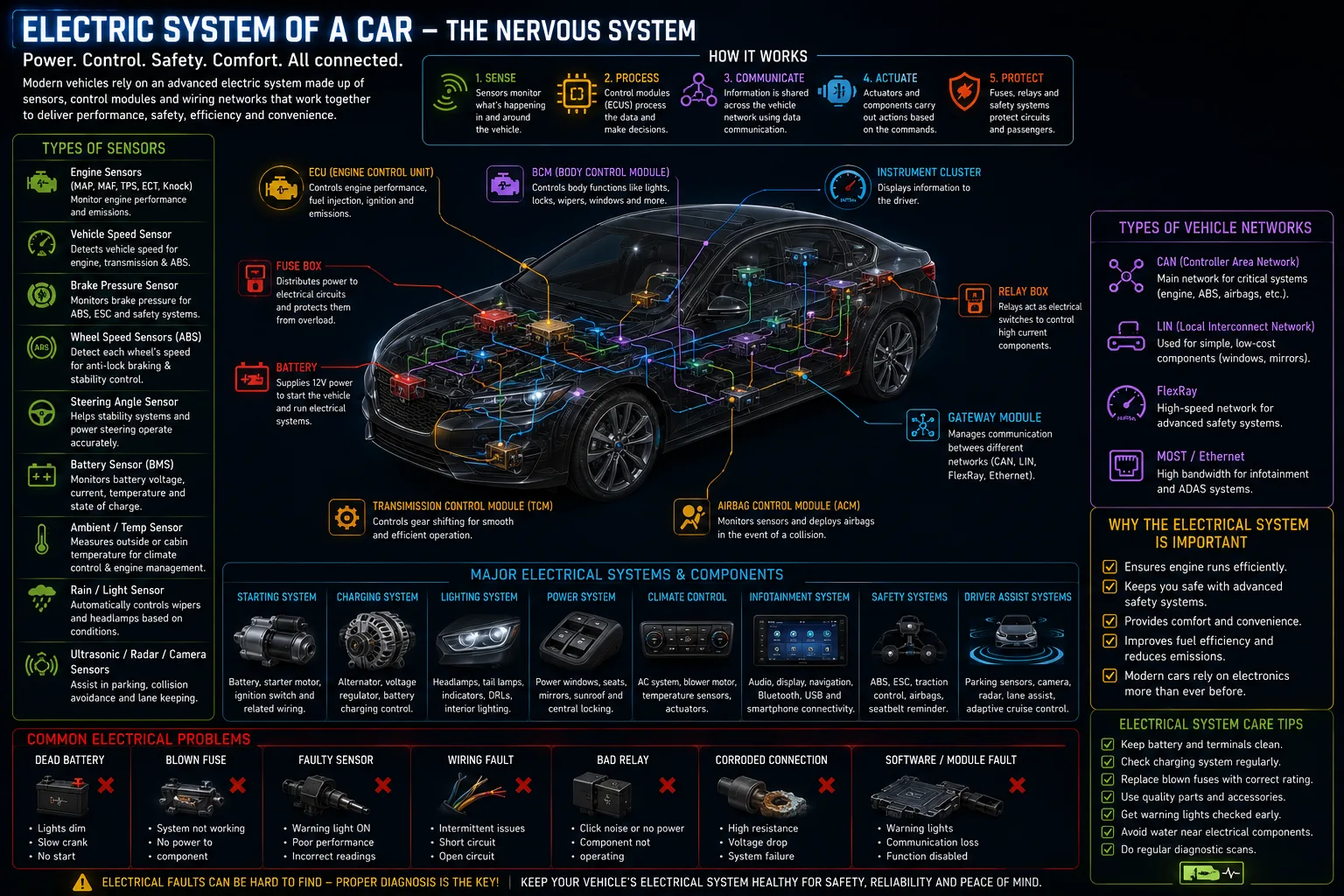
Your central locking system is a network of small electric actuators — one per door, plus the boot on most cars — controlled by a body control module (BCM) or central locking ECU. When you press your key fob or the interior switch, the BCM sends a 12V signal to the relevant actuator. Inside the actuator is a small DC motor that spins a worm gear or drives a rod directly connected to the lock barrel and latch mechanism. The whole operation takes less than a second: motor spins, gear turns, rod moves, lock throws. The actuator typically lives bolted directly to the door latch or mounted separately and connected via plastic rods or a cable. On modern cars the latch and actuator are often one integrated unit — which means when the motor fails, you buy the assembly. Older designs separate them, which can be kinder on the wallet. The BCM monitors whether the lock actually moved (on some vehicles via a feedback switch in the latch), which is why it knows to repeat the signal or flash the hazards to confirm. When the motor is dying, it may still receive the signal and try — hence the clicking or whirring — it just can't finish the job. Eventually it stops trying altogether. The door then sits permanently in whatever position it gave up in: stuck locked, stuck unlocked, or stuck somewhere uselessly in between.
Sound familiar?
So what's behind it?
What we do — at your door
We start with diagnosis before we order anything. A quick scan with our diagnostic tools checks whether the BCM is actually sending the signal to the door — that rules in or out a wiring or module fault before we go pulling door cards off. If the signal is reaching the door and the actuator still isn't moving, we remove the door trim panel, disconnect the actuator, and test it directly with a 12V feed to confirm it's dead (or confirm it's a rod/linkage issue, which is a different fix). Once confirmed, we fit a quality replacement actuator — OE or OE-equivalent where possible, not the cheapest thing off an online marketplace — reattach the linkage rods and clips, refit the door card, and test the lock through its full range: fob, interior button, and remote unlock. We come to your home or workplace; the whole job is typically done in an hour or two without you taking the car anywhere.
What affects the price
The cost depends on a few honest variables: the make and model (a Ford Fiesta actuator is considerably cheaper than a BMW or Land Rover equivalent, and some latch-integrated units cost more than a standalone motor); whether the fault is the actuator itself or just a broken rod/clip (sometimes it's a much cheaper fix); whether it's a front door or rear (rears are usually simpler to access); and whether a stripped or corroded latch means the whole latch assembly needs replacing rather than just the actuator. Labour time is fairly consistent — usually one to two hours — but the part price varies widely by vehicle. We diagnose first and quote before ordering parts, so there are no surprises.
Random knowledge you didn't ask for
Questions you're probably asking
Can I still use the car if one door lock actuator has failed?
Technically yes — you can usually still lock and unlock the door manually via the interior knob or by reaching through the window. But if the door is stuck locked from the inside you may have a problem with passenger egress, and some insurers take a dim view of a door that can't be secured properly. Sort it sooner rather than later; it doesn't get better with ignoring.
Is it always the actuator, or could it be something else?
Good question, and this is why we diagnose before ordering parts. It could be a broken plastic rod or clip connecting the actuator to the latch (cheap fix), a faulty wiring connector or chafed wire in the door hinge area (wires flex every time you open the door — they fatigue), or occasionally a BCM fault. The actuator is the most common culprit, but we confirm it before replacing anything.
Why does my actuator click but not move?
Clicking or whirring with no movement almost always means the motor is still alive but the mechanical output has failed — either the internal plastic gears have stripped, or the drive linkage has broken. The motor spins freely, there's just nothing connecting it to the lock anymore. The actuator (or sometimes just the linkage) needs replacing.
Can you do all four doors at once if they're all getting tired?
Absolutely, and it can make sense if a couple of others are intermittent — doing them together saves repeat call-out costs. We'd quote each door individually so you can decide which ones are urgent. Front driver's door usually gets the highest cycle count and fails first.
How long does a door lock actuator replacement take?
Typically one to two hours for a single door, including diagnosis, door card removal, fitting, and testing. Some vehicles have more involved door card designs that add time — we'll flag this when we quote. Multiple doors in the same visit share the travel and setup time, so it's more efficient than separate jobs.
Door Lock Actuator Replacement — sorted at your door
Stop procrastinating. Get a transparent quote and we'll come to you.